
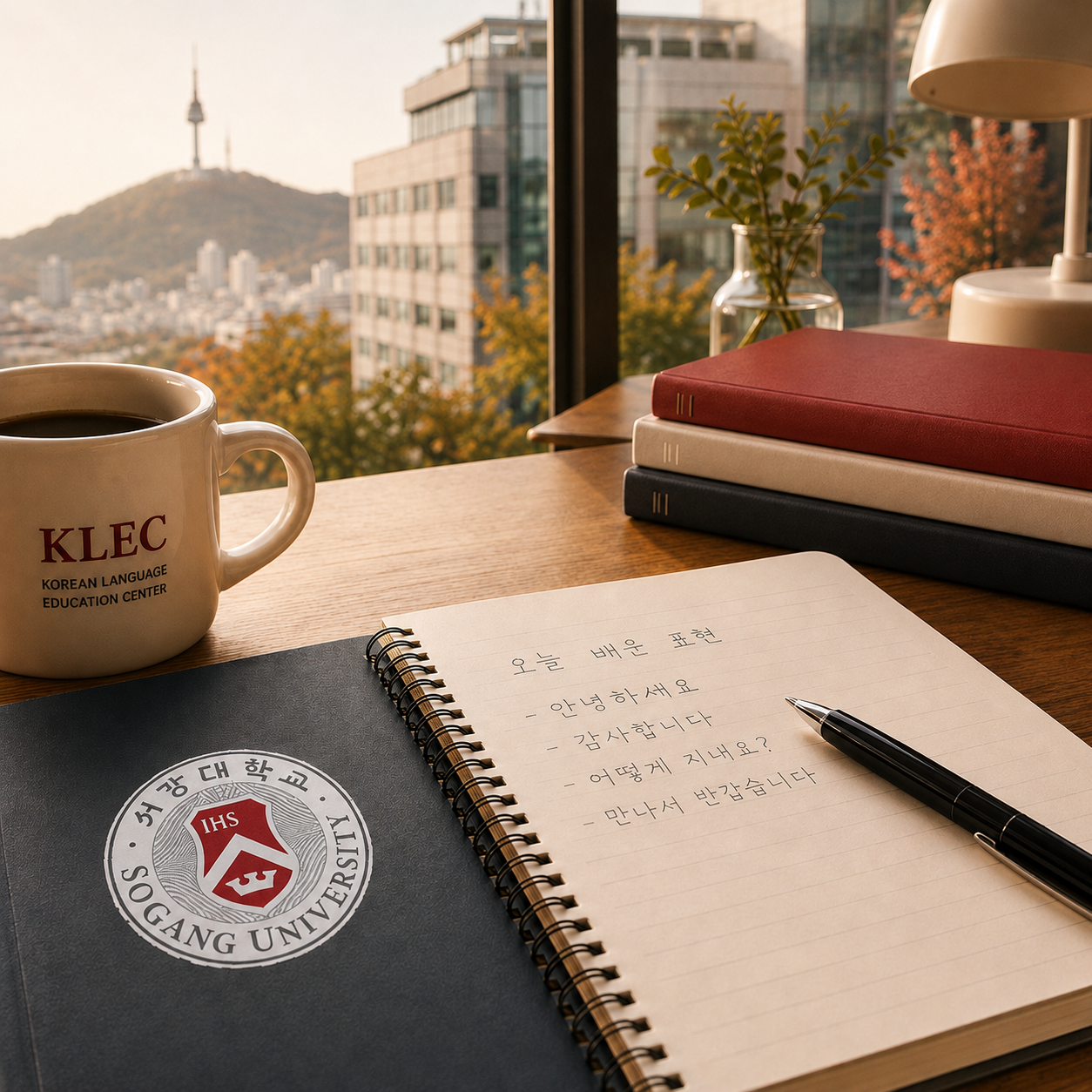
Studying Korean at Sogang KLEC at Age 54
2026: The Year I Would Finally Speak Korean
New Year’s Day 2026. Happy Year of the Fire Horse, associated with ambition, action, and courageous transformation. As I watched the snow pile up on a frigid day in Pittsburgh, Pennsylvania, I resolved that 2026 would be the year that I started SPEAKING Korean — not just “learning” the language, but actually using it in conversations with my Korean husband, his family, and our friends. This resolution was 20 years in the making and long overdue.
When I learned to read and write Hangul (the Korean alphabet system) in 2004, it took about two weeks to get the gist. I thought learning Korean would be easy. But after enrolling in my first Korean class a few years later, I quickly discovered quite the opposite! I enjoyed the challenge, though, and learning Korean developed into a hobby. Every so often, I’d take a class, try an online program, buy a new workbook, subscribe to a fun YouTube channel, etc.
Gradually over the years, I acquired a lot of grammar and vocabulary, and could even manage basic survival interactions when in South Korea. My heartache, though, was that I could never seem to corral all that grammar and vocab into functional everyday conversations with friends and family.
Why Sogang University
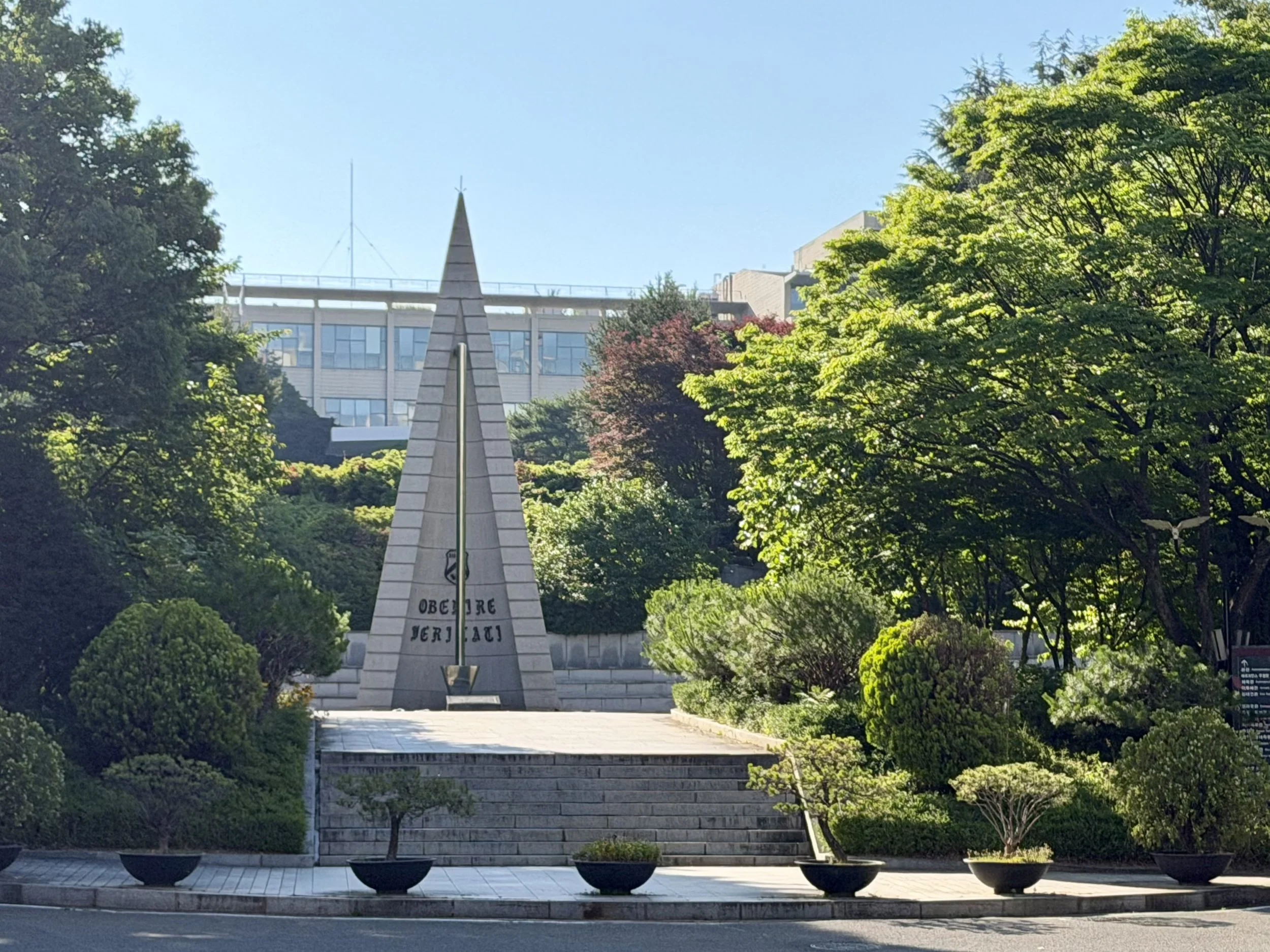
Entrance to Sogang University in Seoul, South Korea
My husband told me many times that I wasn’t “putting all that knowledge onto the tongue”, meaning: I wasn’t speaking out loud and forming sentences. Although I had tried to have conversations with my husband and Korean friends, the mind-mouth connection needed for spontaneous conversation just didn’t happen and I always ended up frustrated and embarrassed. Perhaps I needed a neutral place to practice; a classroom setting where I could make mistakes with abandon. Enter Sogang University’s Korean Language Education Center (KLEC), renowned for its emphasis on speaking.
I knew about the program for years, but could never justify the time commitment necessary to enroll for a 3-month semester in Seoul. This year, however, I was retired from my career and we were already planning to spend the summer in Korea. Before the first week of January ended, I hired a speaking tutor and began the registration process for Sogang University’s KLEC summer semester program.
For a While, It Worked
After a writing and speaking assessment, I was placed into Level 3, which is Low Intermediate. Class started on a sunny weekday in early June. The classroom was arranged in four little pods of four desks, group-learning style. Our fifteen-person class included students from eleven countries across Asia, Europe, and Africa — and me, the lone American.
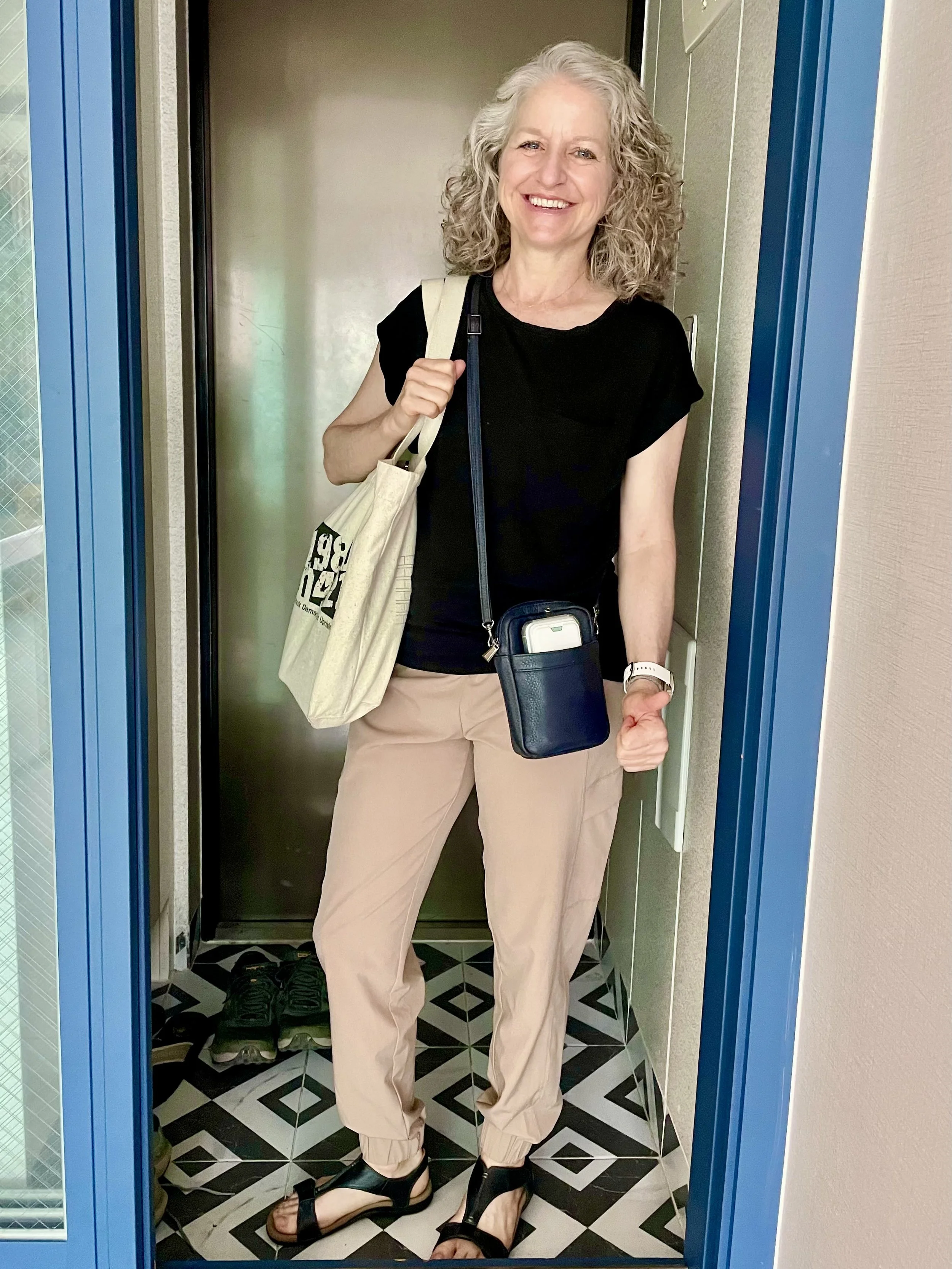
First day of class! Smiles!
As we waited for the teacher, the room buzzed with Korean as we made informal introductions in the only language common among us all. I was so impressed at everyone’s willingness and eagerness to speak Korean! This was unlike other classes that I had attended in the past, where students were embarrassed and reluctant to speak.
Sogang is excellent at instilling the discipline of speaking only Korean in its classrooms. From the opening drill on day 1, it was full Korean immersion. After learning a couple of grammar points, we practiced dialogue patterns aloud and incorporated new vocabulary. Grammar points we learned in the morning carried over into the listening, reading and writing, where more vocabulary and more sophisticated uses of the grammar points were also added.
This was the general pattern, five days a week, four hours a day, for three months: Learn, Speak, Expand.
Fast Pace, No Individualized Coaching
I had deliberately chosen Sogang University’s program because it is famous for its emphasis on speaking. Initially, it seemed to be exactly what I needed: I was talking! Korean only! Memorizing Dialogues! Drills!
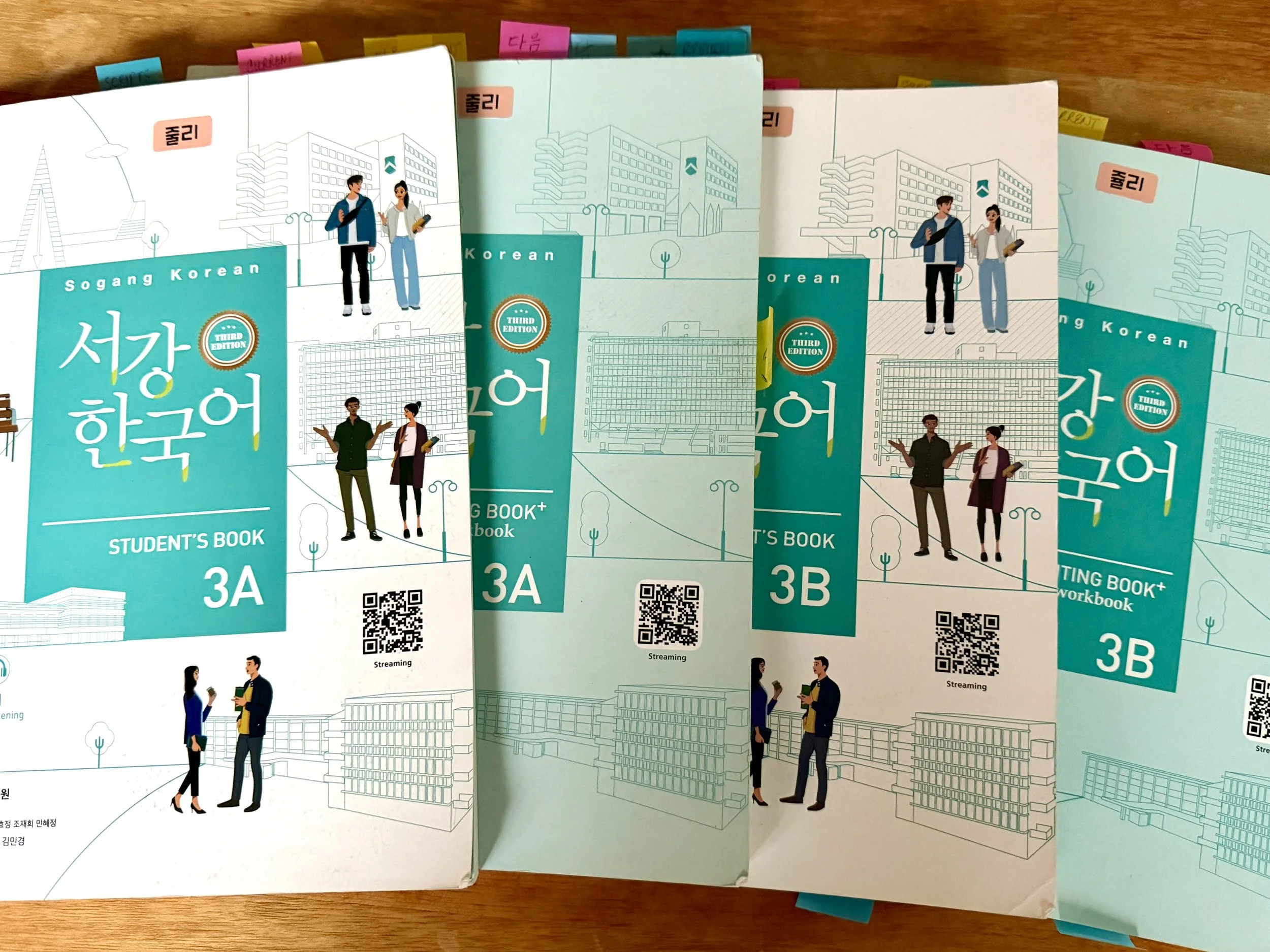
Levels 3A and 3B in one semester
Soon, however, the pace began to feel rushed — not just for students, but also for the teachers. We had 10 instructional weeks to cover 16 chapters, nearly 35 new grammar points and over 600 vocabulary words. Teachers must continue moving forward, “on schedule”. Our teachers rushed in and out of class, punctually and diligently led every drill in the book, insisted on our rapt attention — but had little time to give students individualized attention or native speaker feedback. It simply isn’t built into the curriculum. Our homework was in written form and most of our speaking drills were done in student pairs or groups with little to no teacher observation.
Without the teacher’s coaching, the performance bar was unclear. Were we doing well? Were we improving? In classroom drills, we spoke a lot, but it felt uni-directional: no meaningful eye contact as we practiced from scripts or prompts, no subtle indication of understanding or confusion that occurs when two people talk naturally, no correction of mistakes. We simply did the drills. I was speaking more Korean than ever before, but I began to sense that speaking a lot and learning to speak better are not quite the same thing.
The Mid-Term Turning Point
As part of the mid-term exams, each student has a 15-minute one-on-one speaking interview with the teacher. I expected that this interview would be my opportunity to showcase all that I had learned up to that point and receive helpful feedback from the teacher on what to focus on in the second half of the semester: pronunciation, grammar use, colloquial expressions, etc. I was immensely disappointed. The interview ended up being another one-way exchange. The teacher asked questions, I answered. She gave no acknowledgment of understanding, no helpful recommendations - not even a grade or score by which I might get a sense of “good” or “bad”! I left the room without any sense of where my speaking skills fell on the assessment standard, nor any clear indication of what to improve.
The same was true with the Listening test. It was mostly multiple choice, so a few good guesses went a long way towards a passing grade. In fact, though, I didn’t understand a large portion of the listening test! In class, our listening practice often rewarded script memorization over comprehension in our own words. On the test, dialogues were faster, there were no scripts, and questions required real comprehension. I felt ill-prepared. After the mid-term exam, I knew that my listening skills were weak but I had no diagnostic feedback about where I was struggling or how to improve.
At the same time, our teachers regularly reminded us that failing a level was normal and that repeating the semester was always an option. I understand that language learning doesn't happen on a fixed schedule and advancing students who aren't ready doesn't do us any favors. But from the student side, the message lands differently. For adult students paying tuition and housing and forgoing other opportunities in order to learn Korean, “simply repeating a level” isn't a trivial statement. It’s actually demoralizing, especially in the absence of meaningful feedback about how to improve.
The second half of the semester was noticeably (awkwardly!) quieter and less engaging. Several students had not done well on the mid-terms and, worse, were unclear how to recover. The pace was catching up with us all. What had started as a very interactive, eager group of willing participants began to unravel. Students mumbled through exercises and were reluctant to participate. The energy in the room was gone and it felt like we — students and teachers — were just going through the motions. Even if teachers acknowledged the sour mood and lack of motivation, they didn’t seem equipped — nor was there time — to go off-script to remedy the issue.
This is when I realized that the Sogang program prioritizes keeping an entire class moving through a standardized curriculum in a precise format (we shall do every drill!); it is not designed to diagnose and address individual weaknesses. This was the mismatch between my expectation and the reality of a university-level classroom experience.
For students with a desire to master all aspects of the language - Reading, Writing, Listening, and Speaking - the Sogang KLEC program is rigorous and comprehensive; justifiably it needs to keep forward momentum as its priority. For a hobby enthusiast who just wants to improve conversation with friends and family, what I really wanted was more free-flow conversation practice, more opportunities to retrieve what I already knew and what I was currently learning, make mistakes, be corrected, and repeat. This kind of individualized coaching is difficult to provide consistently in a classroom of 15 students with varying abilities and aspirations. On a positive note, though, that is a revelation that came only by attending the class; I didn’t actually know what I wanted or needed until I didn’t get it.
The Reality of Being Age 54 in a Class of 20-Year Olds
Age has never stopped me from trying new experiences and it wasn’t really a concern of mine when I enrolled at Sogang. Still, though, I had hoped to meet one or two students at a similar stage of life. The reality was that all the other students were 30 years my junior! I was 54 years old, in a class with students whose ages ranged from 17(!) to 27.
While the students were genuinely lovely people, kind and respectful to me, a “friend” connection proved difficult. The age gap was simply too wide for shared experiences. While they were deciding what career to pursue, I'd already had one. While they were ogling K-pop stars on Instagram and attending weekend “fan signs”, I was celebrating a 20-year marriage — and looking up the definition of a “fan sign”.
For me, the life stage mismatch felt a bit isolating. I had hoped to find a study-buddy or a language partner — maybe even a friend — but a peer community never really transpired for me.
So Am I a Better Speaker Today?
To be truthful, I have improved my speaking. I survived 4 hours a day of Korean immersion for three months. At home, I now speak to my husband more in Korean than ever before and I understand more of the conversations I hear around me. I’m less afraid of making mistakes and I have learned how to think grammatically in Korean. I feel more capable of having spontaneous conversation than ever before. I think the most important take-away from my Sogang experience, though, is that it crystalized for me exactly what I want and need to progress further toward my goals.
Although I passed Level 3, I won't be enrolling in Level 4. We covered a breadth of useful material that I don't feel I've fully absorbed. Rather than pile Level 4 on top of it, I want to go through Level 3 again in my own way, with native speaker support — this time focusing almost entirely on listening and speaking until I can retrieve what I already know without working so hard. I still have several months left to harness all that ambition, action and courageous transformation promised in the Year of the Fire Horse, so I’ll keep focused on the goal I set on that wintery day in January.
After twenty years of learning Korean, I finally understand what my husband meant. The language is in my head. Now I have to spend the remainder of the year putting it on my tongue.