Seville: Layers of Continuity, Not Conquest
We began our time in Seville with the requisite walking tour. Scurrying through the tight, confusing maze of cobblestone streets know as Centro, our knowledgable guide did her best to distill two millennia of history into two hours: the Phoenicians as the area’s first settlers, Roman conquerors, the Visigoths who planted the seeds of Catholicism, the expansion of the Umayyad caliphate and cultural legacy of Islamic Al-Andalus, wrapping up with the Reconquista and the dawn of Seville’s golden age of exploration as the grand finale. It was all neat and tidy, a broad brush timeline with which to orient ourselves.
Click any photo for a larger slideshow…
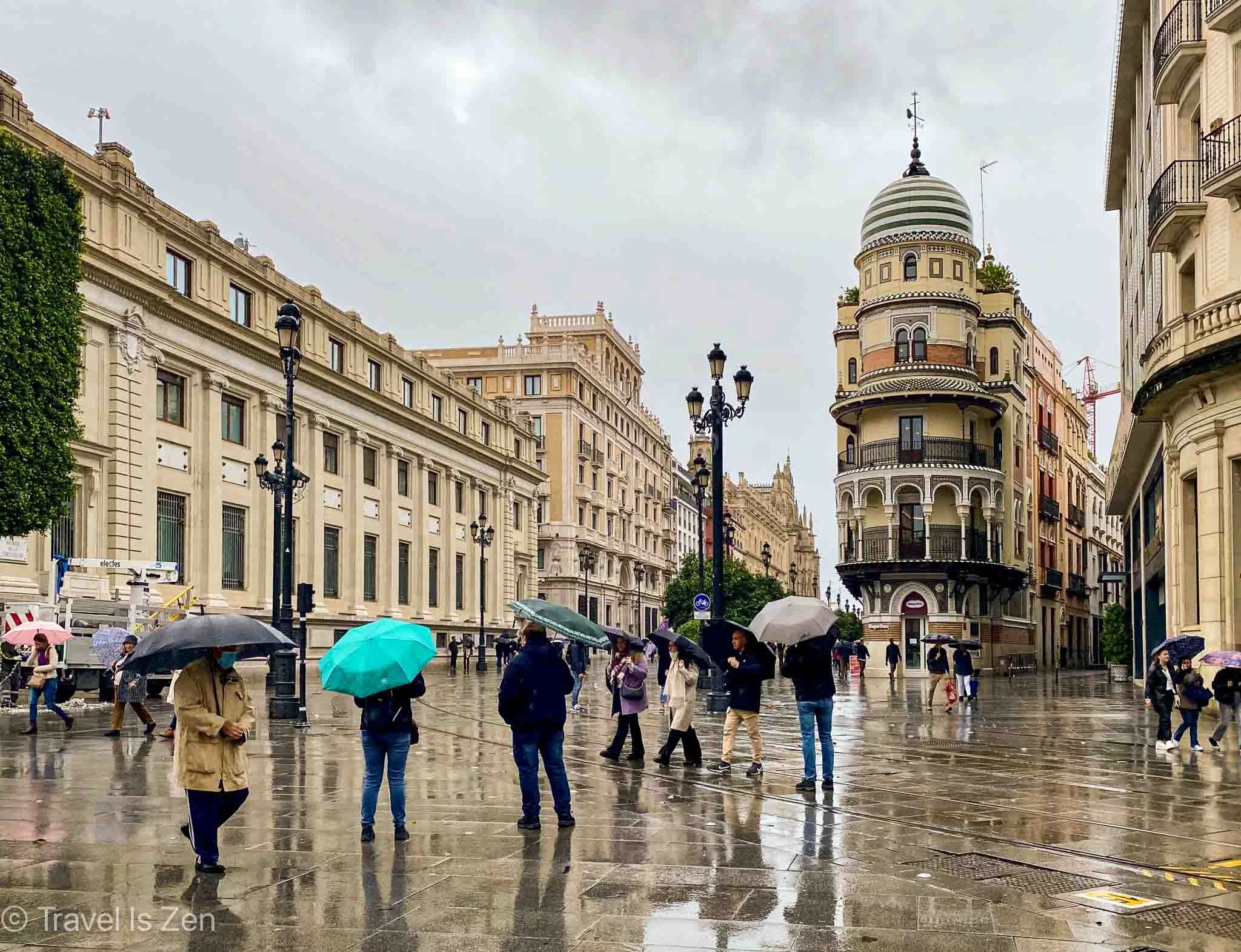
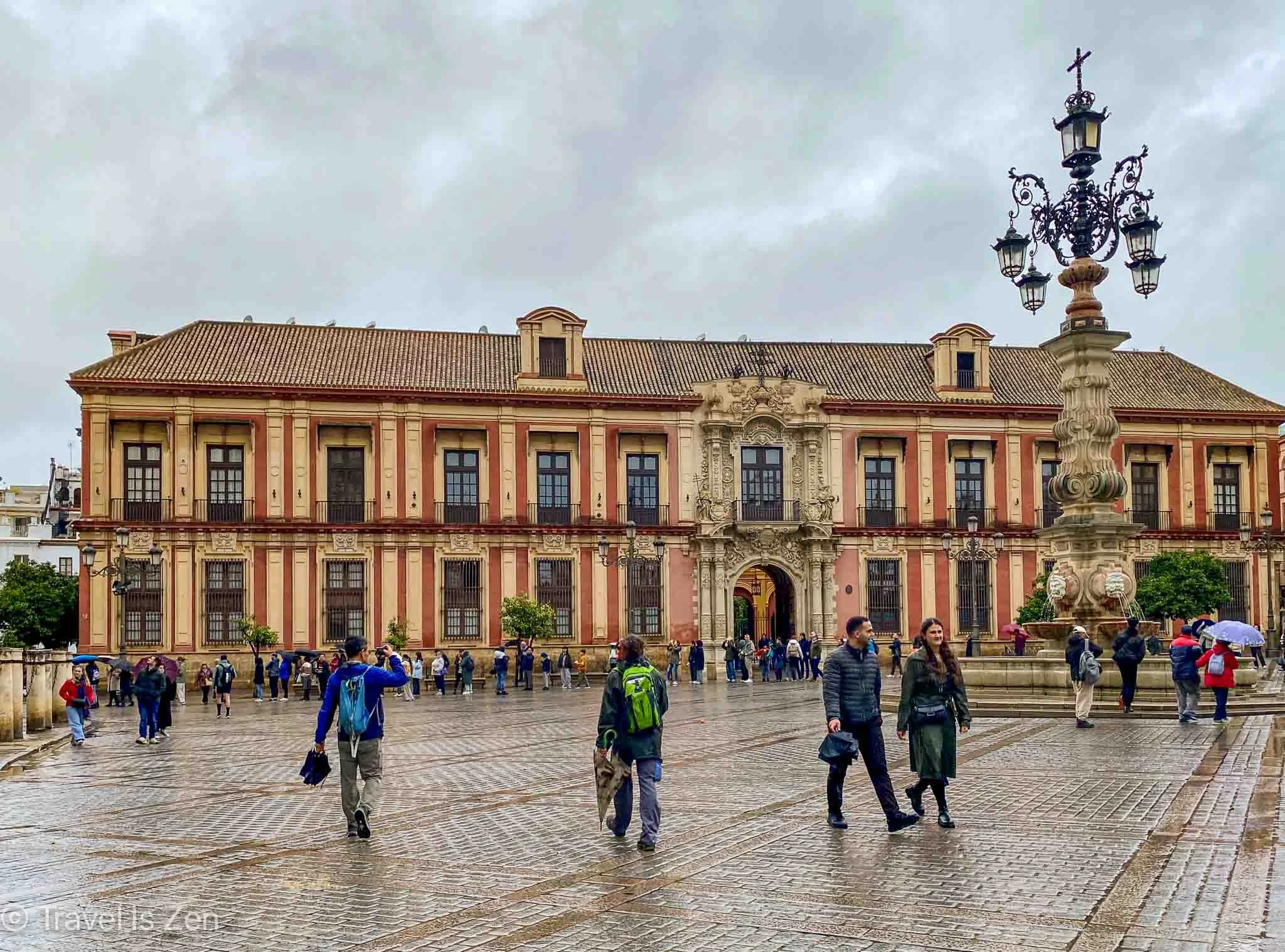
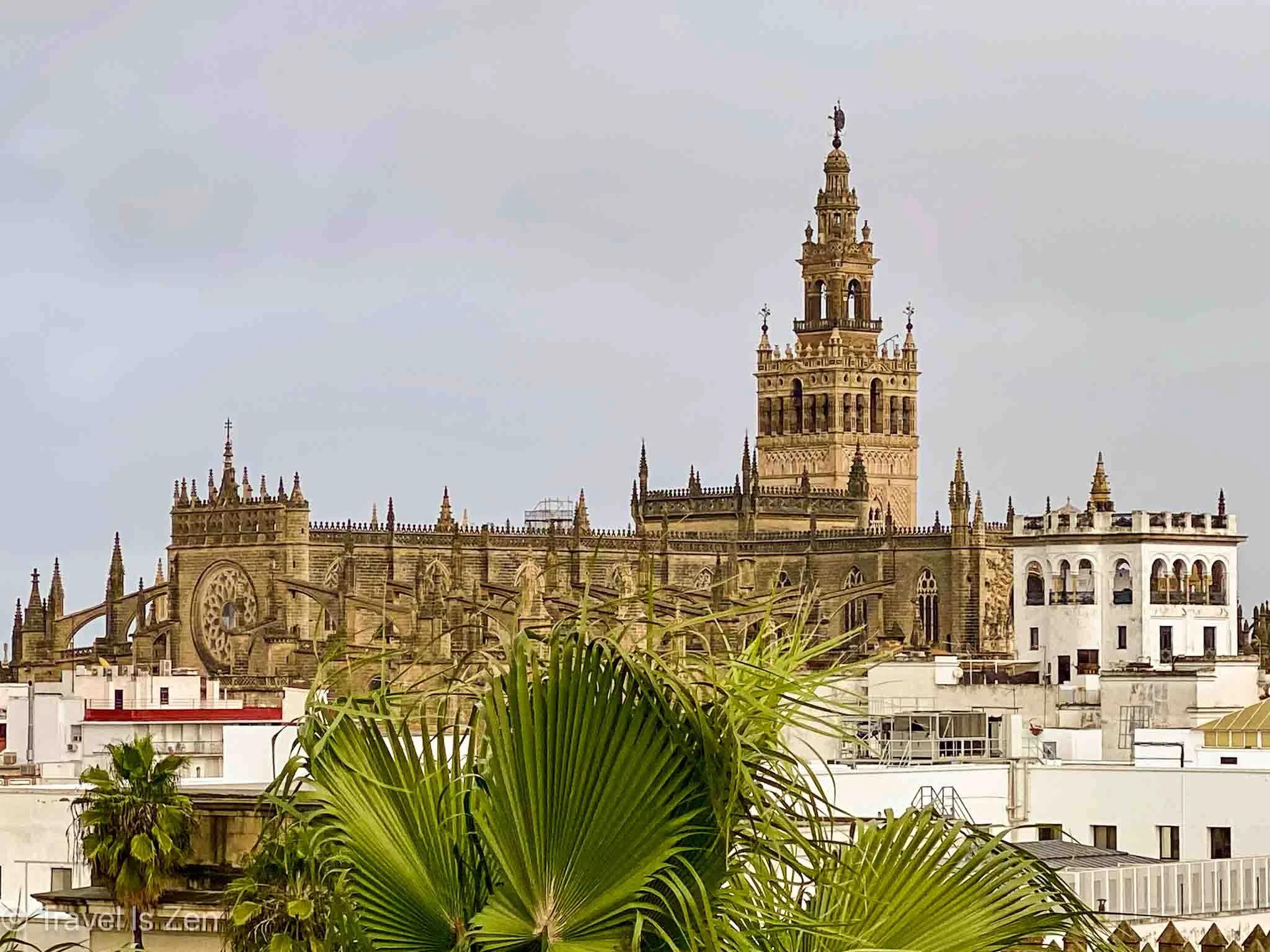
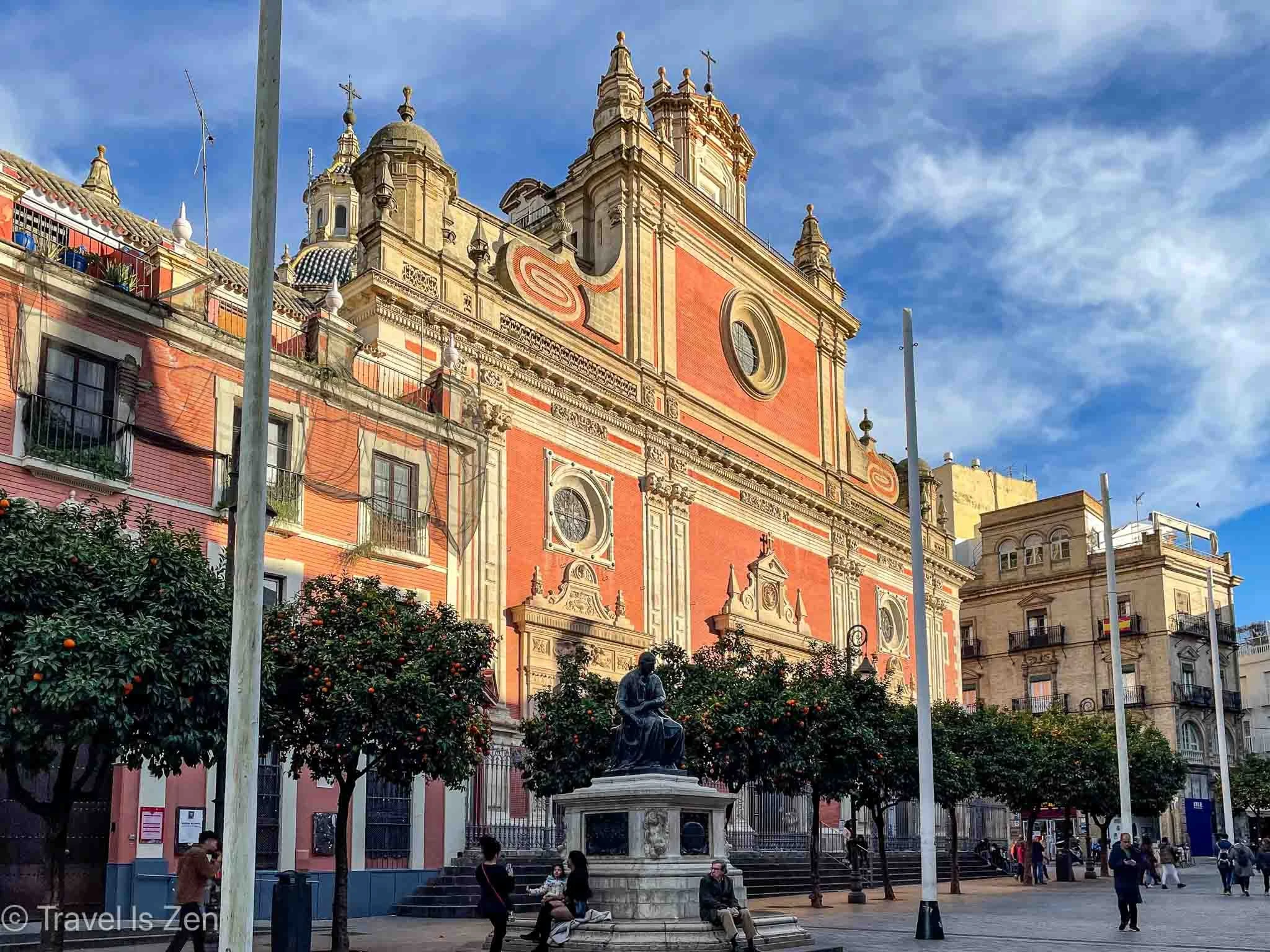
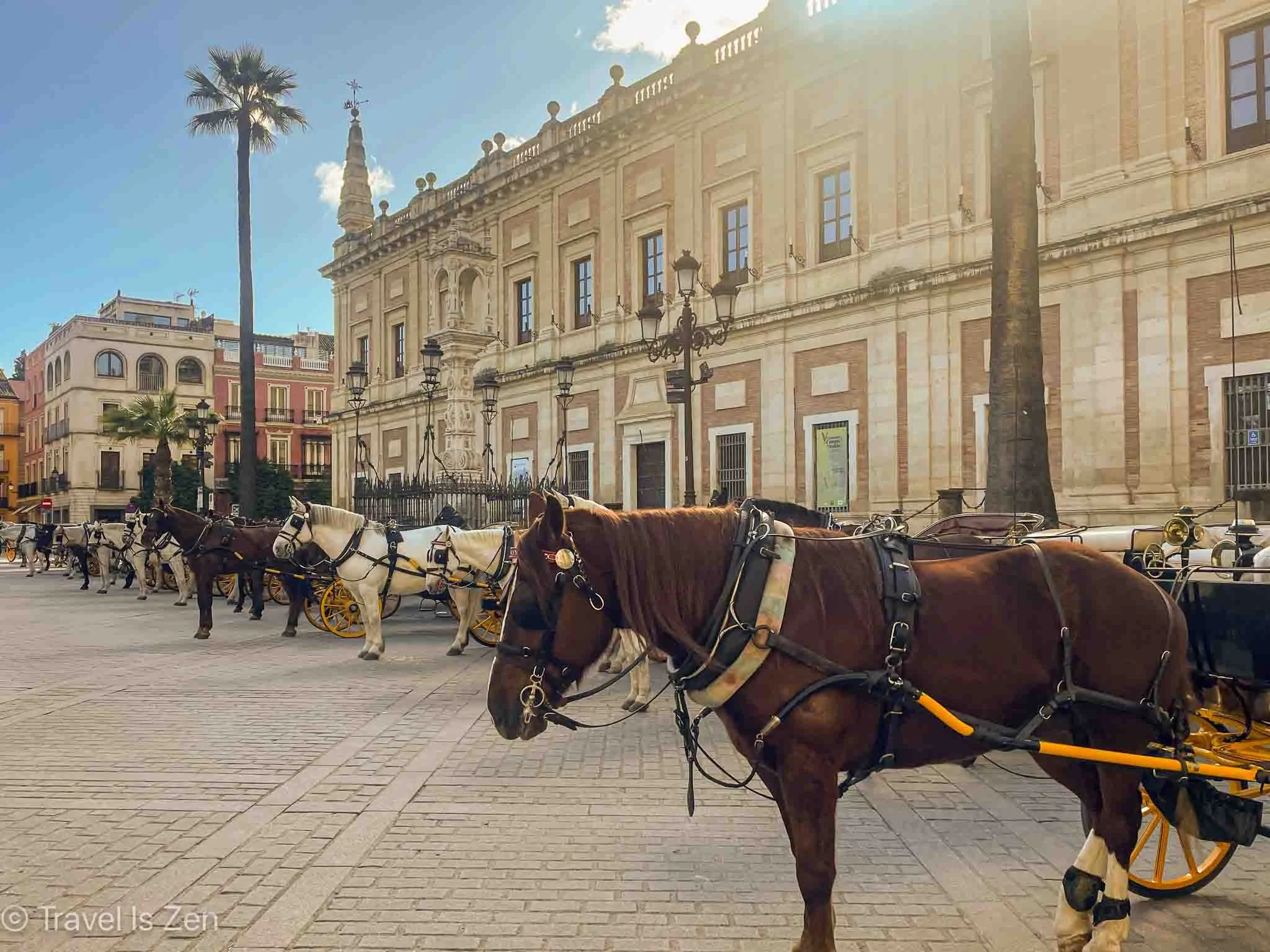
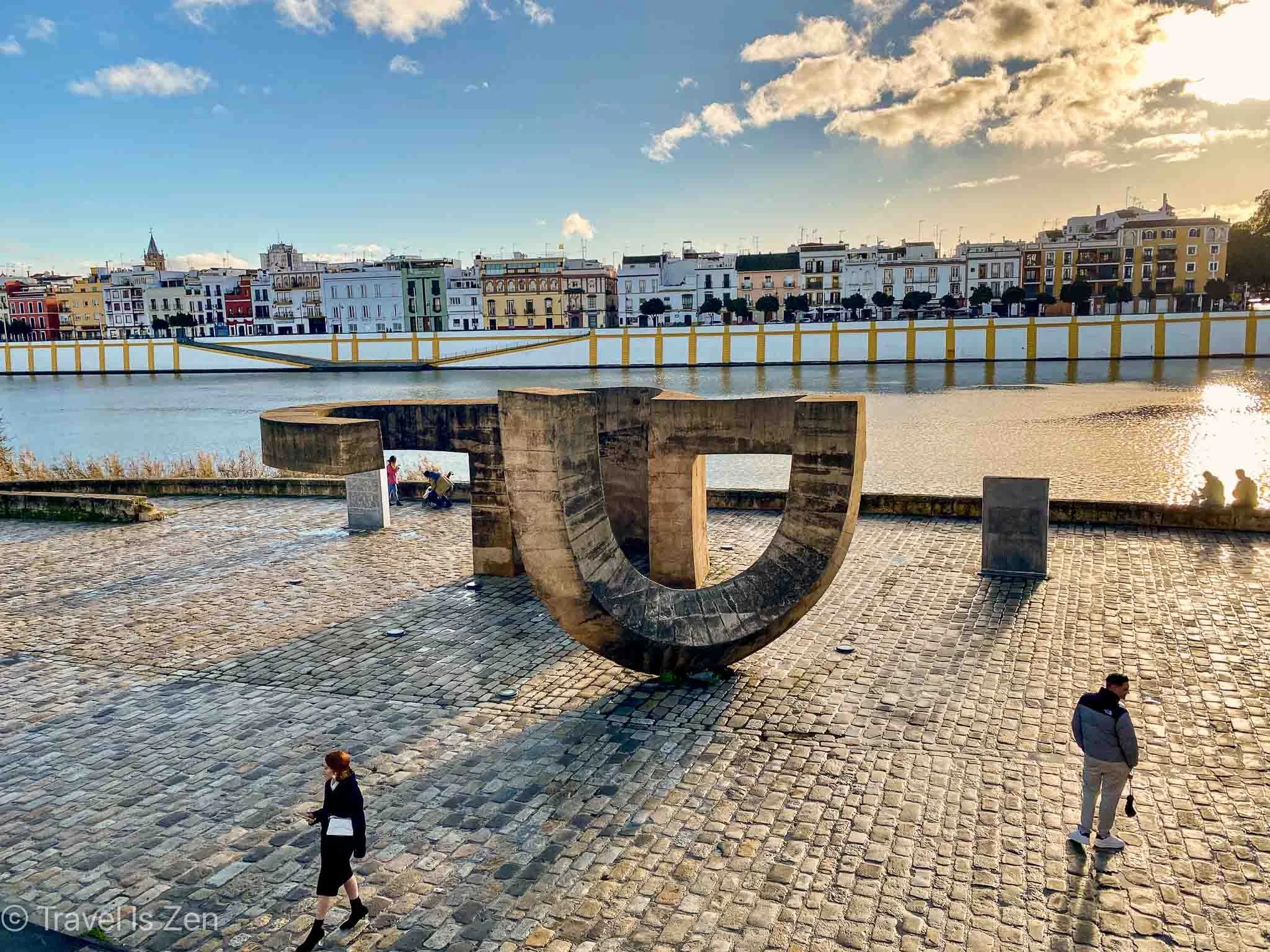
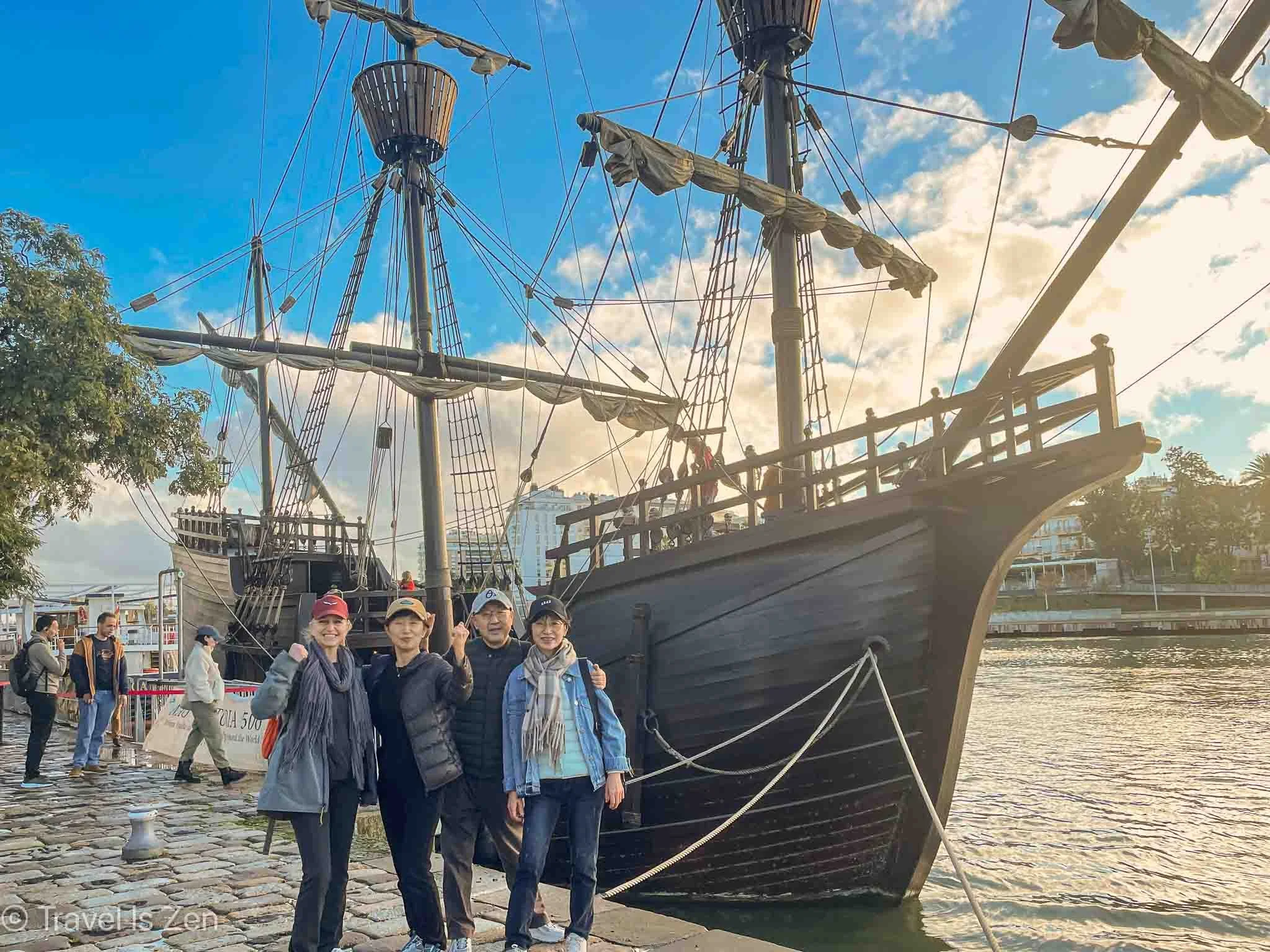
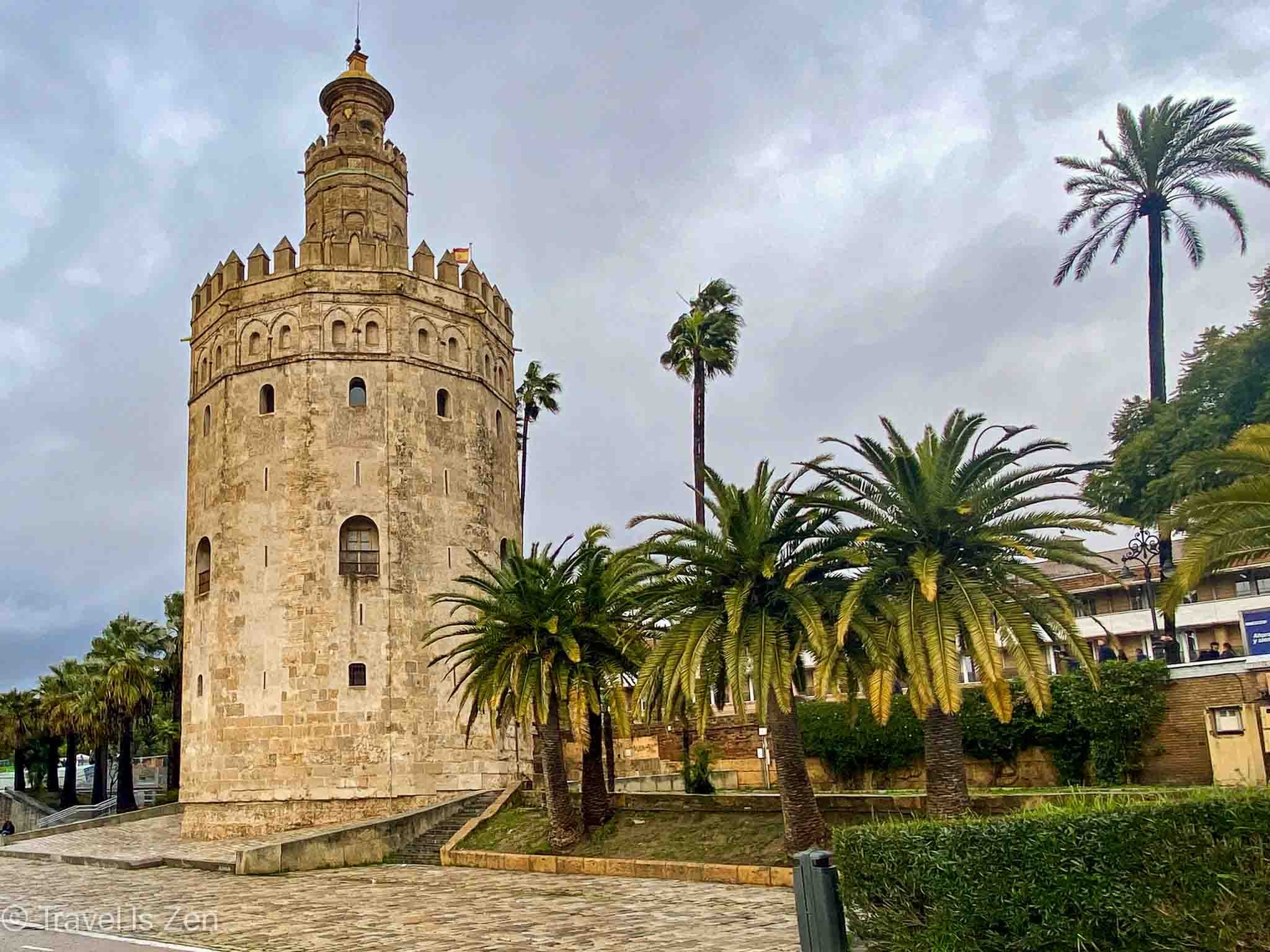
Over the next couple of days, we deep-dove into the details, visiting the Real Alcázar and the former-Mosque-turned-Grand-Cathedral. In trying to decipher “who” built “what”, the neat tidy timeline began to dissolve into something much more layered and nuanced.
Real Alcazar
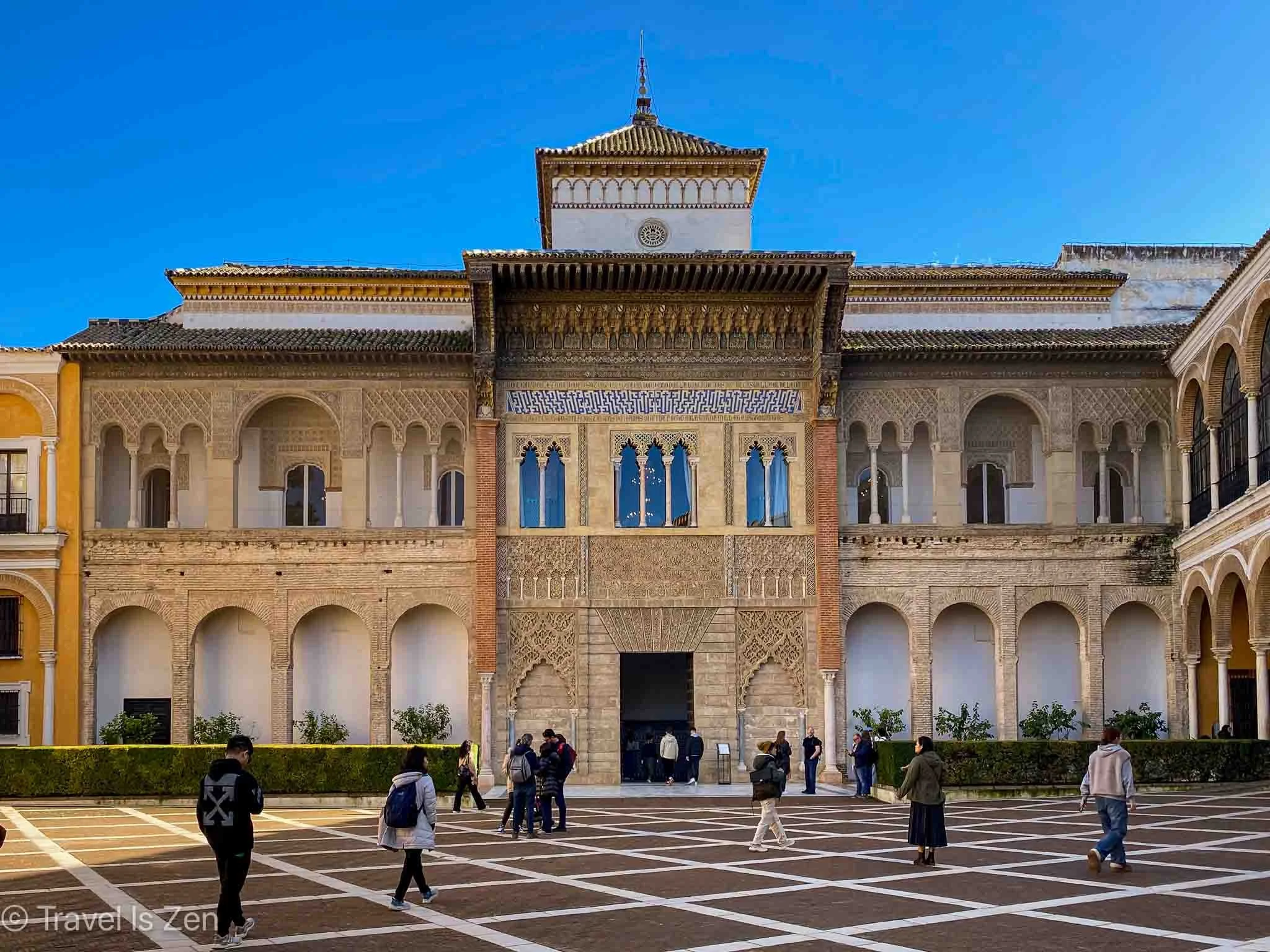
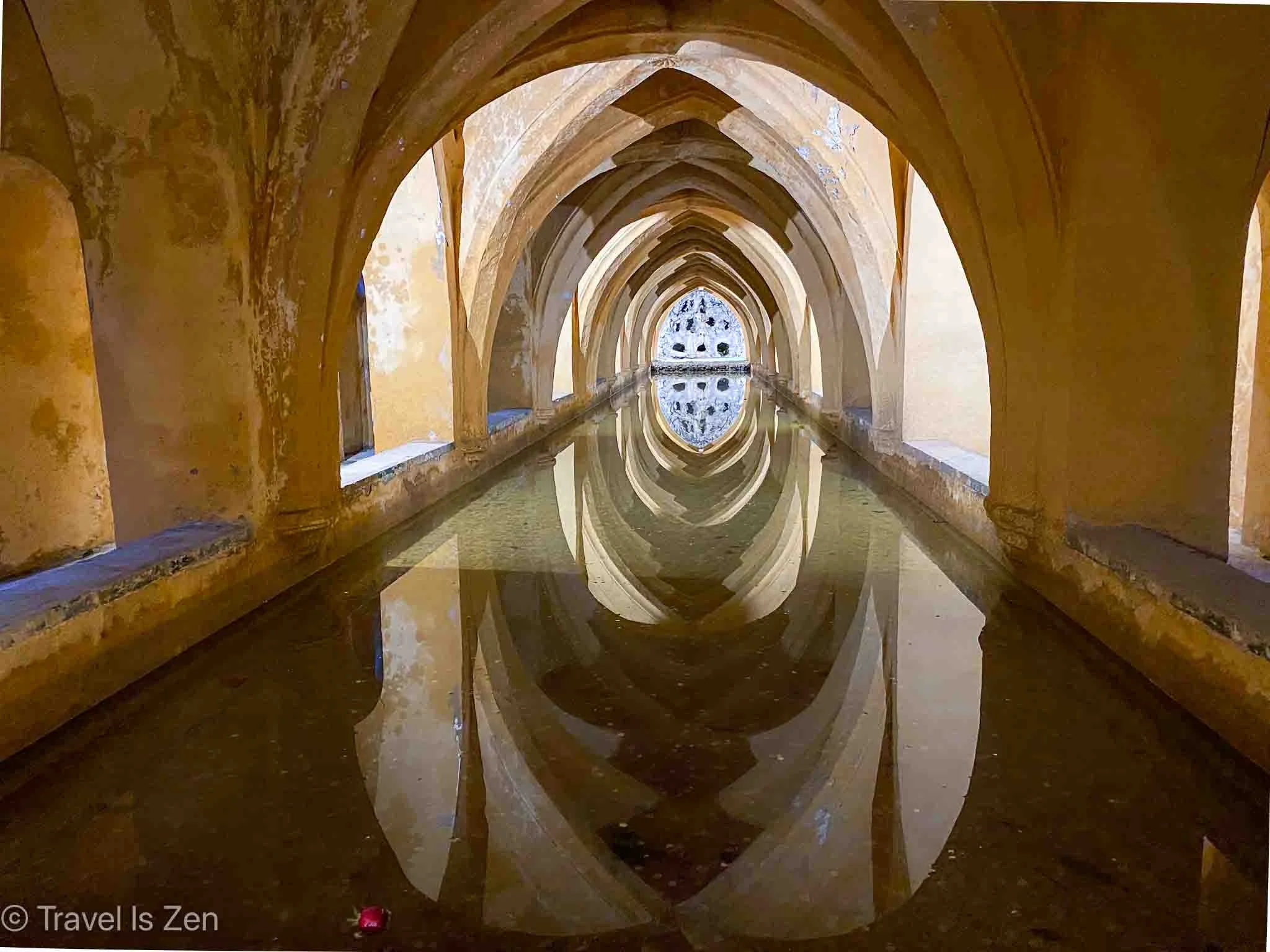
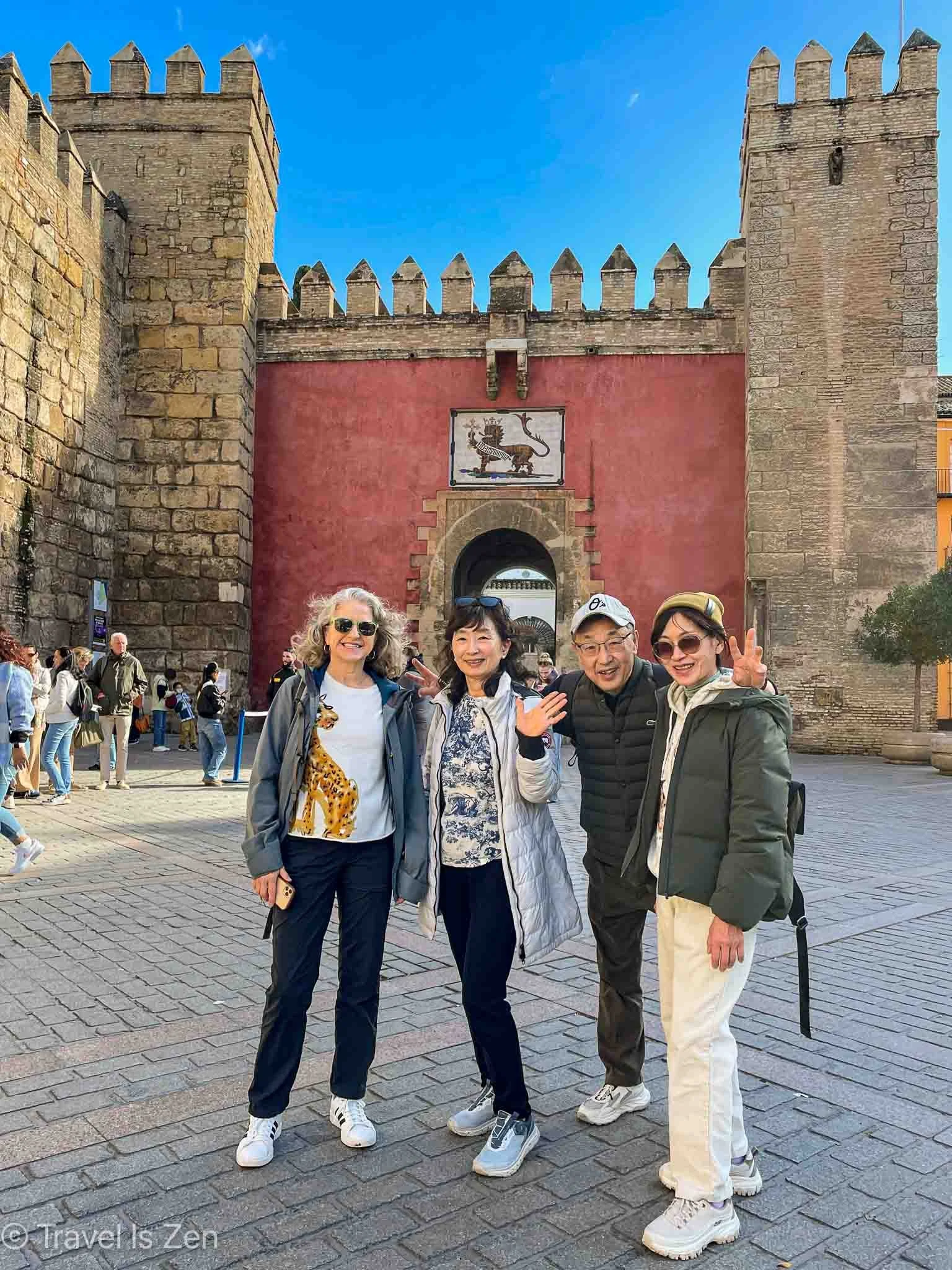
While the original fortress of the Real Alcazar was built by the Umayyad caliphate in the 900’s to keep out the defeated Visigoths, it was expanded upon and enhanced by every new occupier:
The Abbasid Dynasty and then the Almohads added lavish residences, patios, and baths.
The reconquistador Alphonso X of Castile added a Gothic-style palace in the 13th century to suite the Christian court.
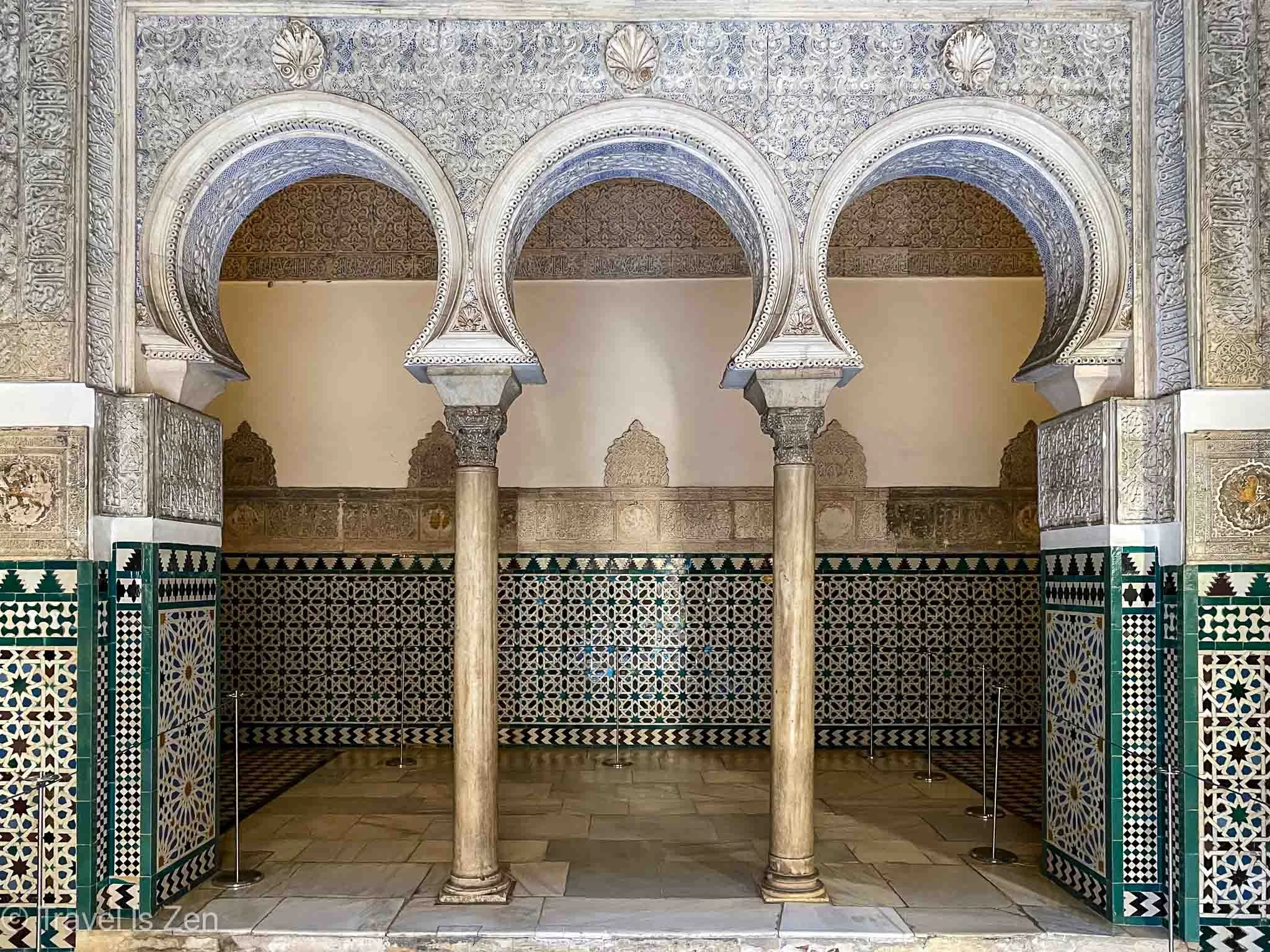
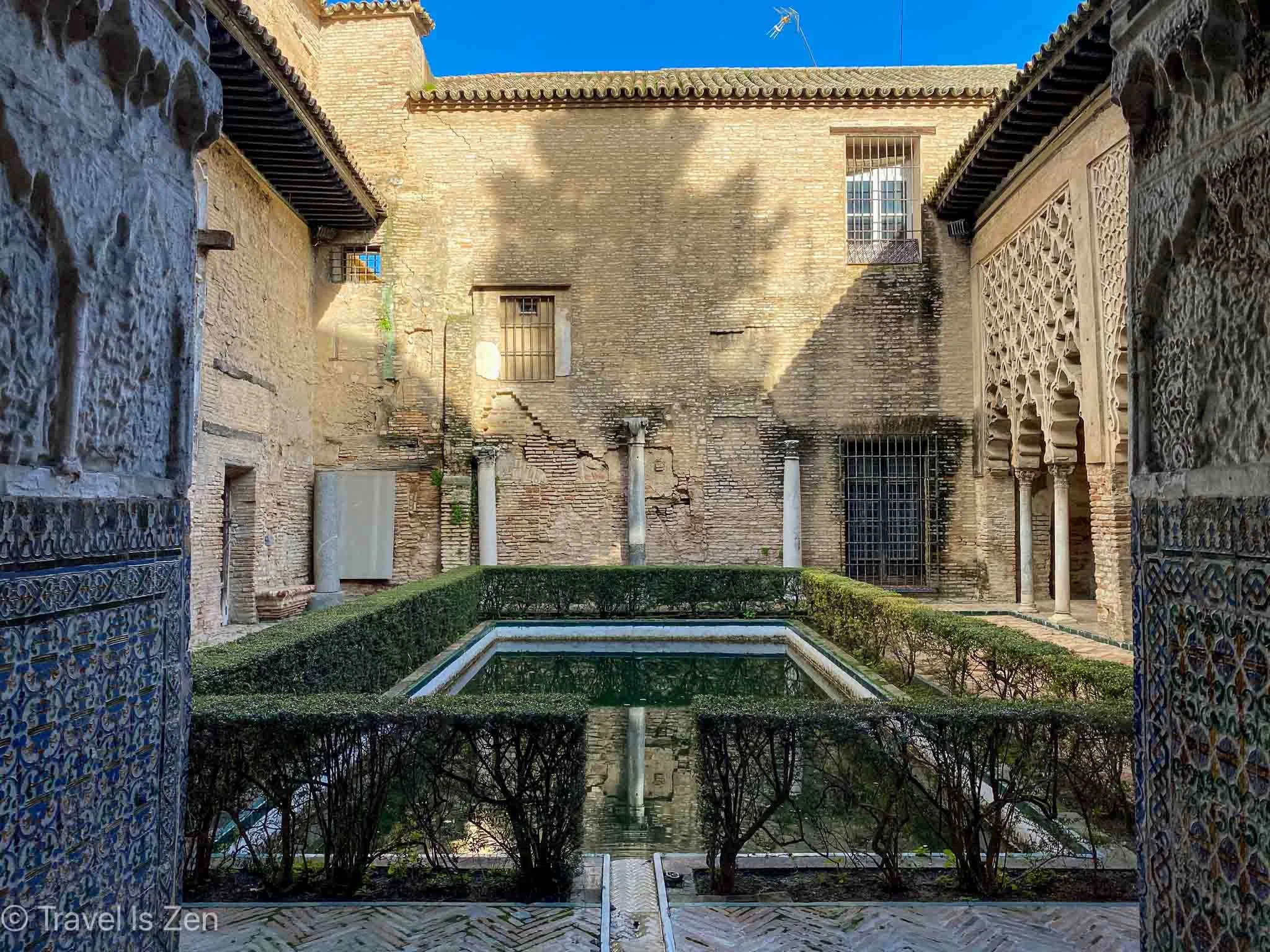
King Pedro of Castille in the 14th century enlisted Mudéjar (Muslim) artisans to refresh the styling, adding decorative calligraphy, geometric patterns with nearly-absurd mathematical precision, intricate lace and vine-like stucco, and honeycomb ceilings derived from Islamic / Moorish tradition.
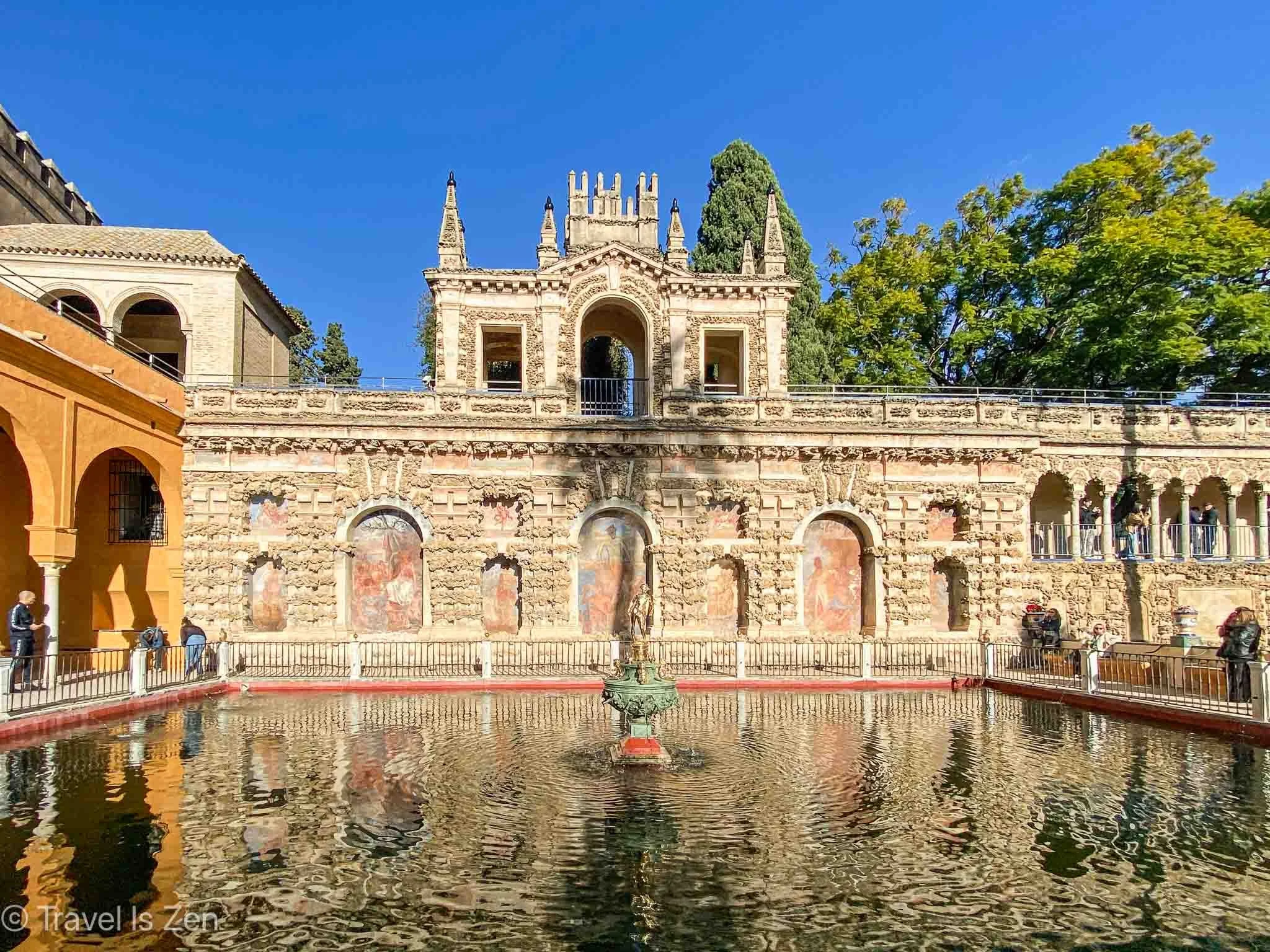
Ferdinand and Isabella embellished the place with trending 15th century Renaissance and Gothic details.
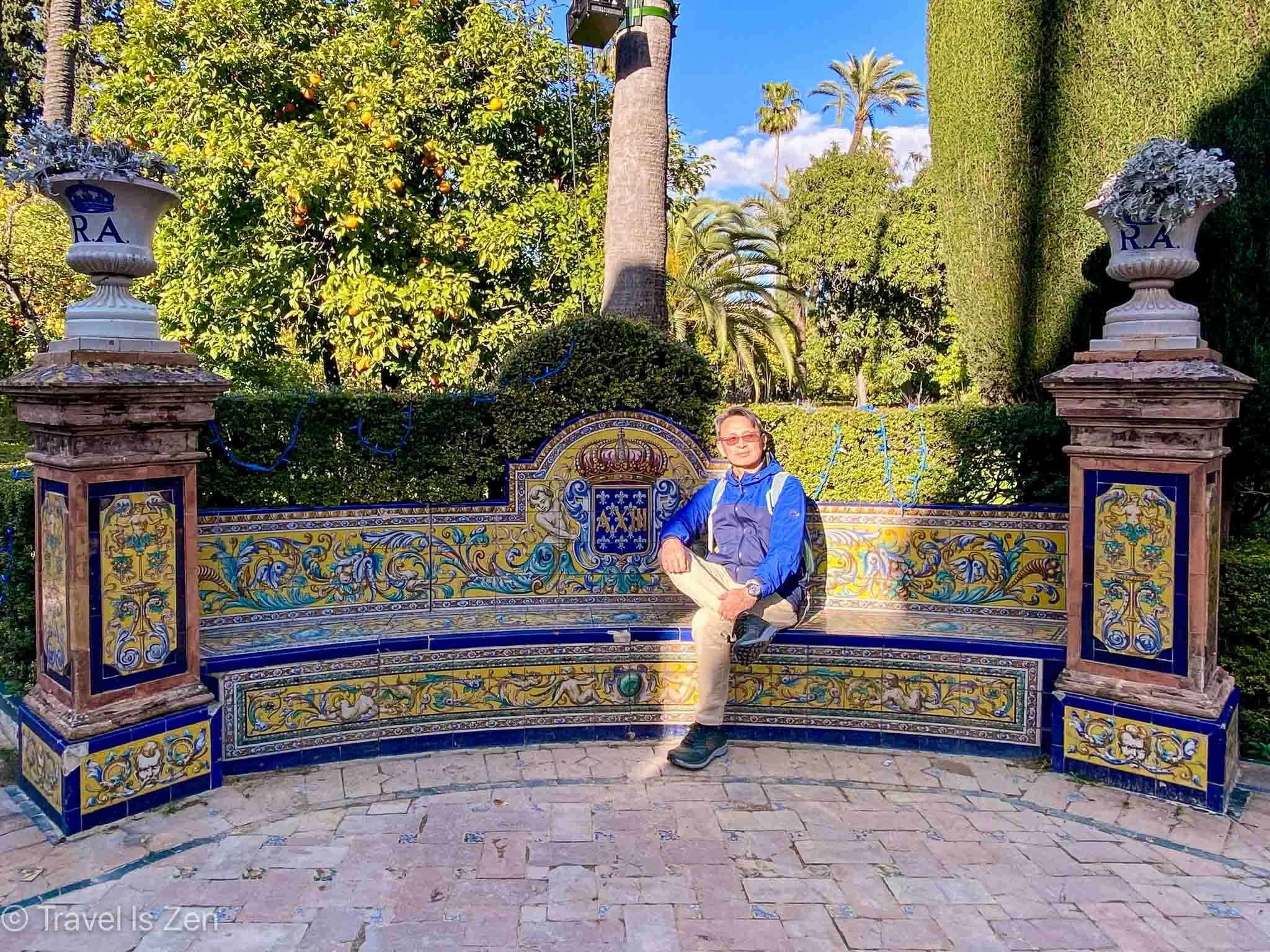
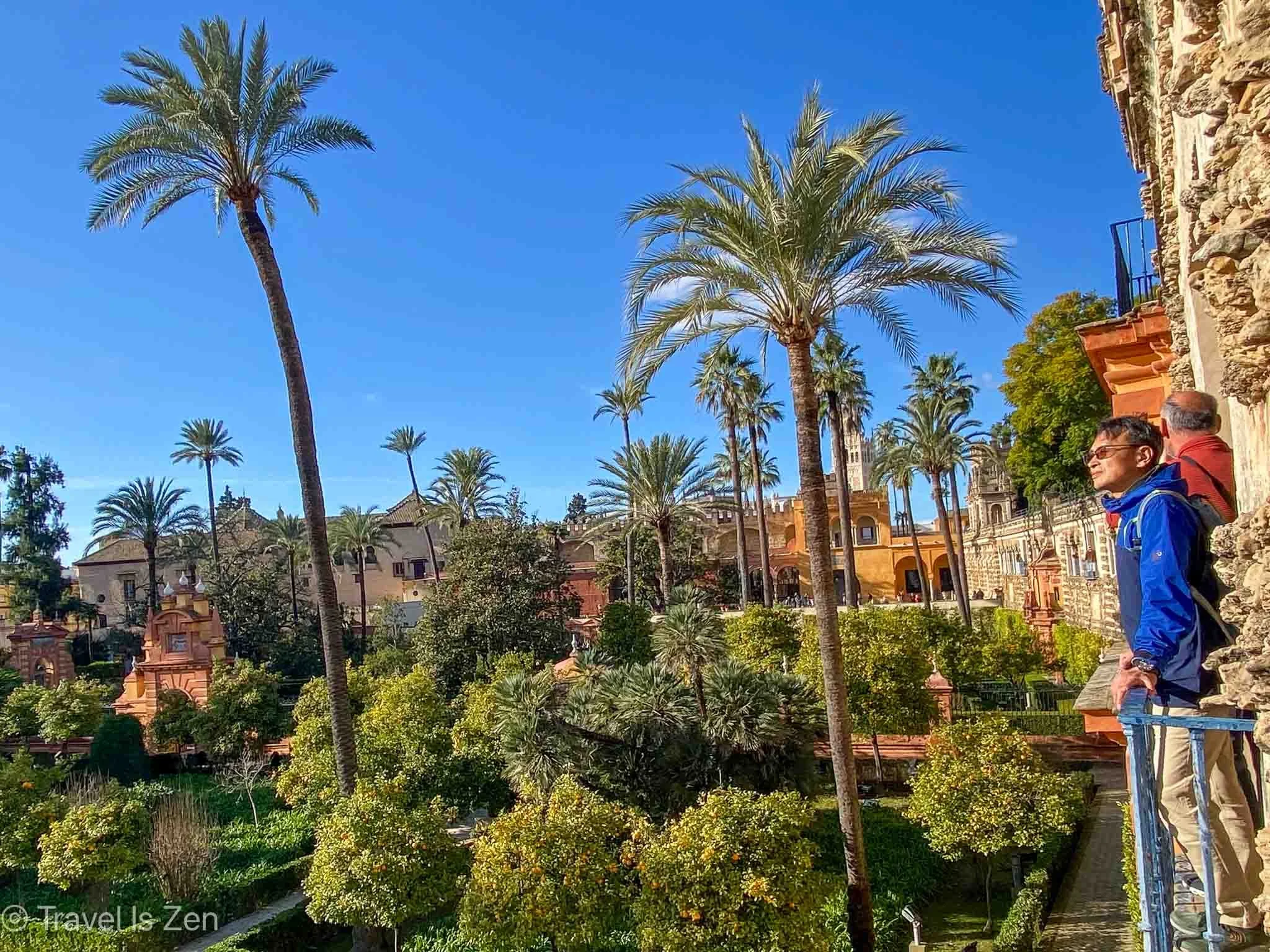
Every square inch of the Real Alcazar carries exquisite detail reflecting personal style choices across cultures and eras. This isn’t a monument immortalizing any one owner or period; it’s a living testament of taste, time, and tradition - a symbol of continuity, rather than conquest.
Seville Cathedral
The same with the Seville Cathedral. At first entry, the sheer scale of the former mosque-turned-cathedral humbles and awes, as only a place of prayer and worship is designed to do.
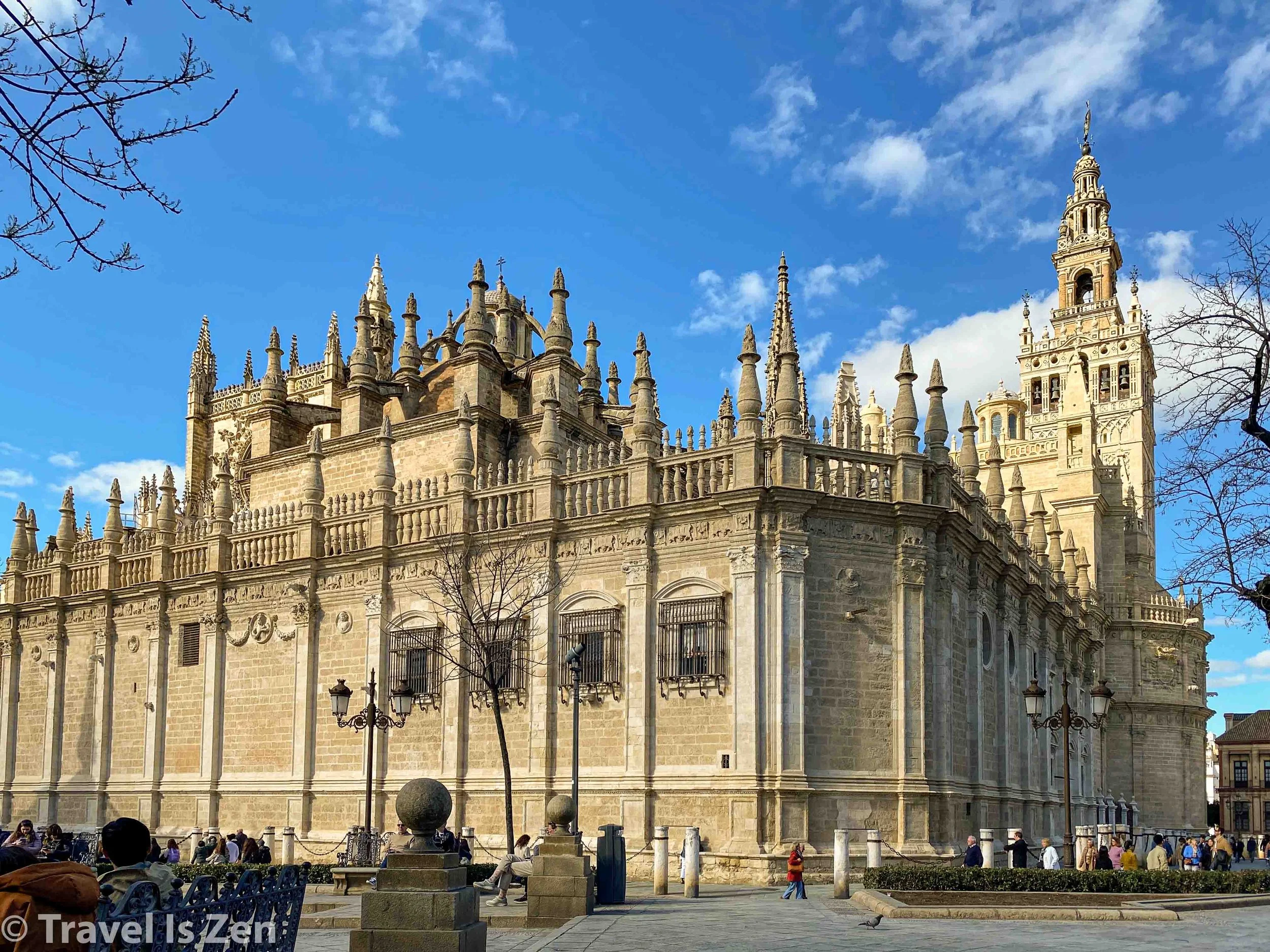
Seville Cathedral, Spain
Eyes up, scanning the main altarpiece, I felt it could take a lifetime (and binoculars) to fully investigate the dozens of gold-gilded, intricately-carved biblical scenes. Like the Alcazar, the cathedral layers Islamic, Mudéjar, Gothic, and Renaissance details: the original Islamic mosque’s domed interior, court of oranges, and Giralda Tower; the choir seats, stained glass windows, and main alter added by the Christian conquerors; the flamboyant tomb of Columbus in Gothic Revival; priceless works of Baroque and Romantic art by Goya, Zurbarán, and others; master gold and silver works by true artisans…
Click any photo for a larger slideshow…
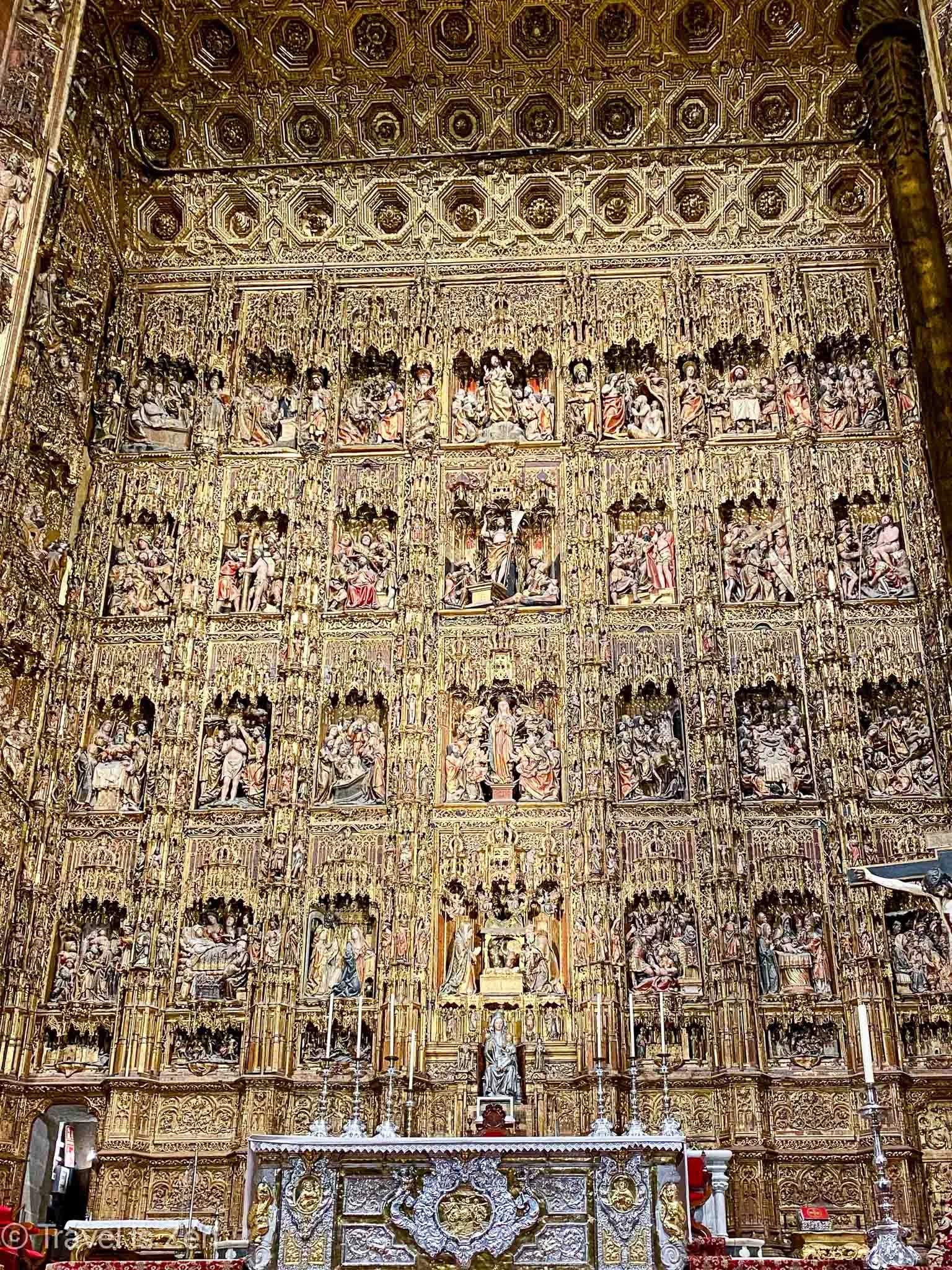
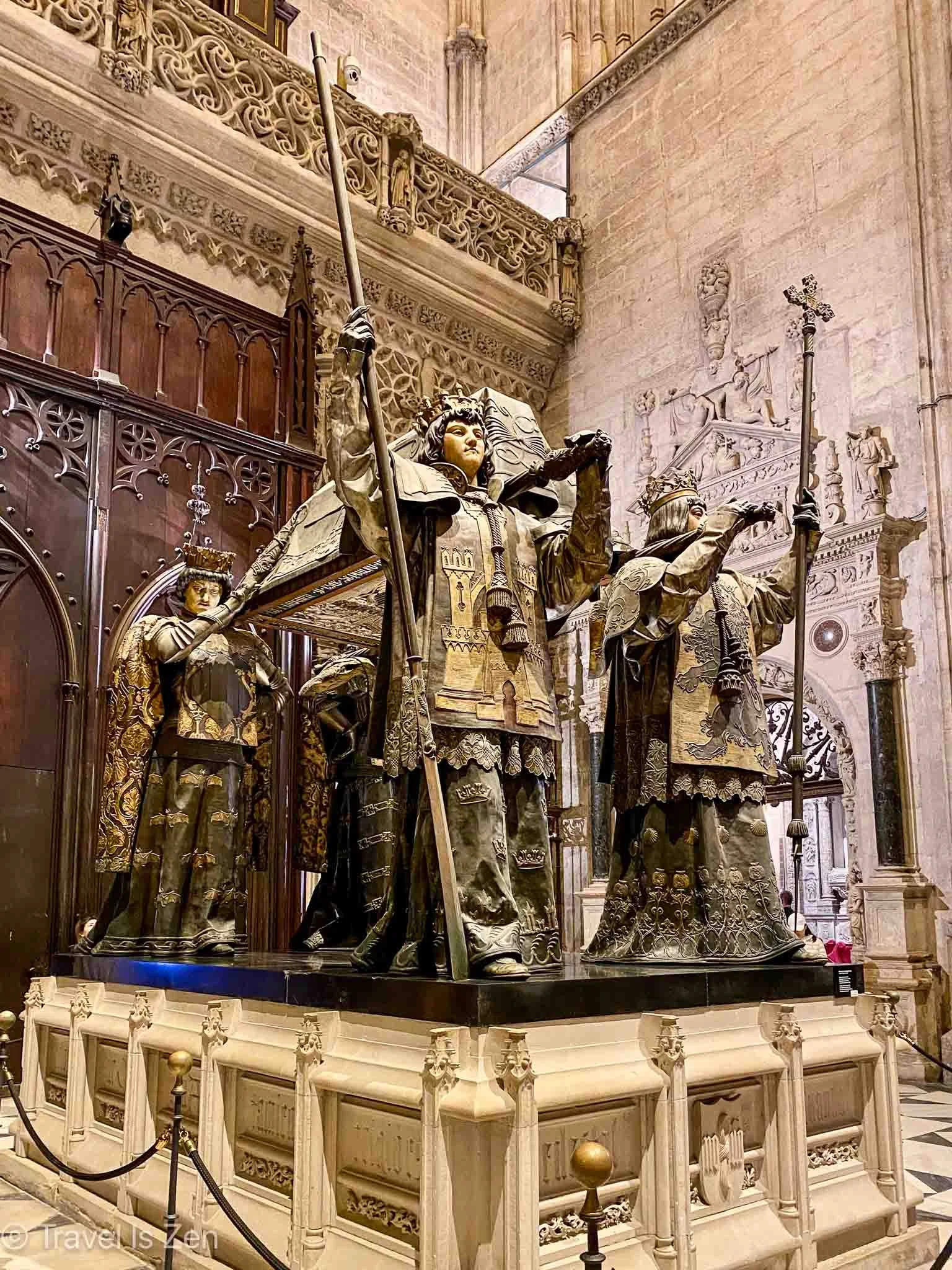
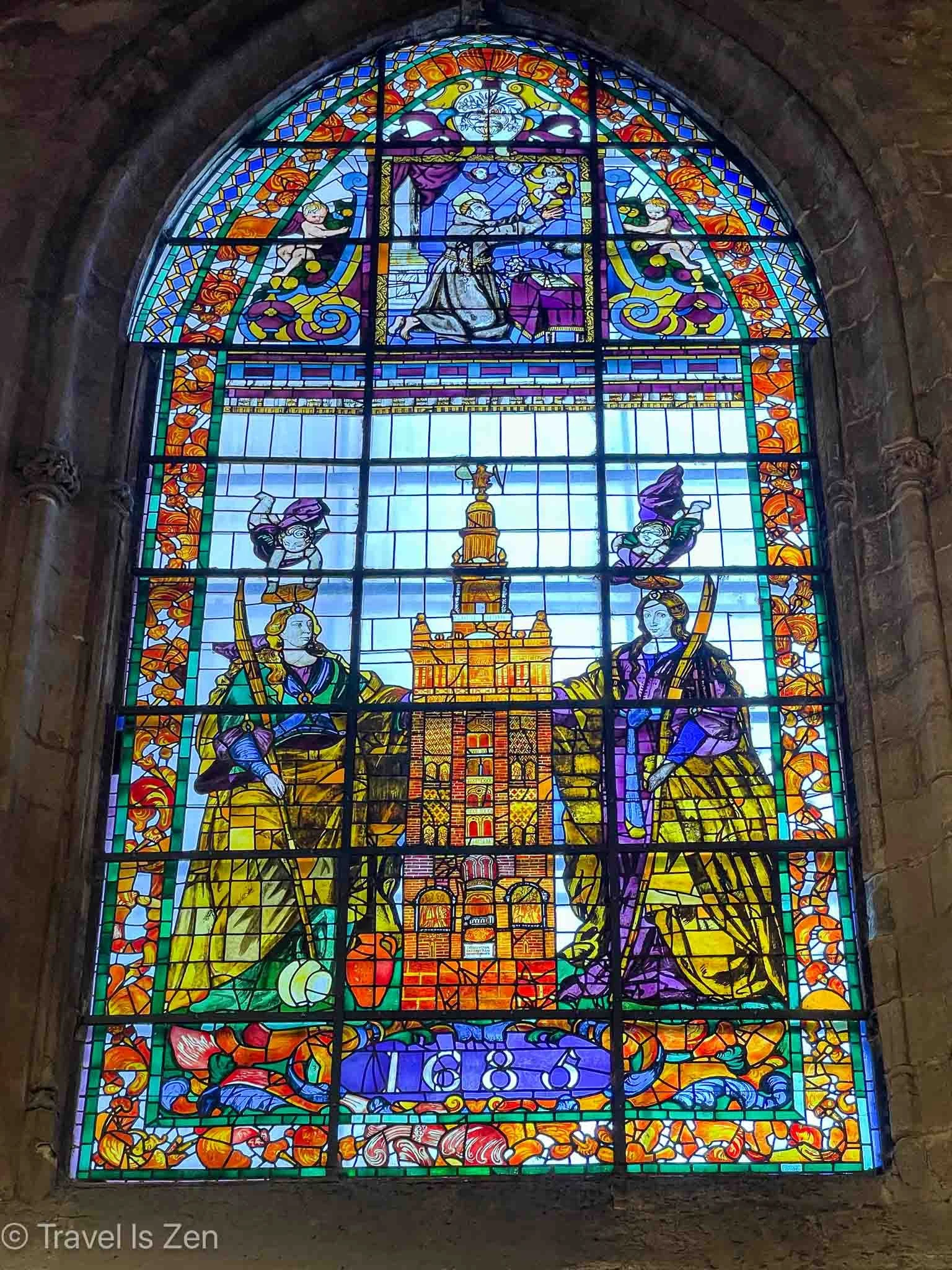
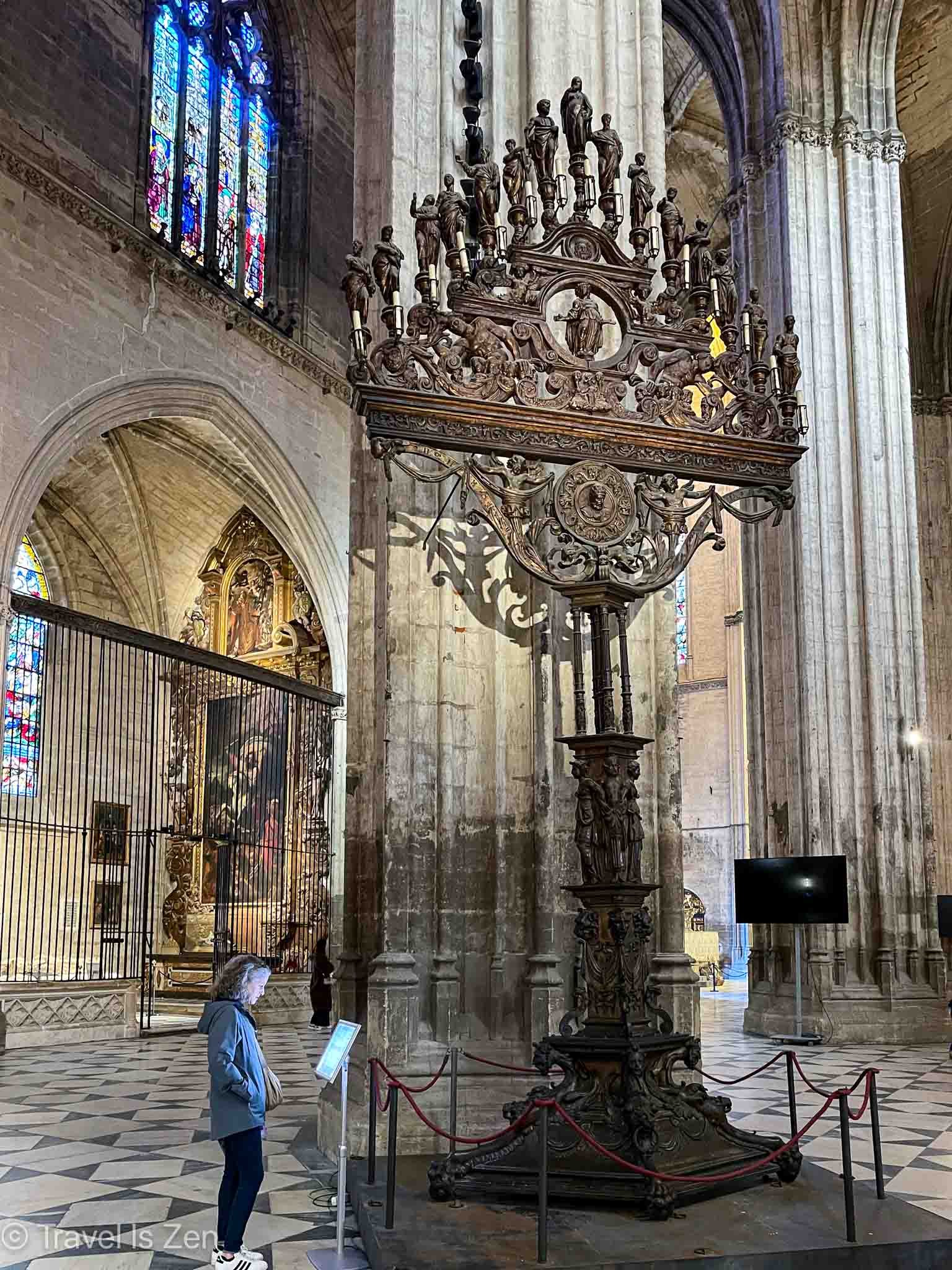
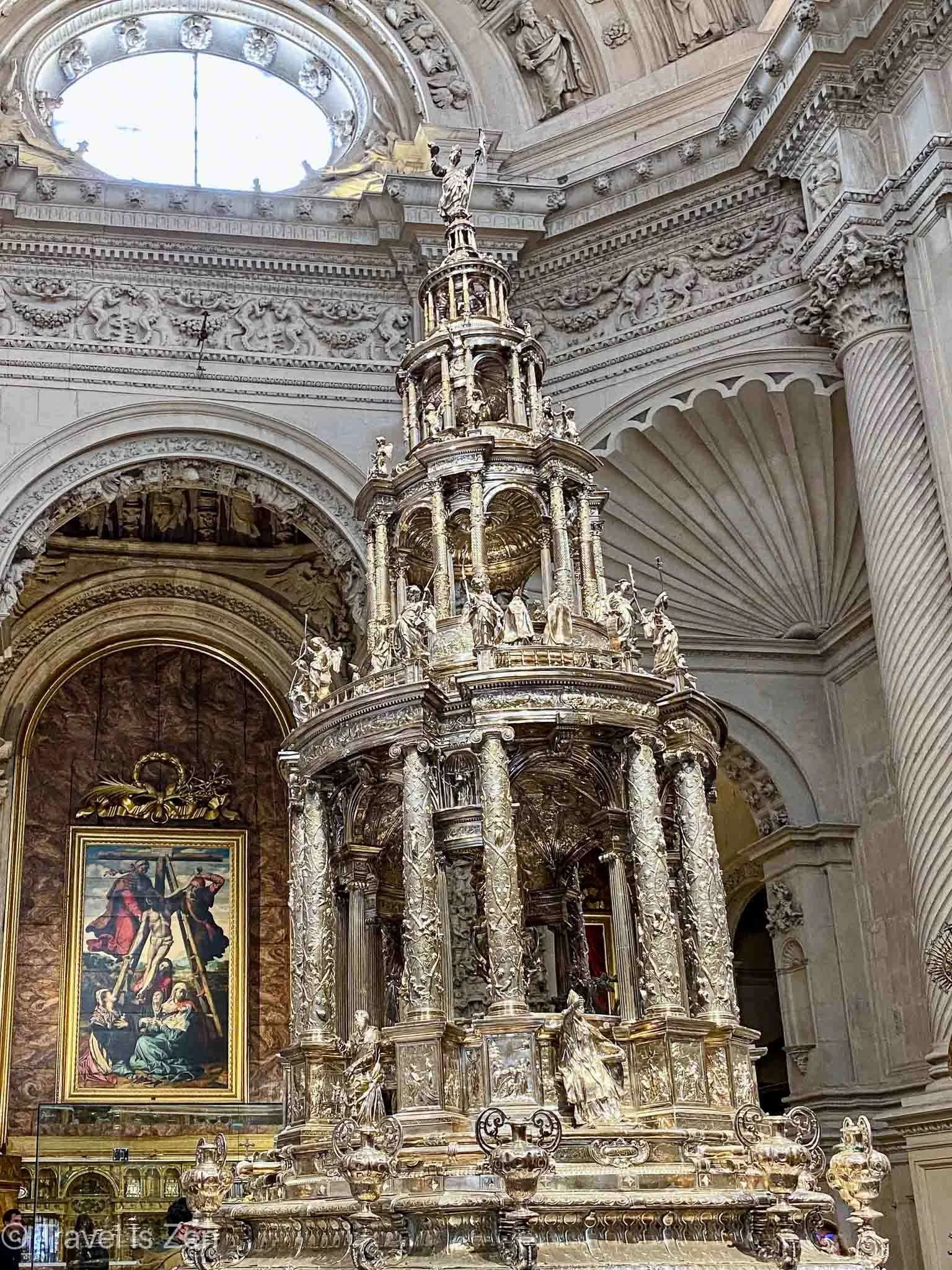
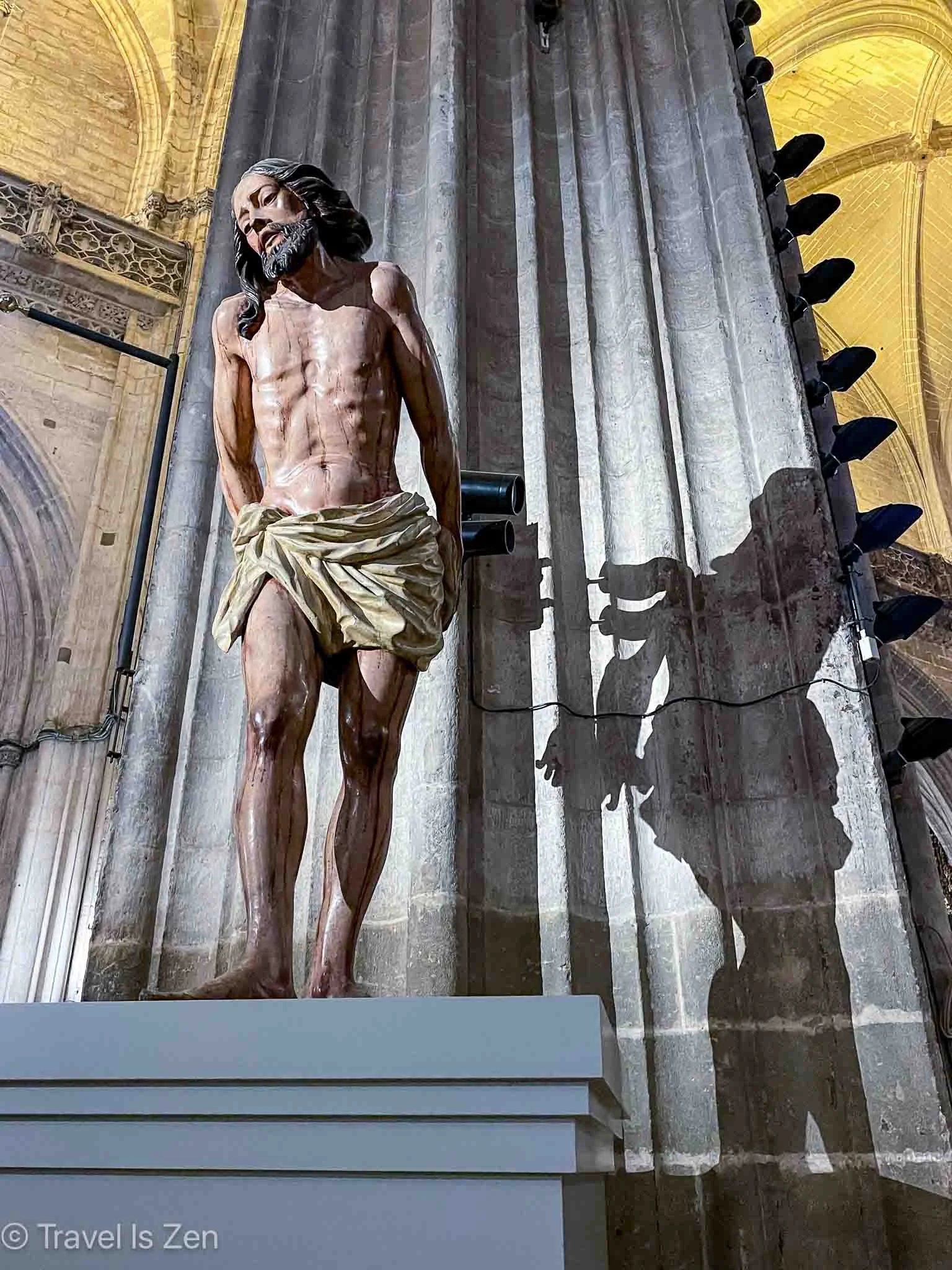
Ascending the Giralda Tower’s ramp is a walk through time, starting at its Islamic base and ending at the Christian bell tower overlooking today’s modern city. The cathedral is the third largest in the world and it lives up to its motto: ‘Let us build a church so beautiful and so grand that those who see it built will think us mad.’ Achieved. The Seville Cathedral represents both triumph and appropriation.
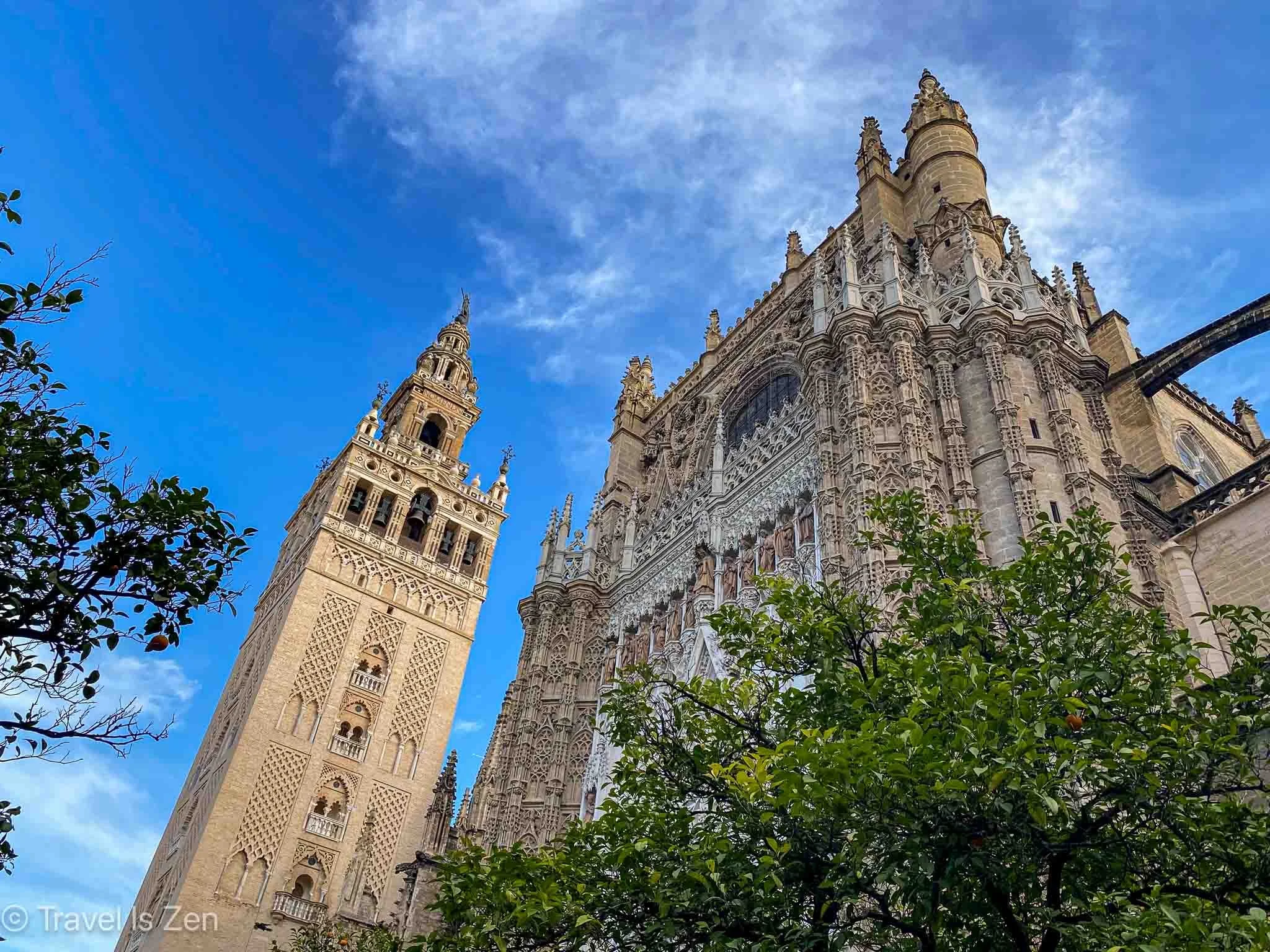
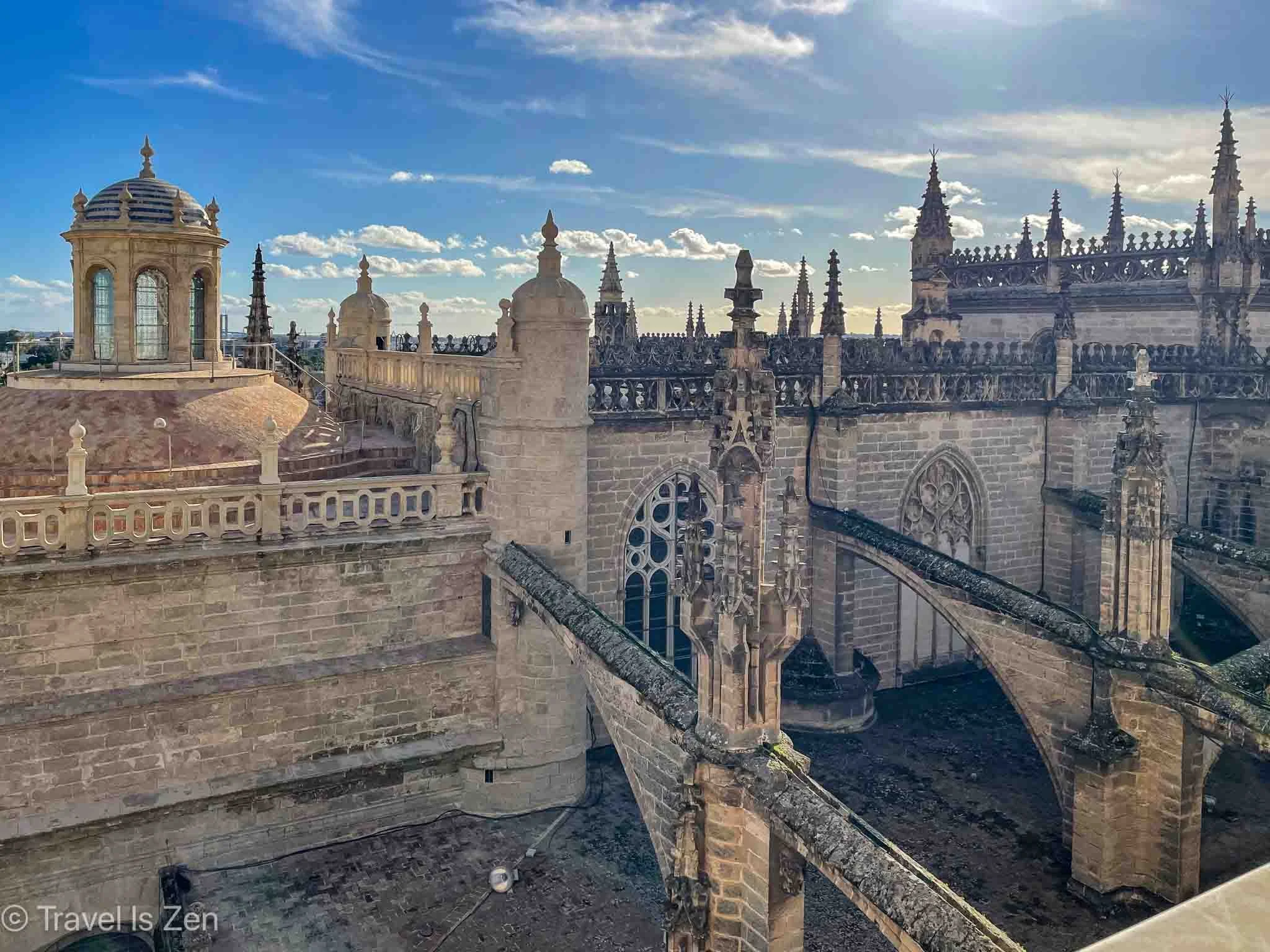
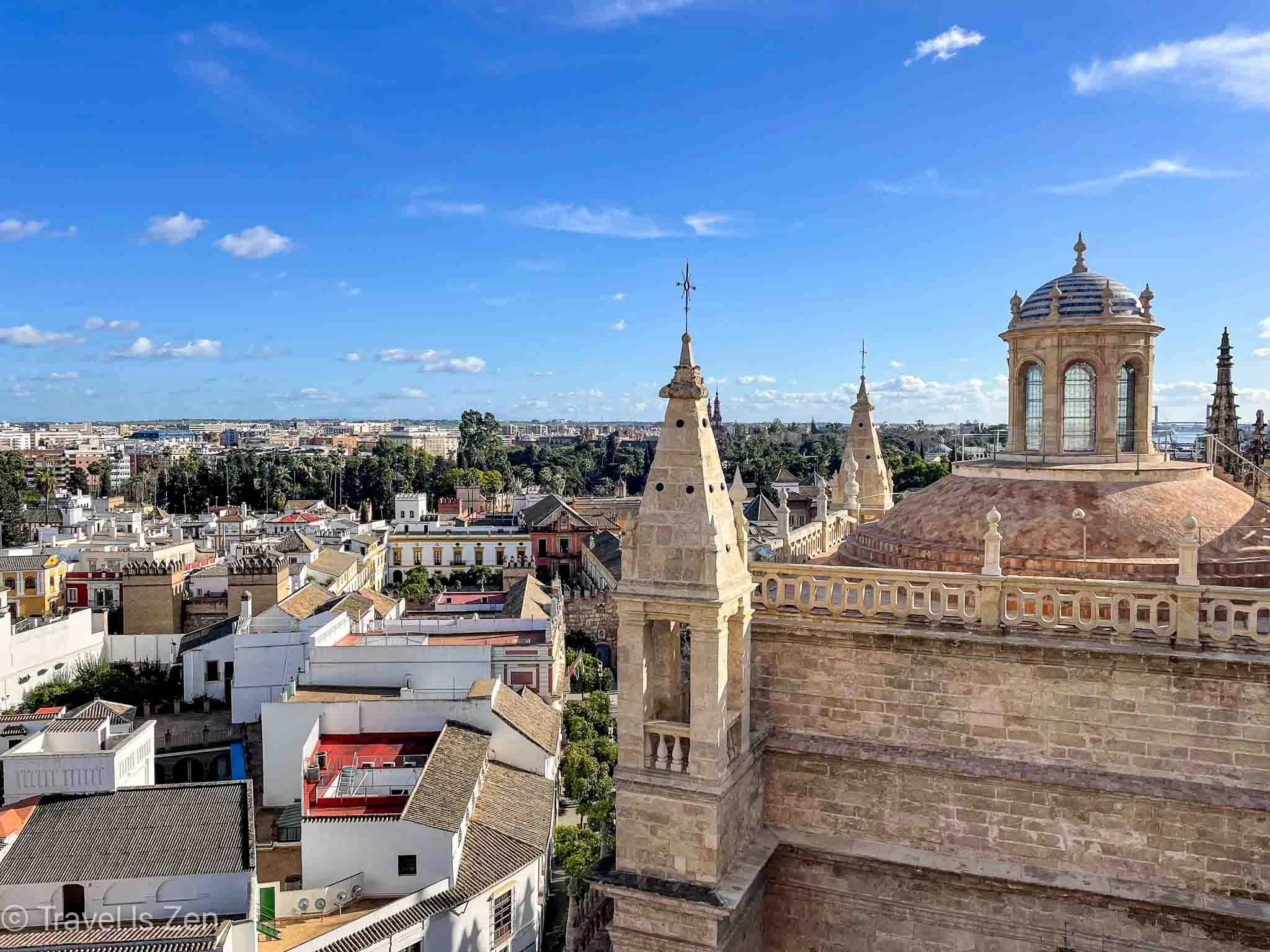
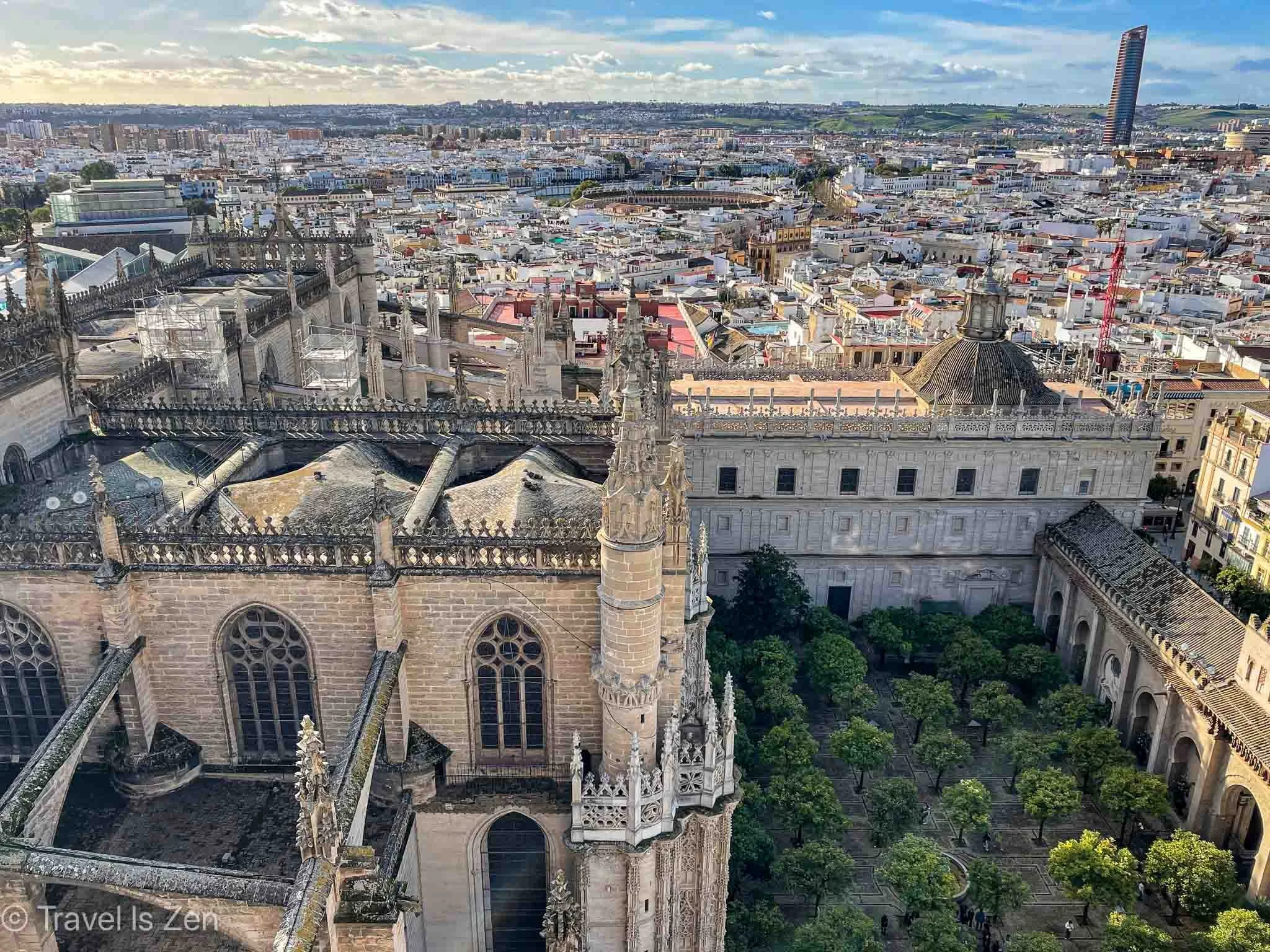
History, when summarized on short guided walking tours where the narrative ends in the 1500’s, feels neat and tidy — but woefully unfinished. The longer we stayed in Seville, the more I came to appreciate that Seville is not a museum, frozen in time, stuck in some memory of a golden age that no longer feels relevant to its residents. Seville has and continues to evolve; its history and cultural identifiers are still very much alive and part of the social fabric. Let’s start with the Plaza de España.
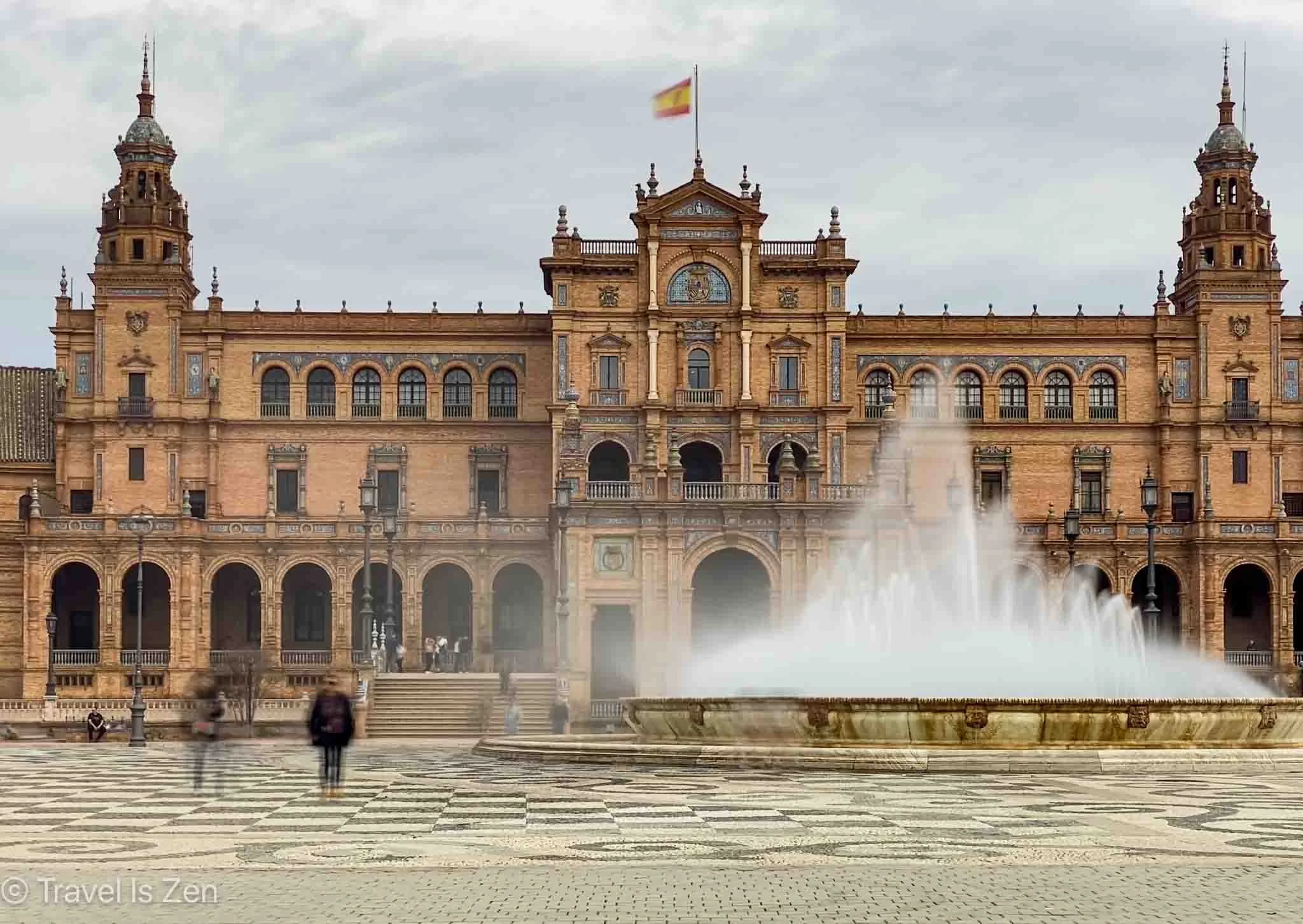
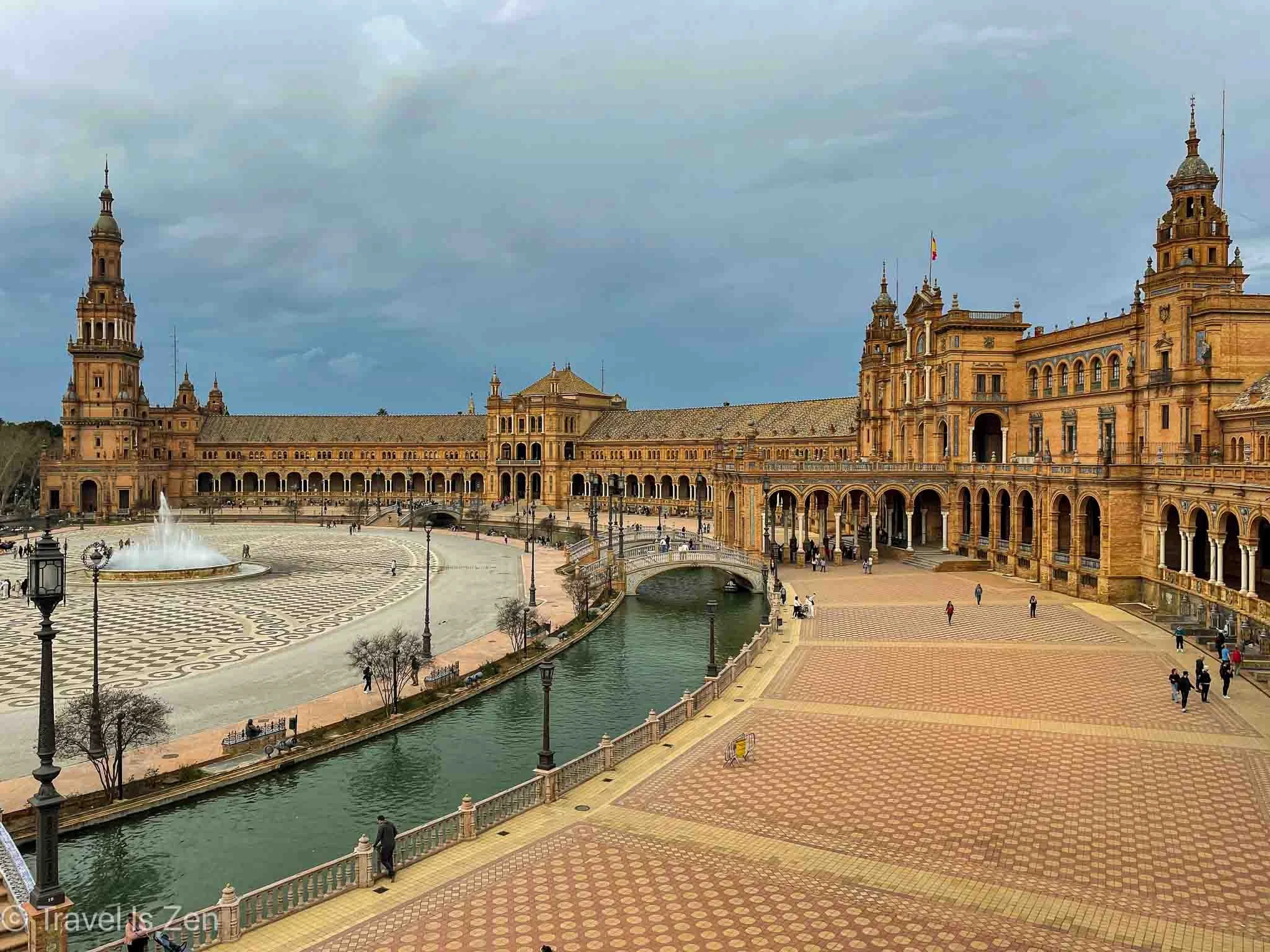
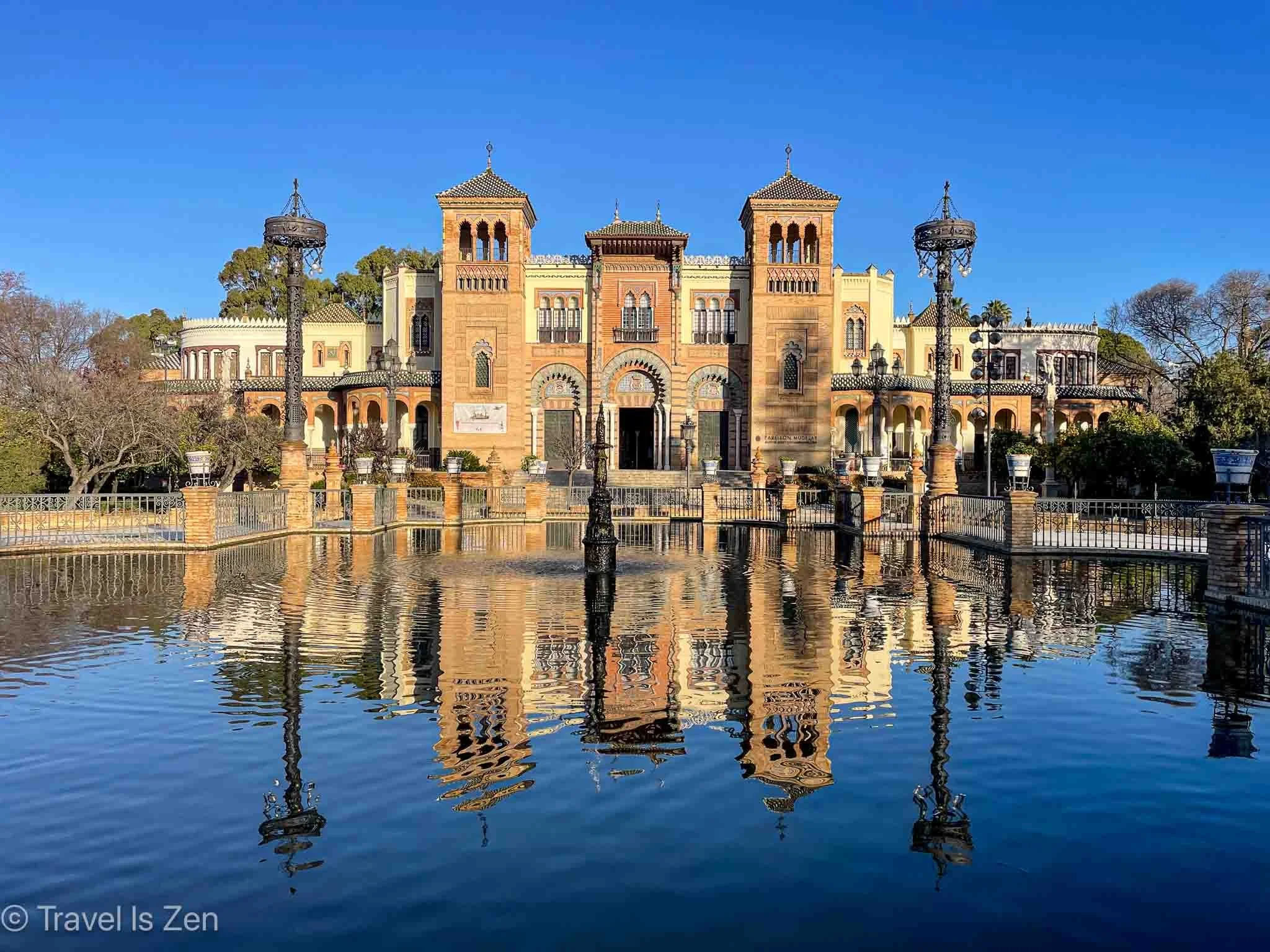
Plaza de España
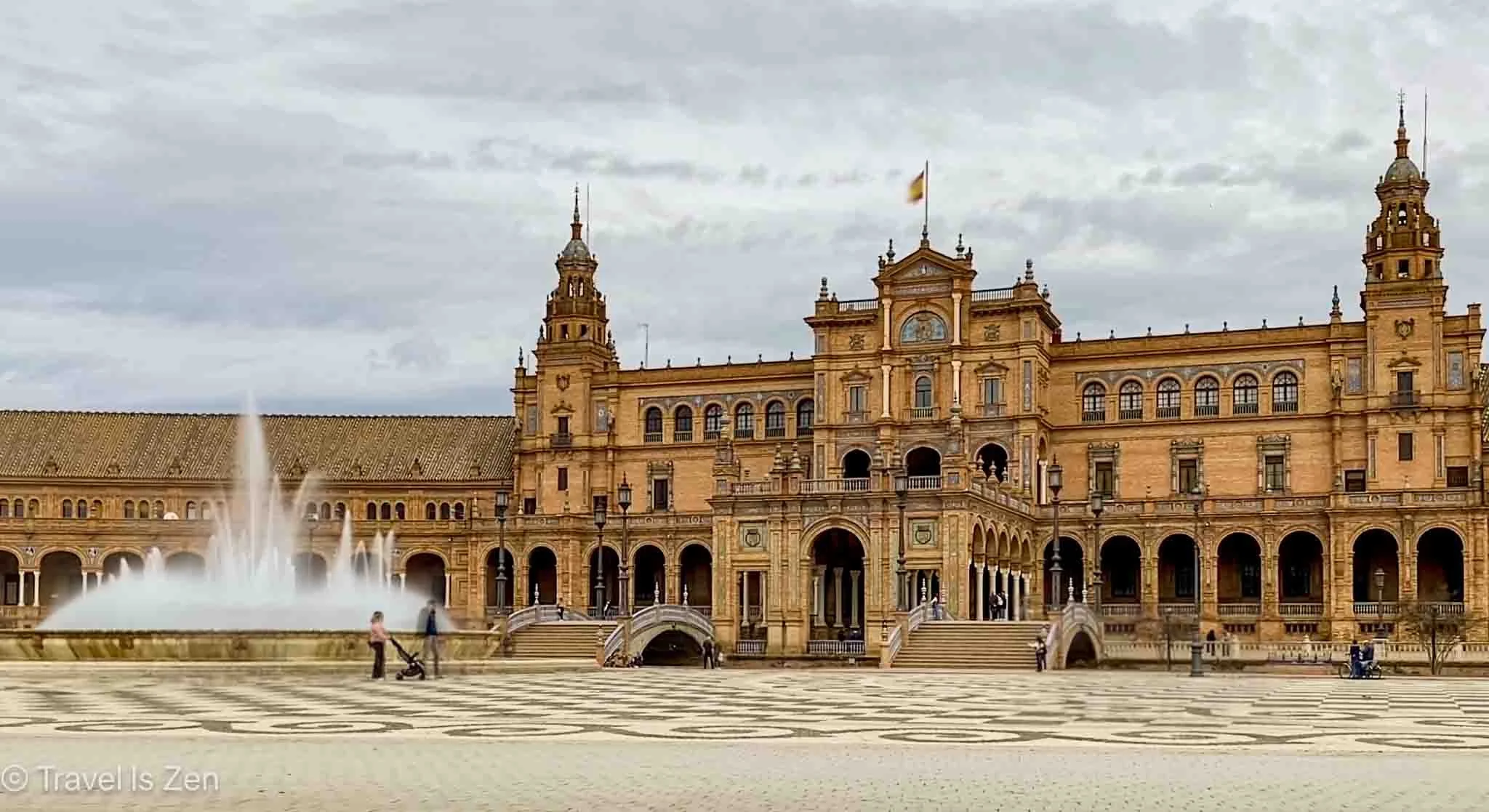
Plaza de Espana, Seville, Spain
Plaza de España feels almost too grand. It’s theatrical in the full sense of the word, with a sweeping semi-circular plaza wrapped around a canal, lined with bridges, towers, fountains, and vividly colored ceramic tile work. It evokes a by-gone era of grand monarchies across Europe circa 1700’s — but it’s actually relatively modern by Seville standards. It was built in 1928 for the Ibero-American Exposition of 1929, which was essentially Spain’s attempt to reconnect culturally and economically with Latin America after the loss of much of its empire in the 1800’s. So while Seville’s cathedral and Alcázar tell stories about imperial Spain at its grandest, Plaza de España reflects a more recent effort to project unity, pride, and cultural identity — ironically, just prior to plunging into a bloody civil war.
Flamenco
Flamenco, too, is not a performative relic of the past; it’s very much a part of modern social life in Seville.
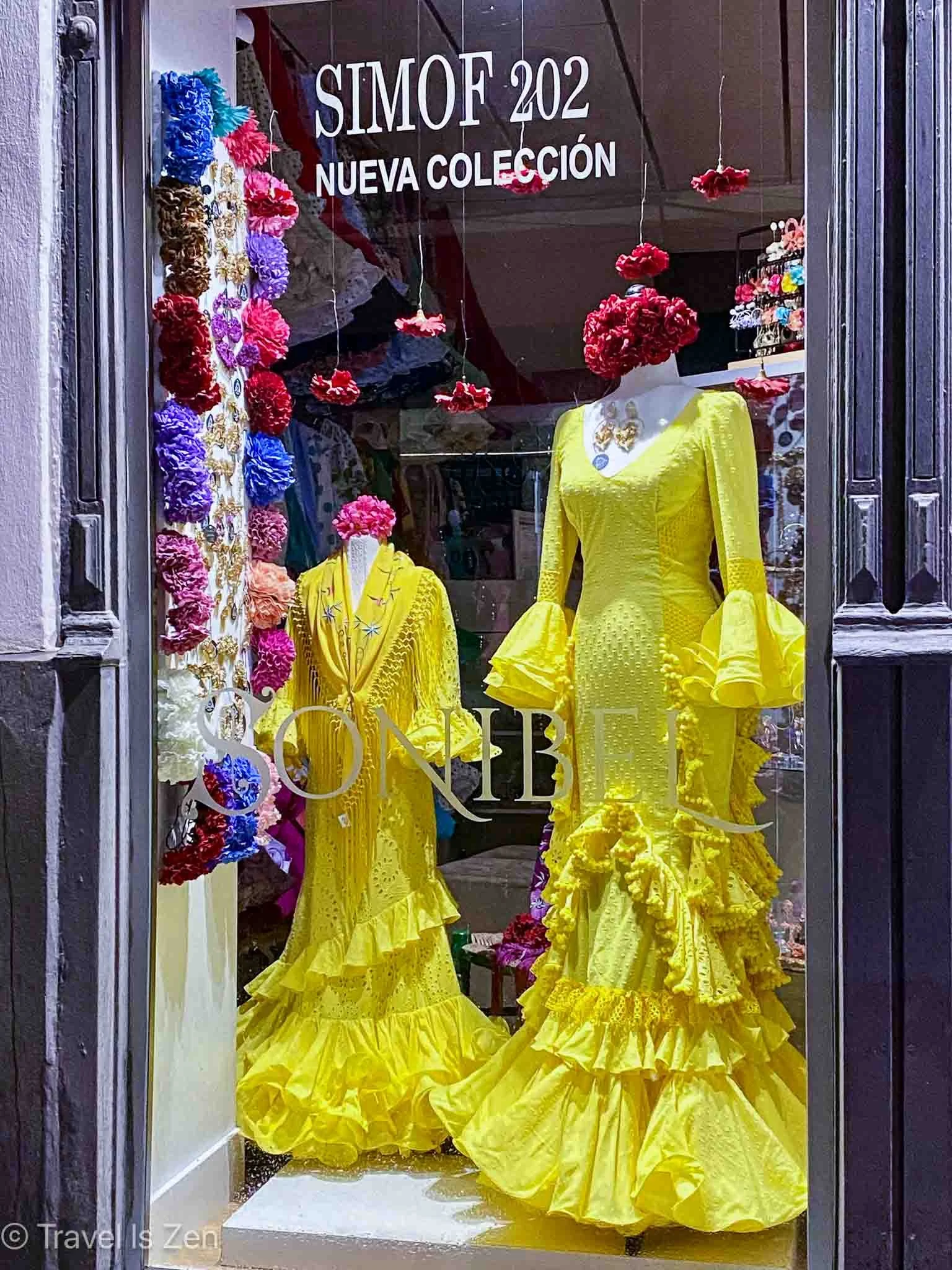
For Andalucians, Flamenco is heritage, a source of identity. When we asked her about Flamenco, our tour guide’s face brightened. With eyes sparkling, she explained how exciting it is to follow the annual dress trends. Women spend the entire year planning and talking about their traje de flamenca (dress): the trending style and length of the faralaes (ruffled layers) and mantoncillo (shawl), popular pattern choices (polka dots, florals…), zapato (shoe) style shifts, and the latest buzz on accessories. With each scheduled fitting, the anticipation builds for the annual Feria de Abril, a week of brilliant pageantry, socializing, and dancing sevillanas and flamenco late into the night.
Our tour guide recommended seeing a Flamenco show at one of the oldest stages in Seville; it was an intimate setting in a dim, rustic basement (pics not allowed; photos below are from a show at another venue). Here, we experienced Flamenco the way it’s always been experienced - up close, personal — where the audience can see the expressions of the performers, feel the floor reverberate with their stomping, and absorb the intensity with which they use dance as an emotional release. This wasn’t historical reenactment or spectacle for tourists - this was Seville sharing a part of its modern identity.
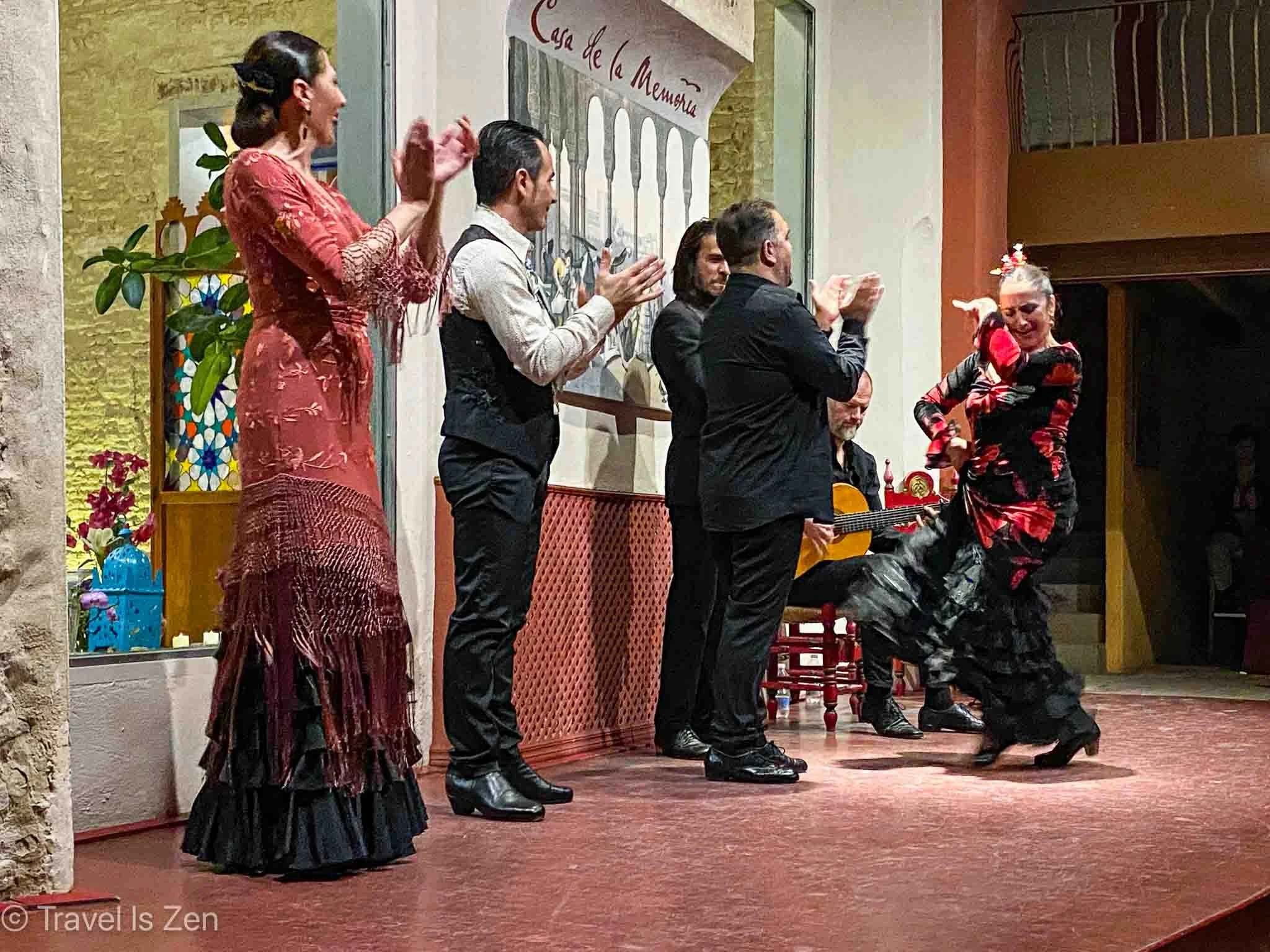
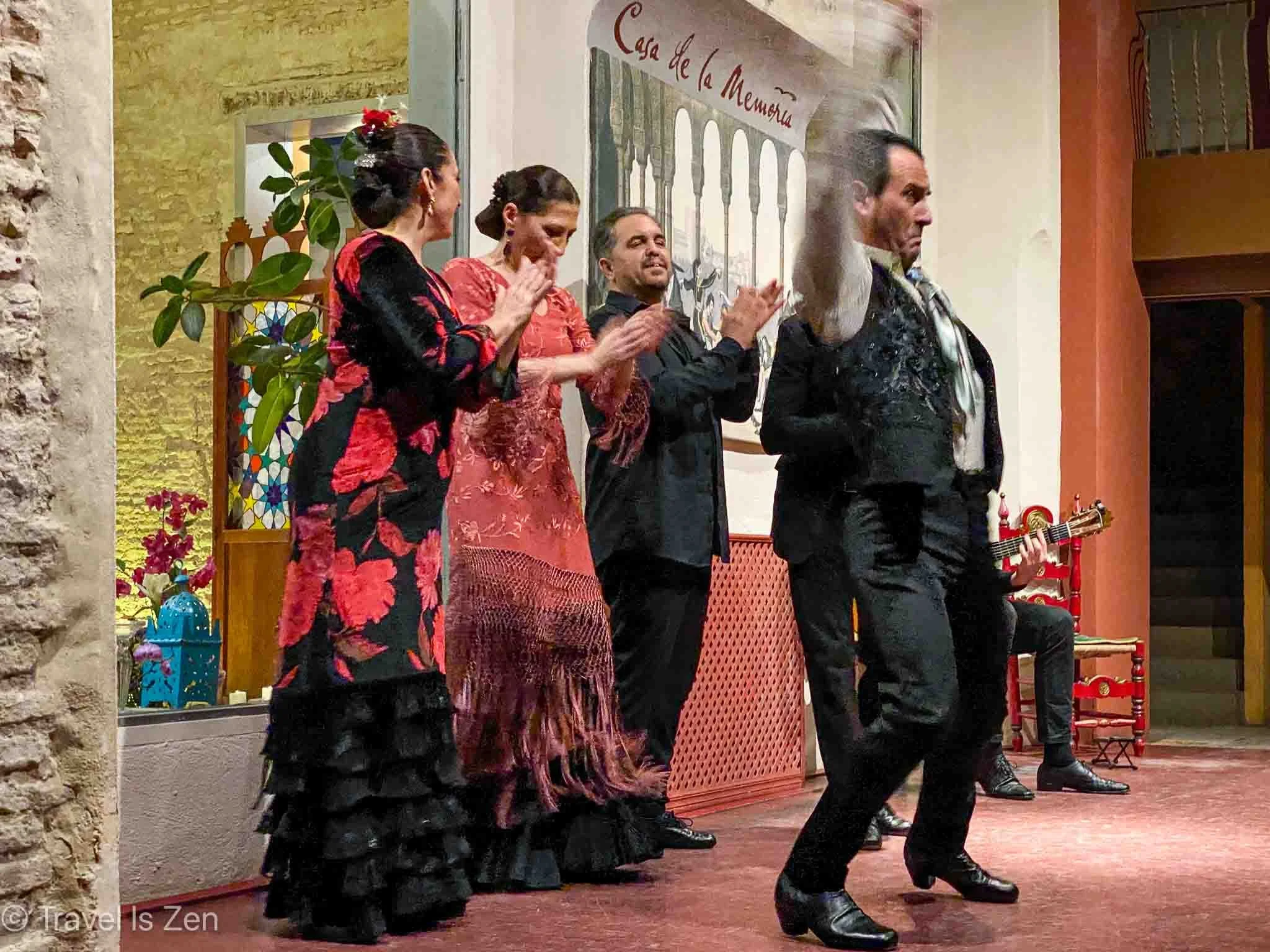
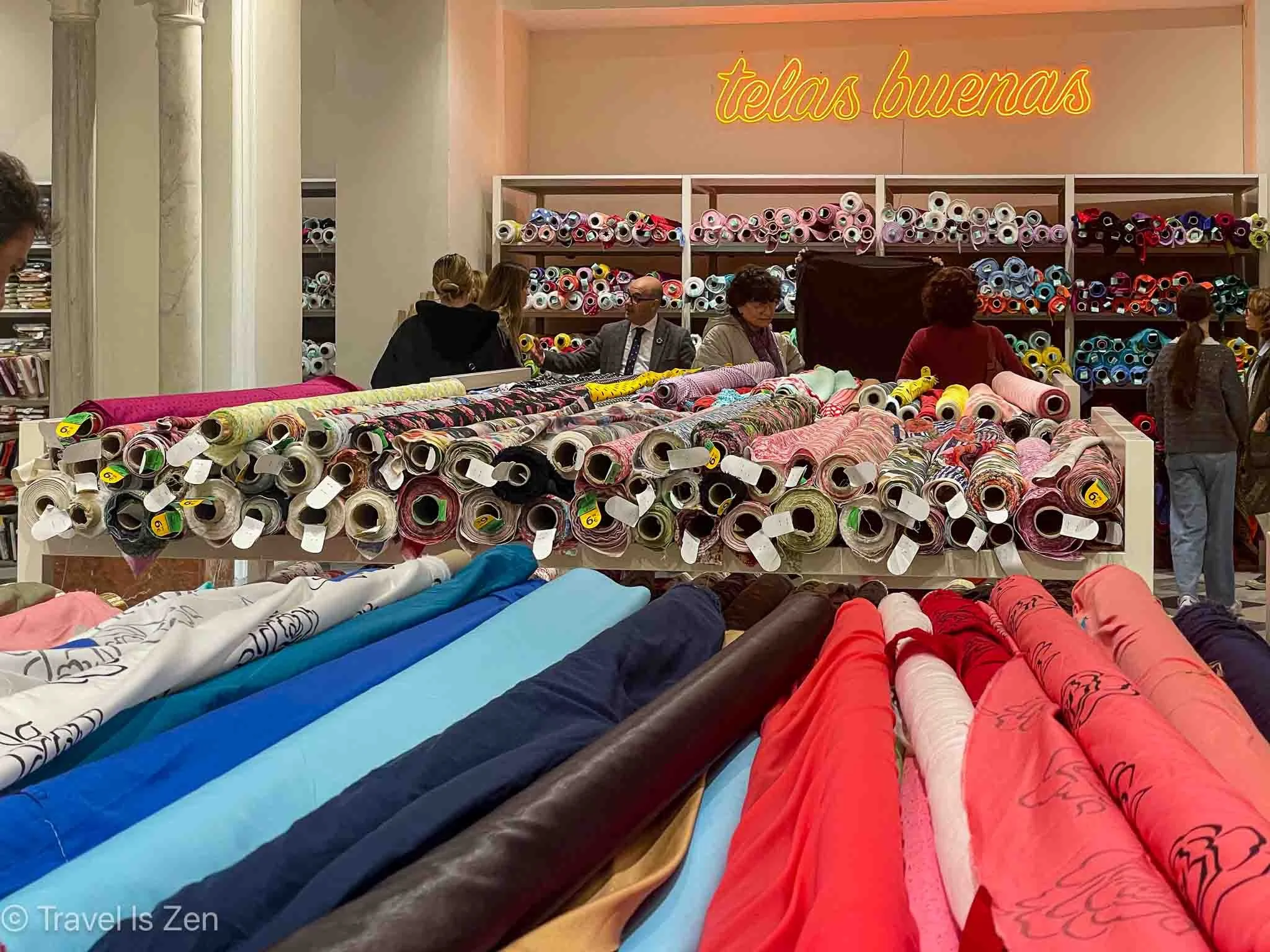
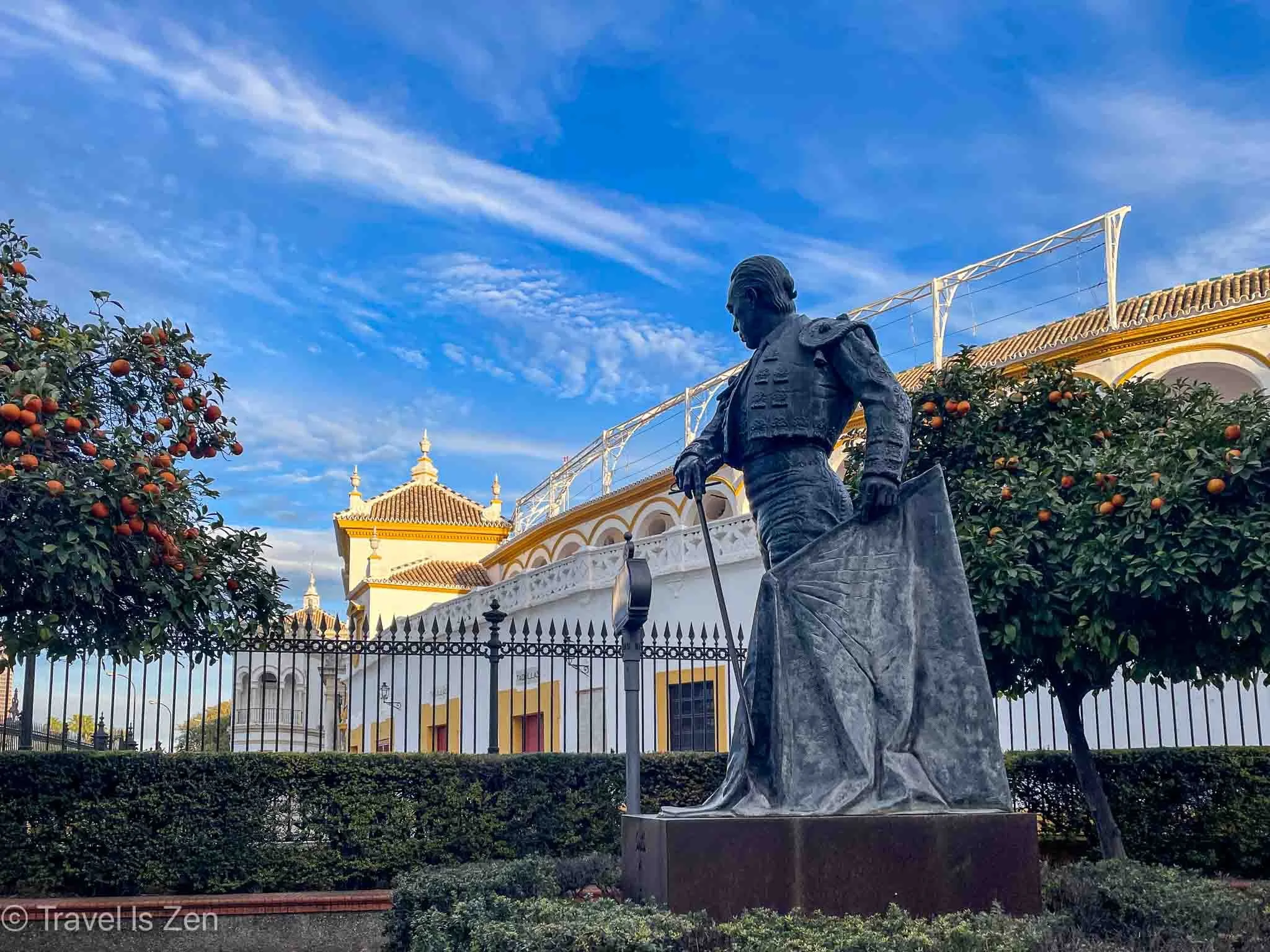
Strolling the streets of Centro, it’s obvious how alive Flamenco continues to be for Seville’s citizens. Shops filled with colorful, vibrant textiles, hair combs, shoes, and accessories; master seamstresses showcasing their hand-crafted gowns in boutique shops. I realized these dresses weren’t costumes for tourists to rent as photo props, nor were they expensive souvenirs; they are part of the economy and social fabric of the locals.
Semana Santa Brotherhoods
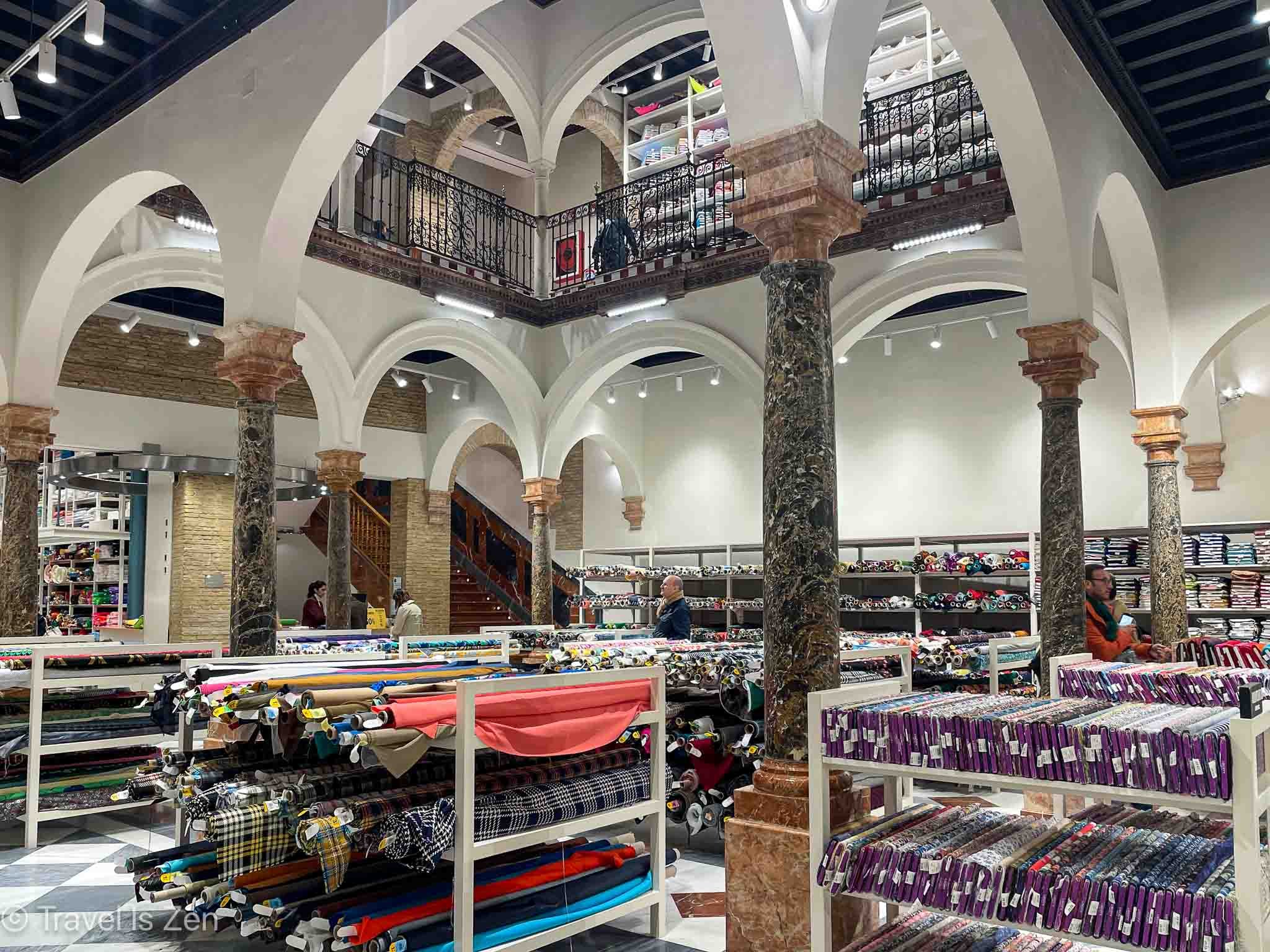
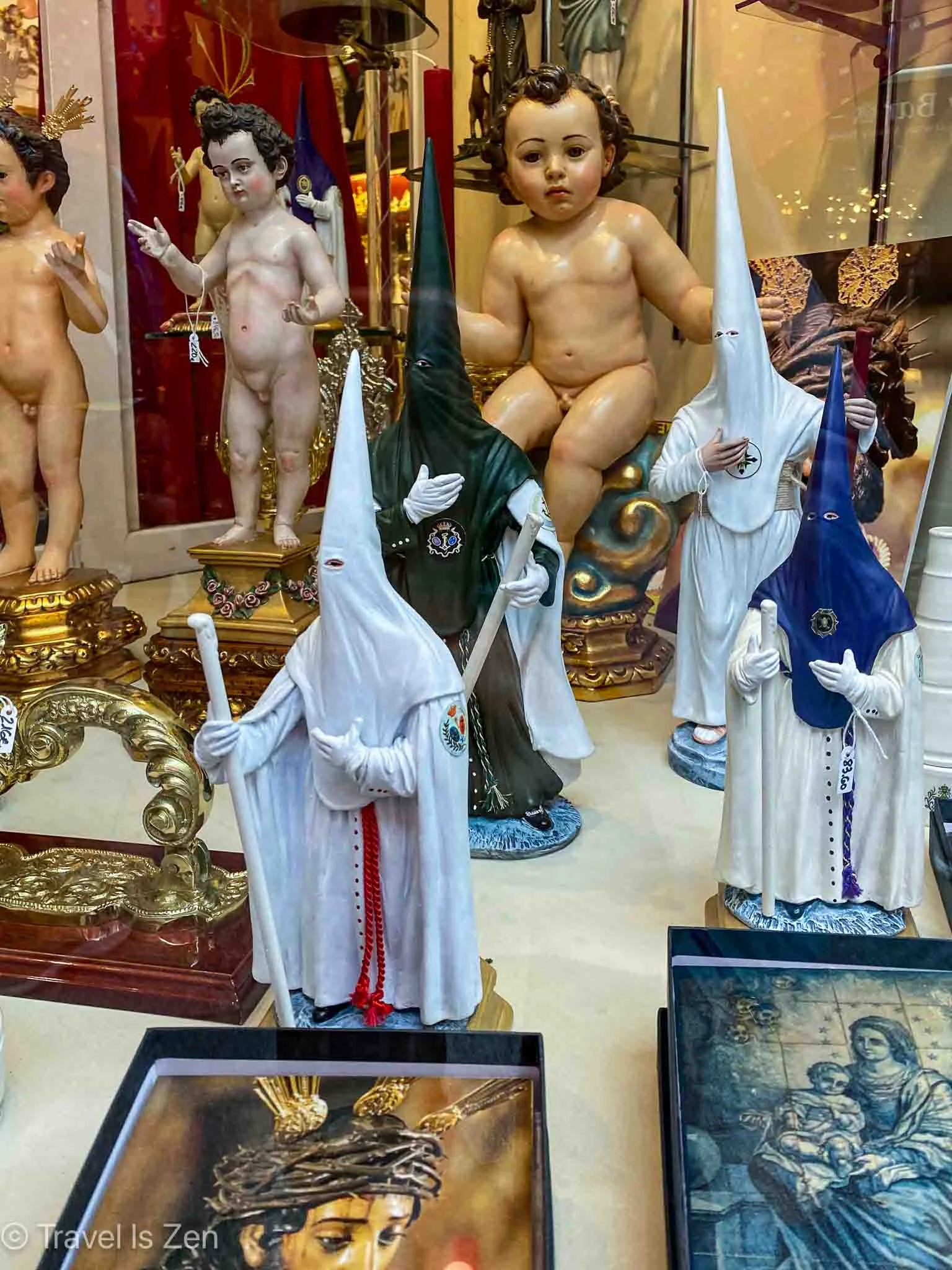
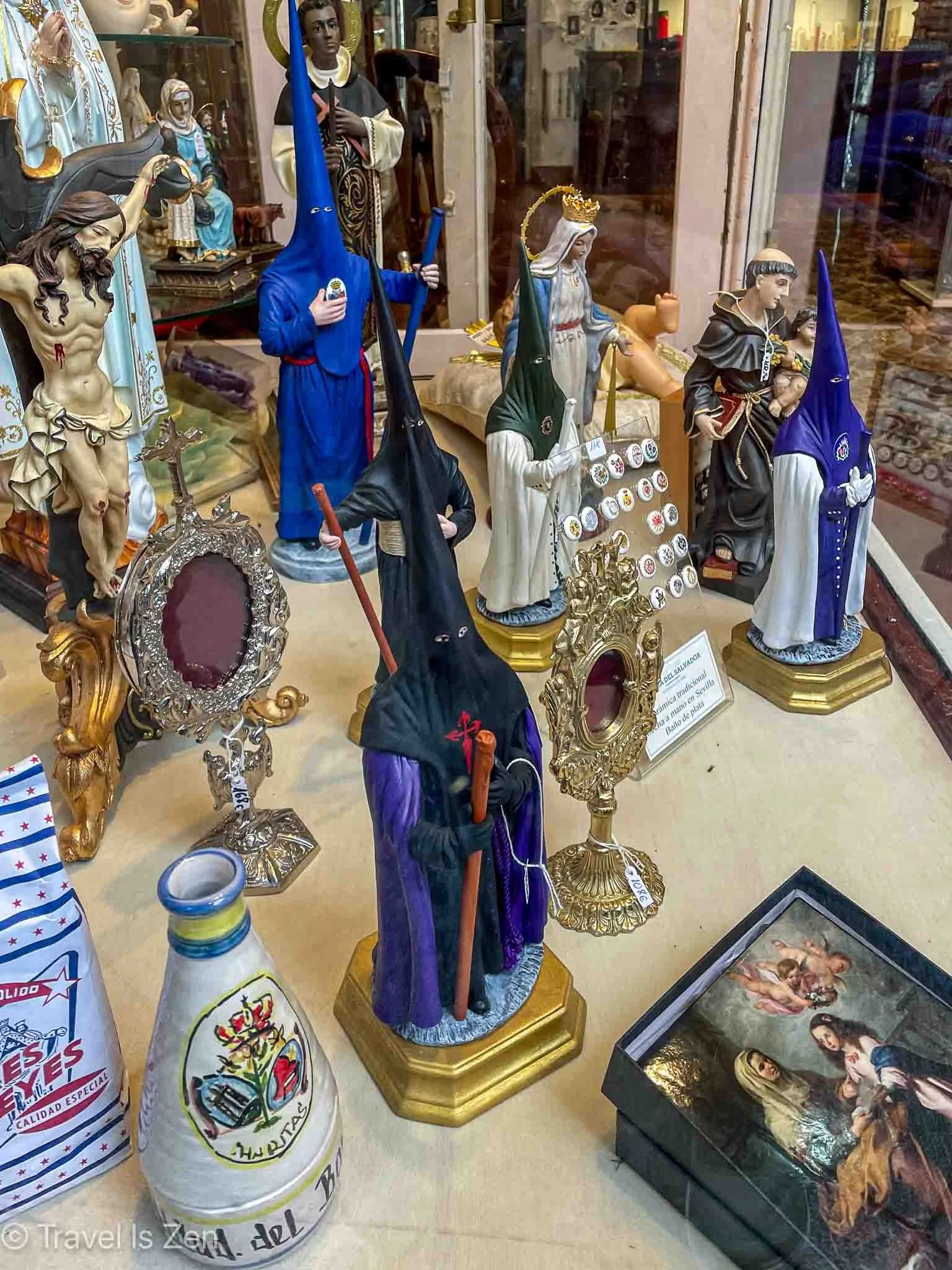
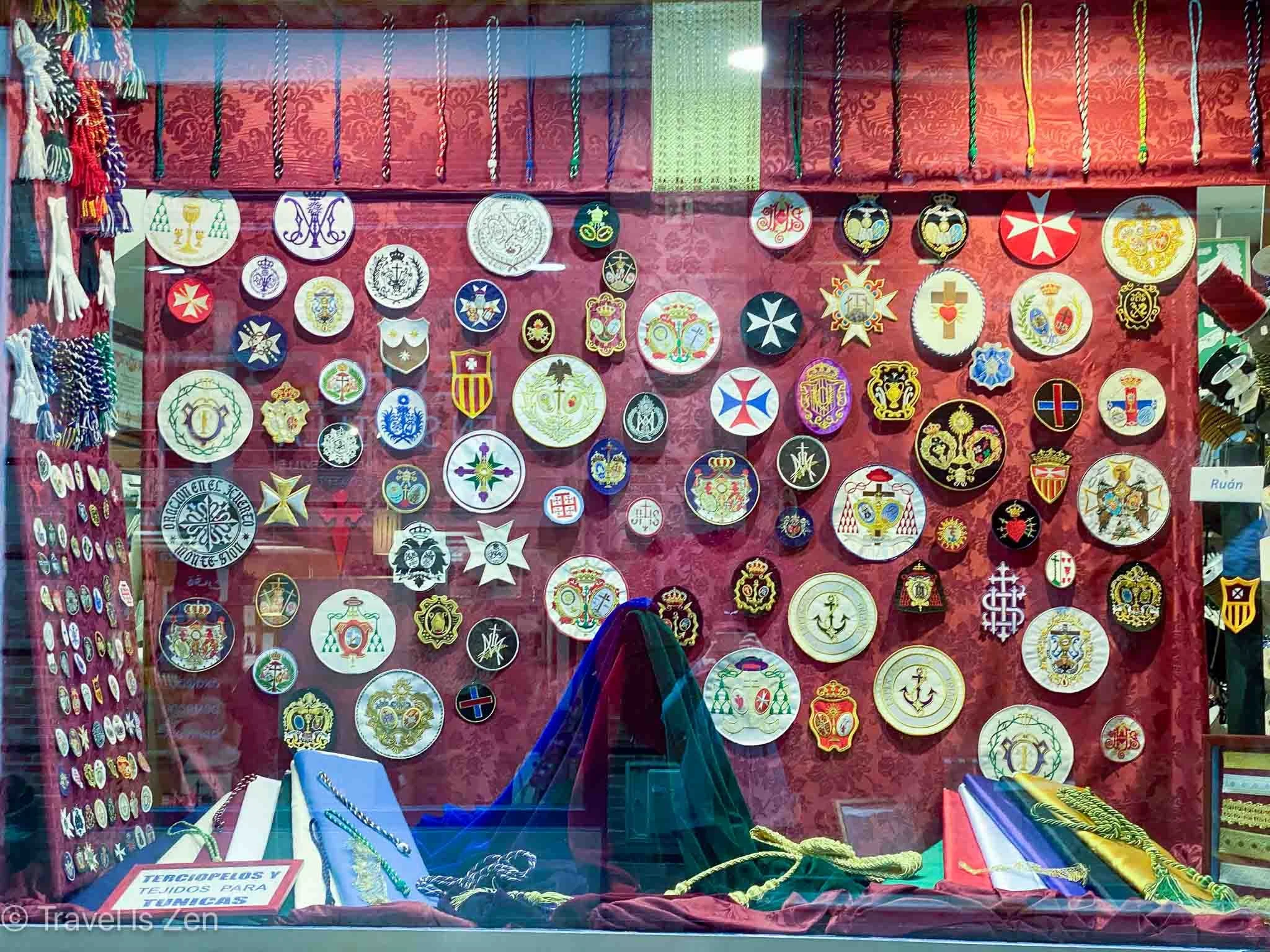
Similar realization with the “brotherhoods”. During our walking tour, our guide had explained another important holiday in Seville involving a procession of Catholic brotherhoods during Holy Week. From an American perspective, it might resemble a gathering of the Ku Klux Klan, but the pointed hats, long robes, knotted cords and other insignia actually represent dozens of local “service clubs” to which families have belonged for generations. While the Semana Santana festival attracts gawking tourists from around the globe, it is actually a long-running tradition with deep meaning for Seville locals. Shops filled with all the necessary membership accoutrements are not for the tourists, but for the participants.
Centro Andaluz de Art Contemporaneo
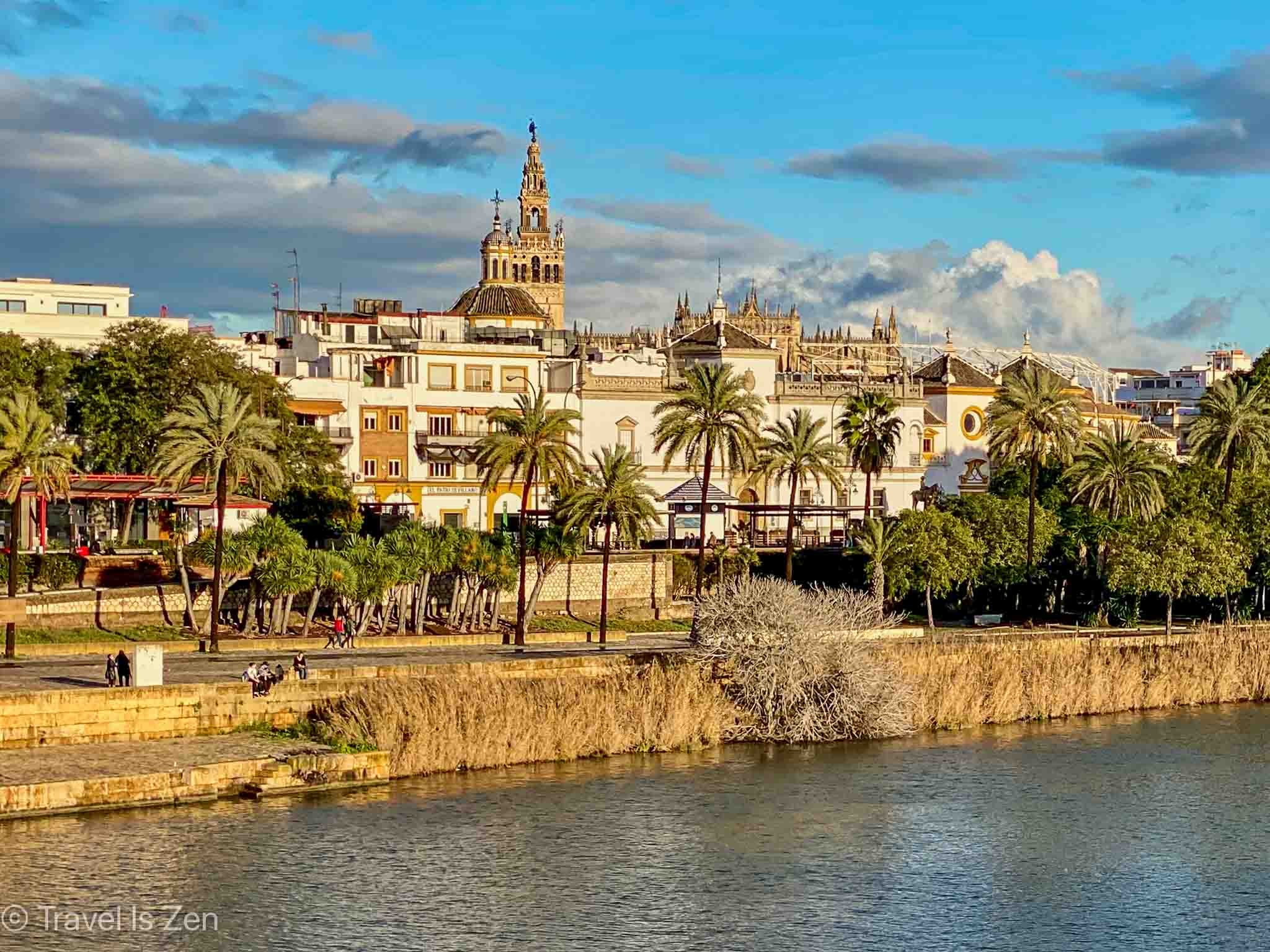
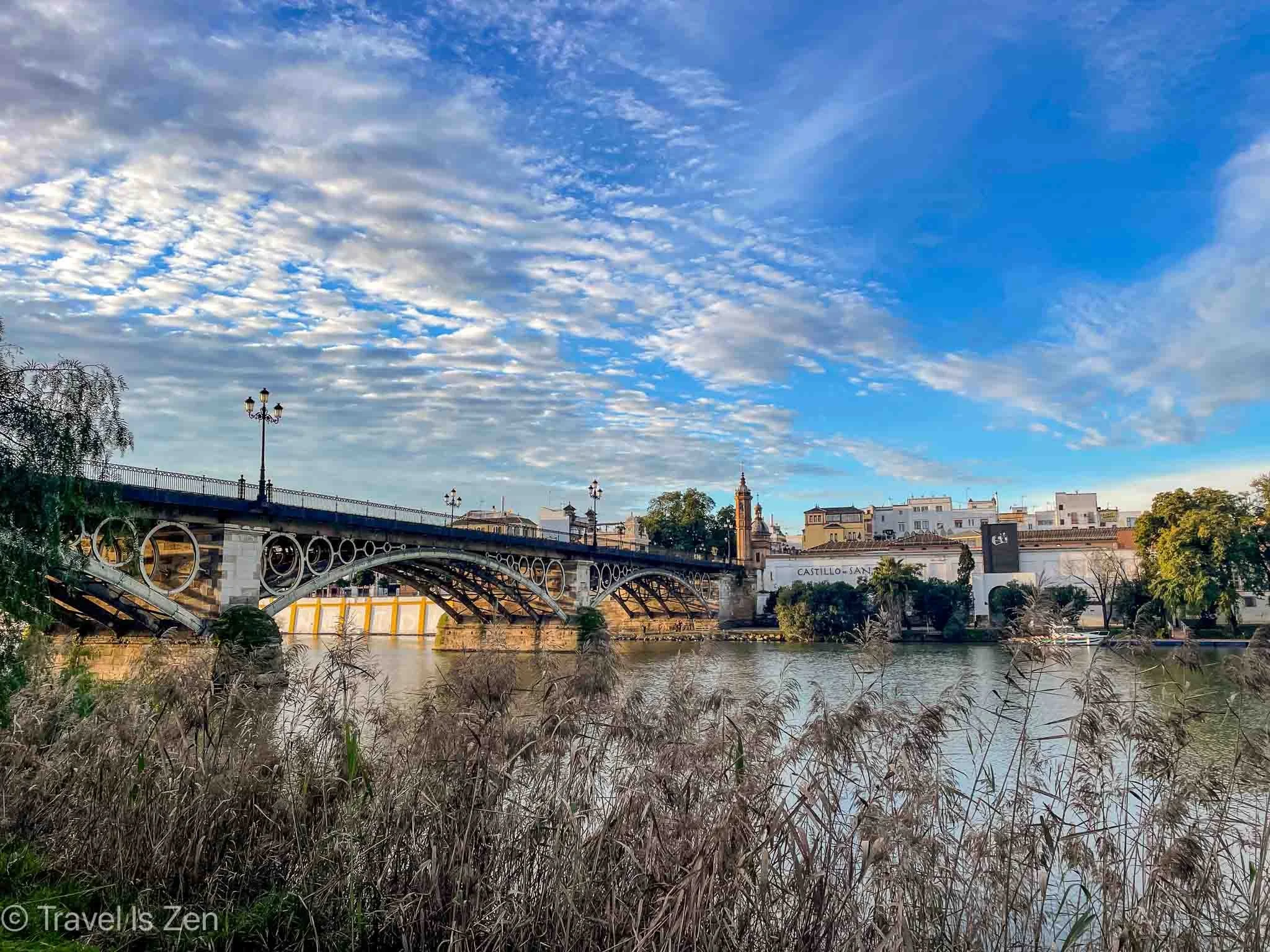
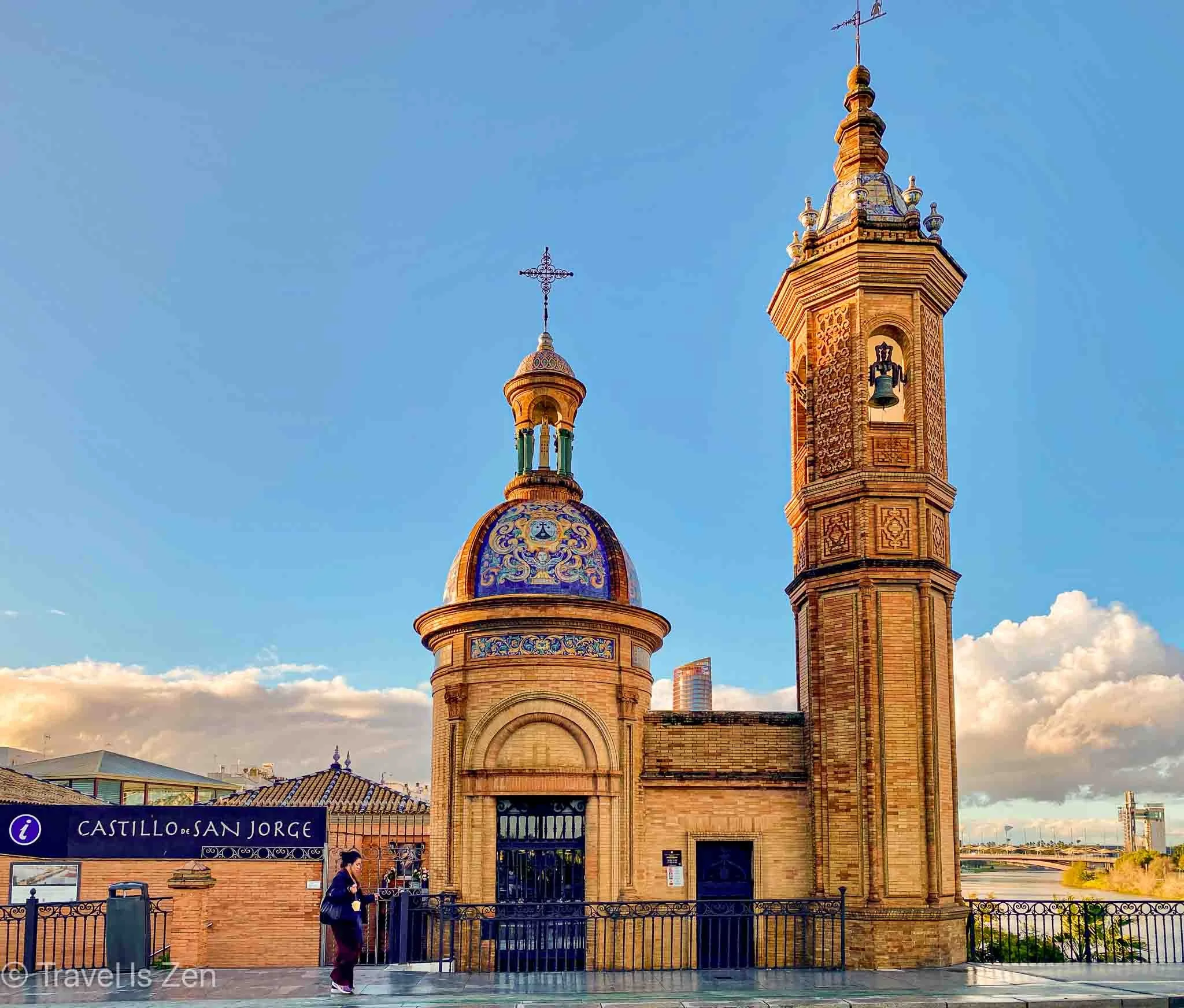
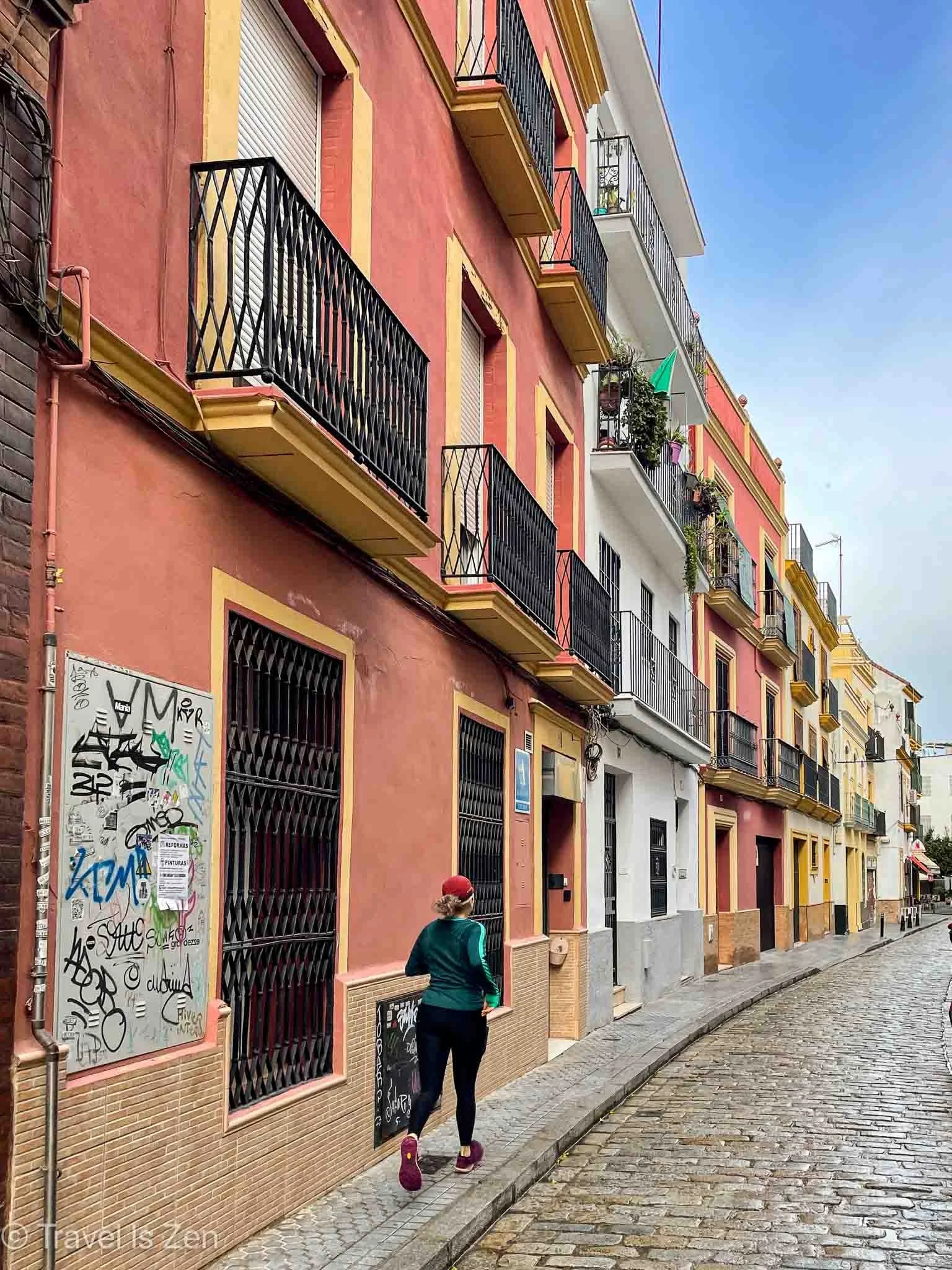
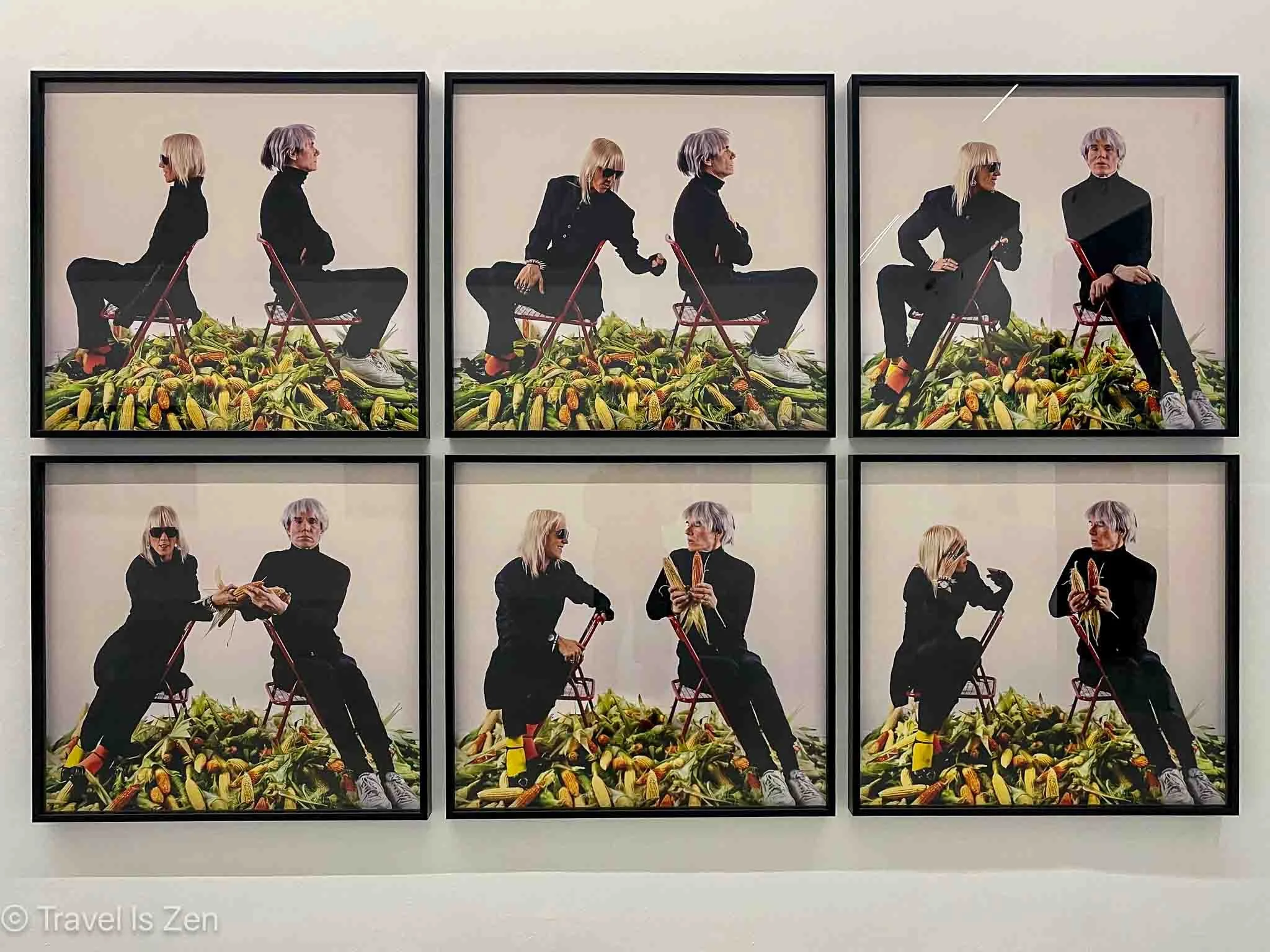
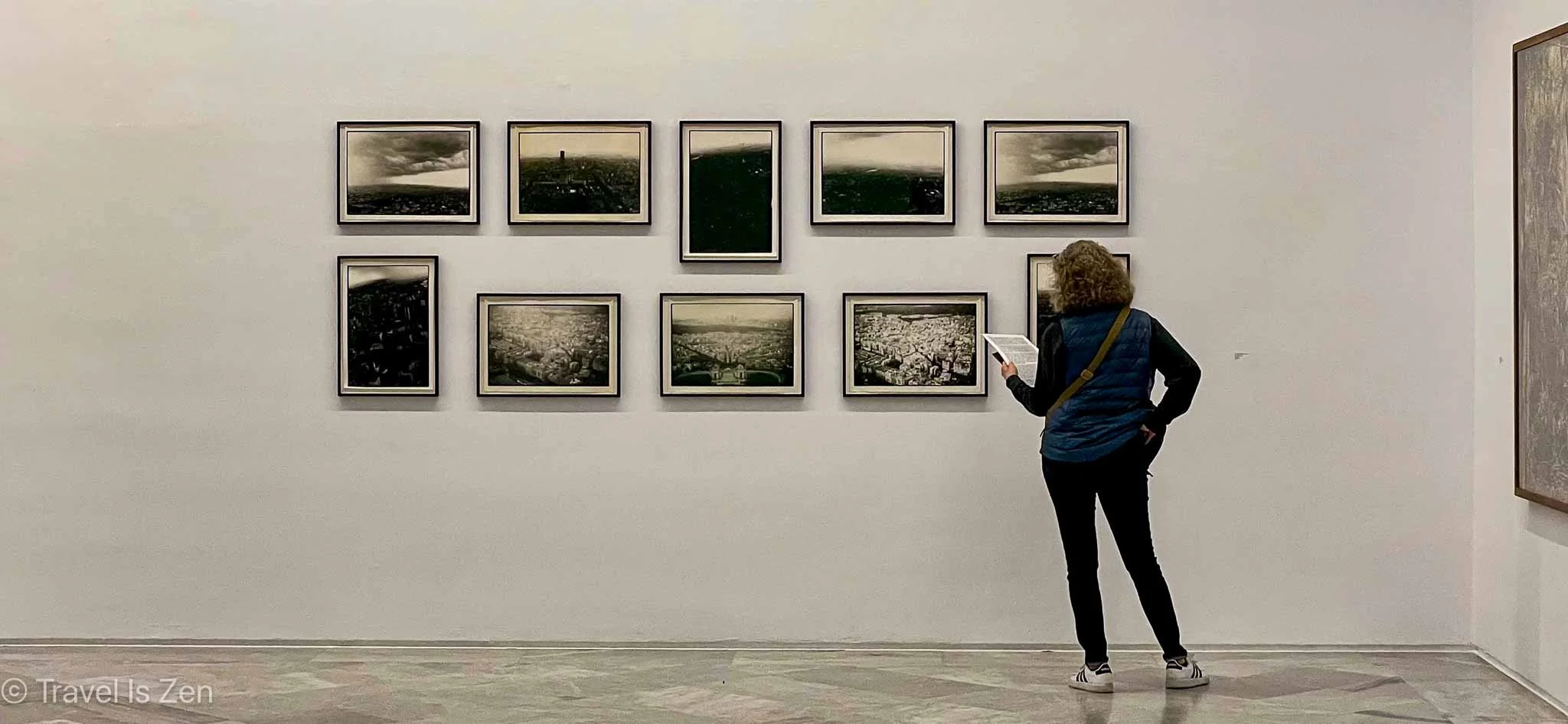
At the Centro Andaluz de Arte Contemporáneo (Museum of Modern Art), modern voices echo through the halls of a former monastery. We stayed in Seville for several weeks, eventually basing ourselves in Triana, across from the main tourist hub of Centro. As early-risers, we had the streets to ourselves for morning runs along the riverfront promenade, sharing the sunrise with local rowing and crew clubs.
Click any photo for a larger slideshow…
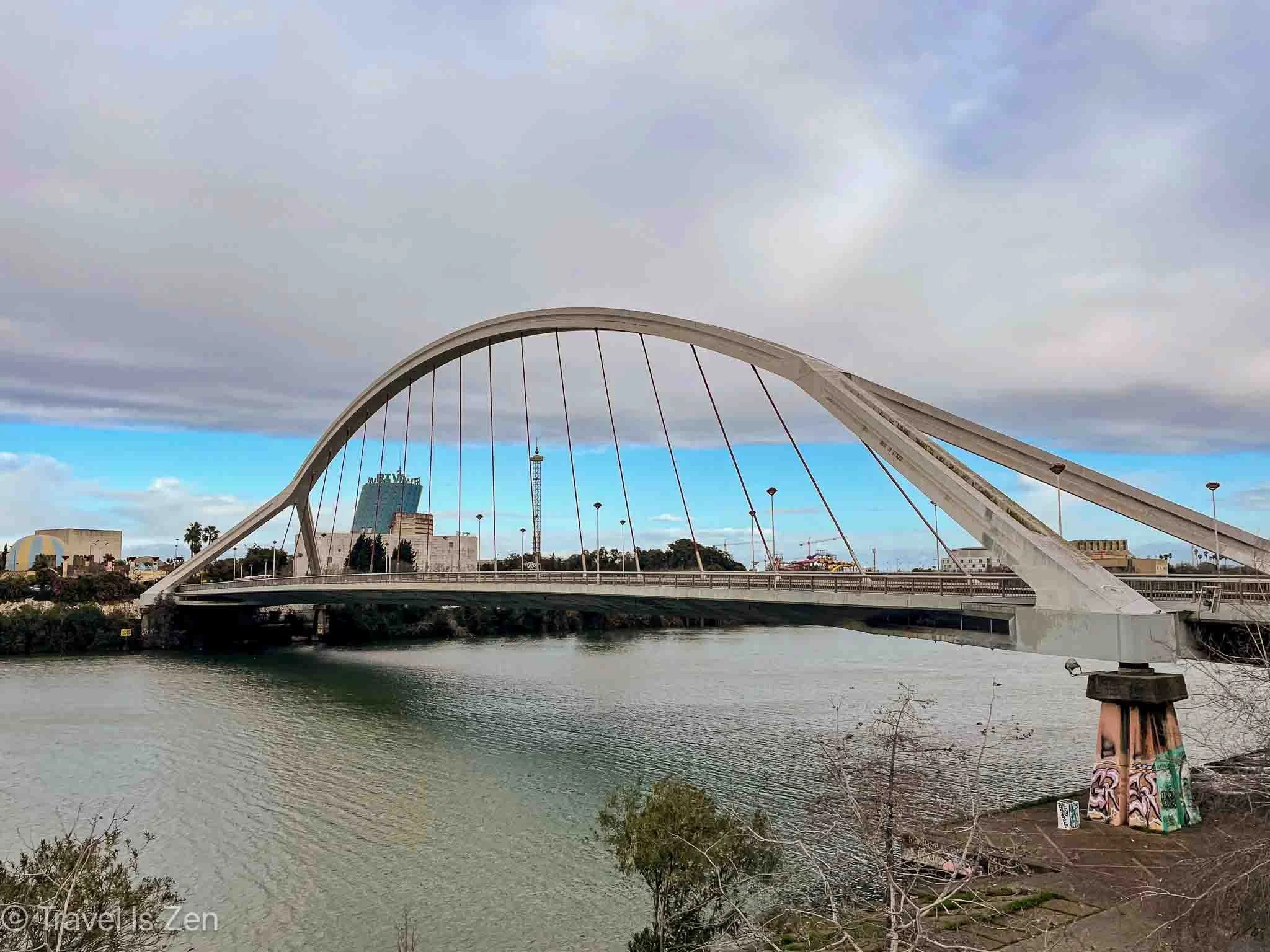
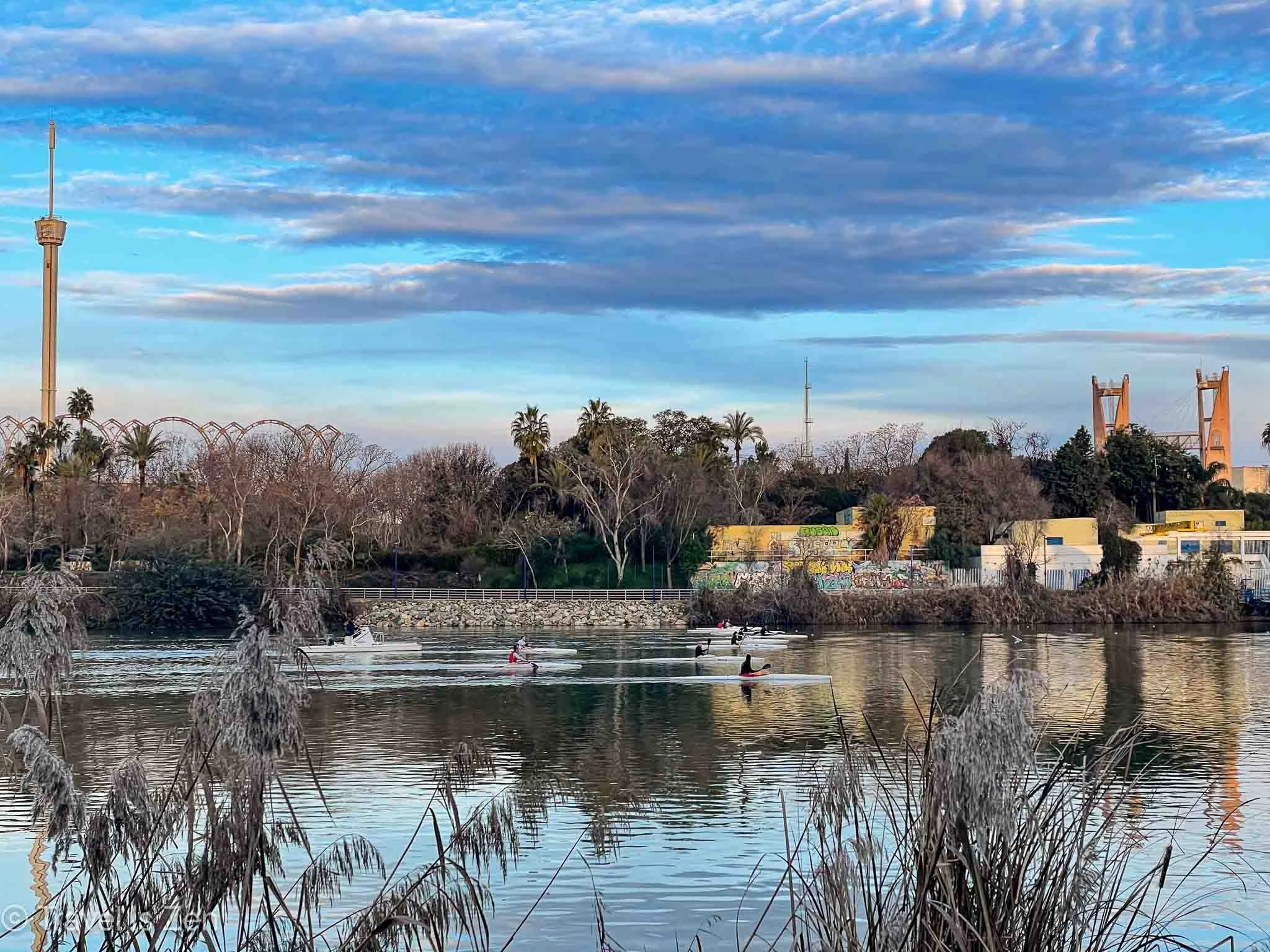
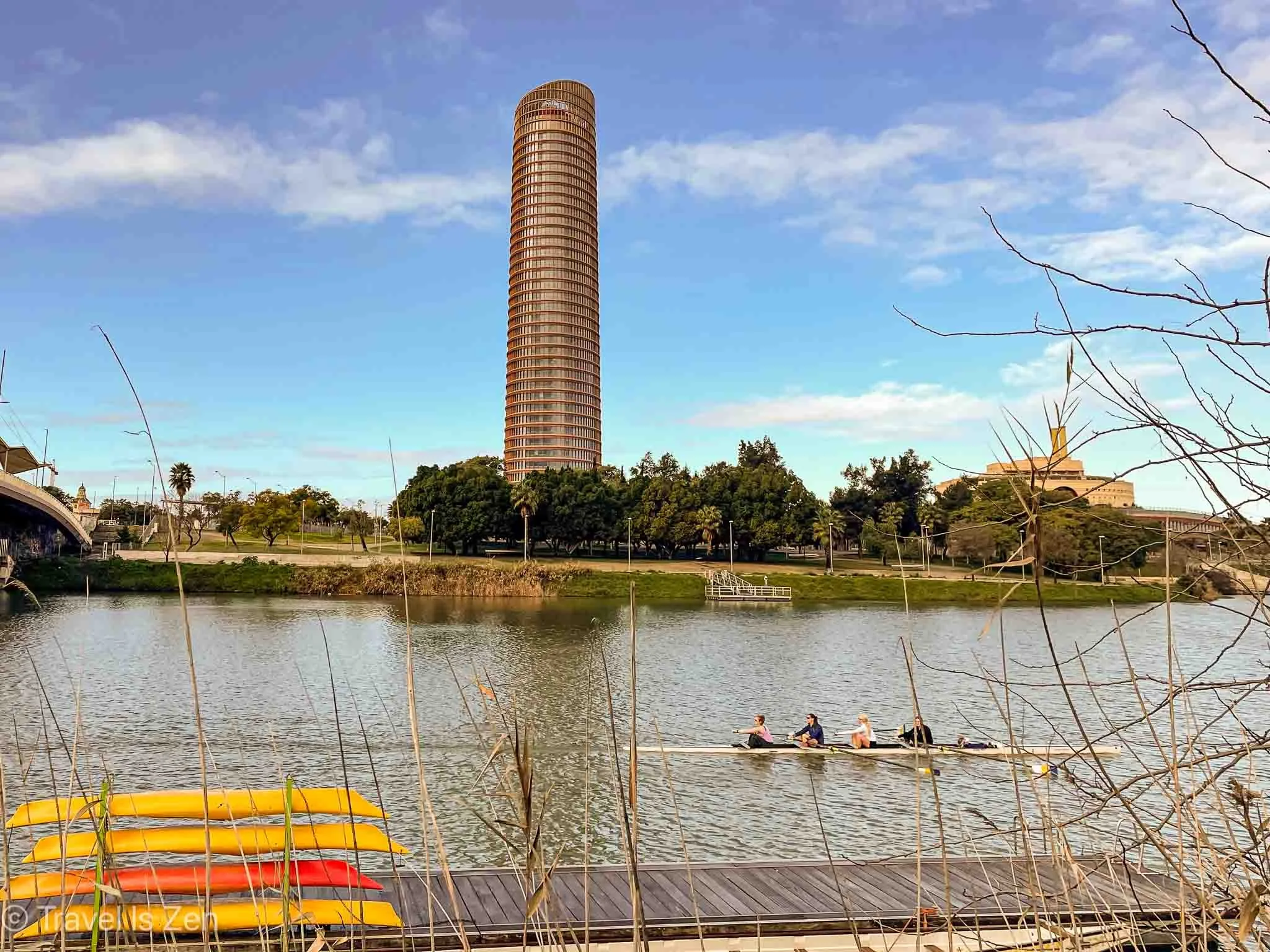
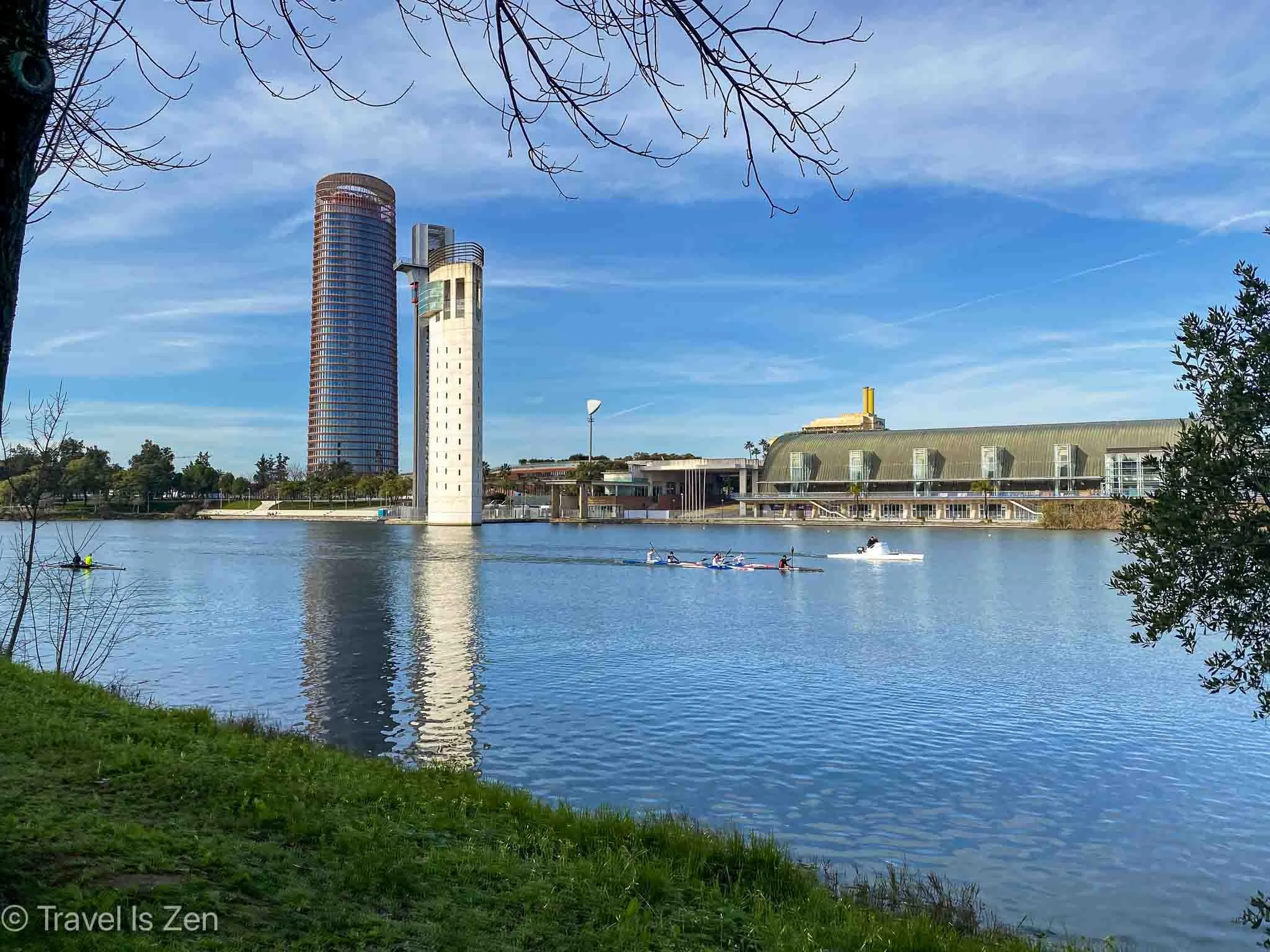
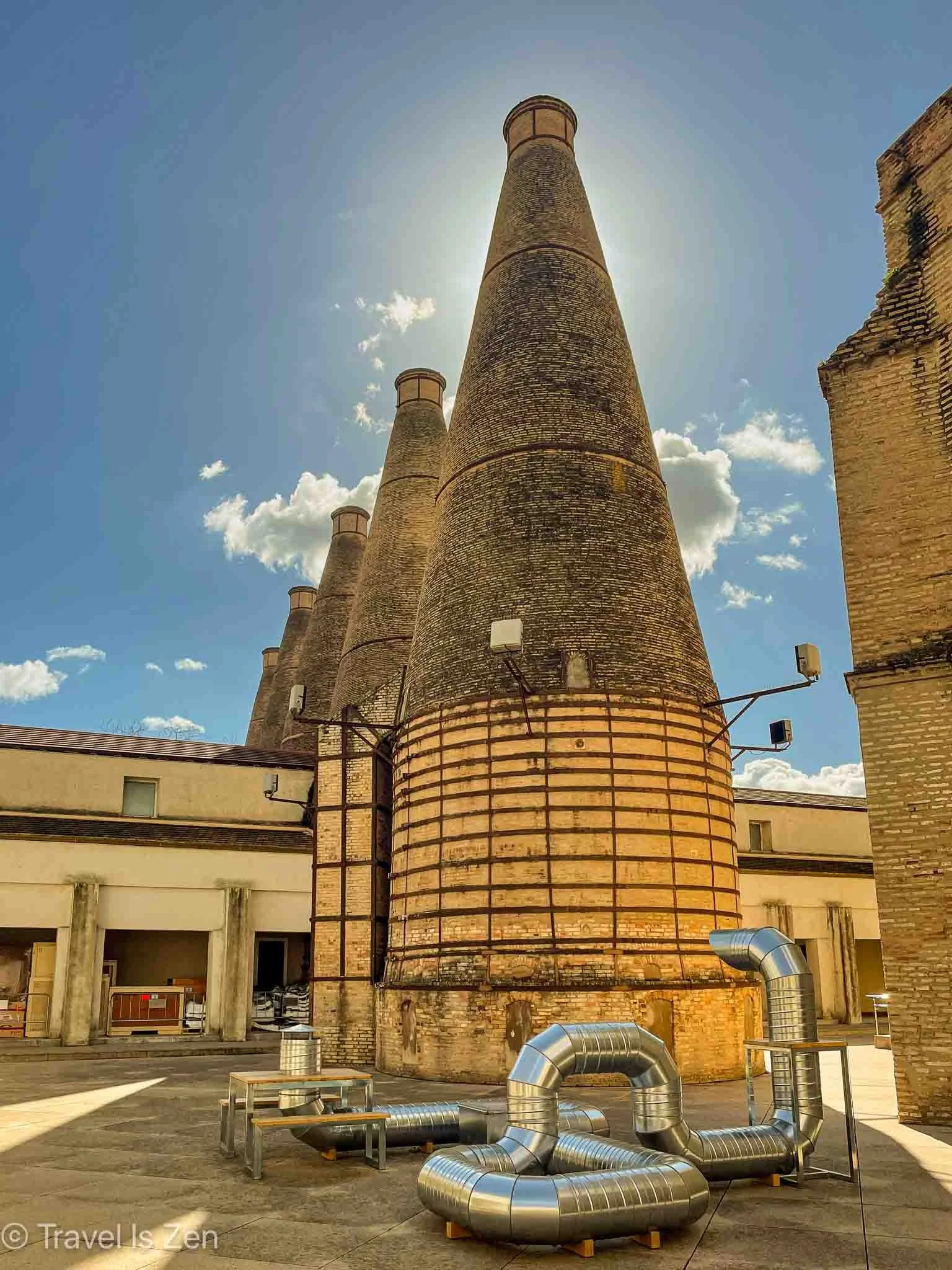
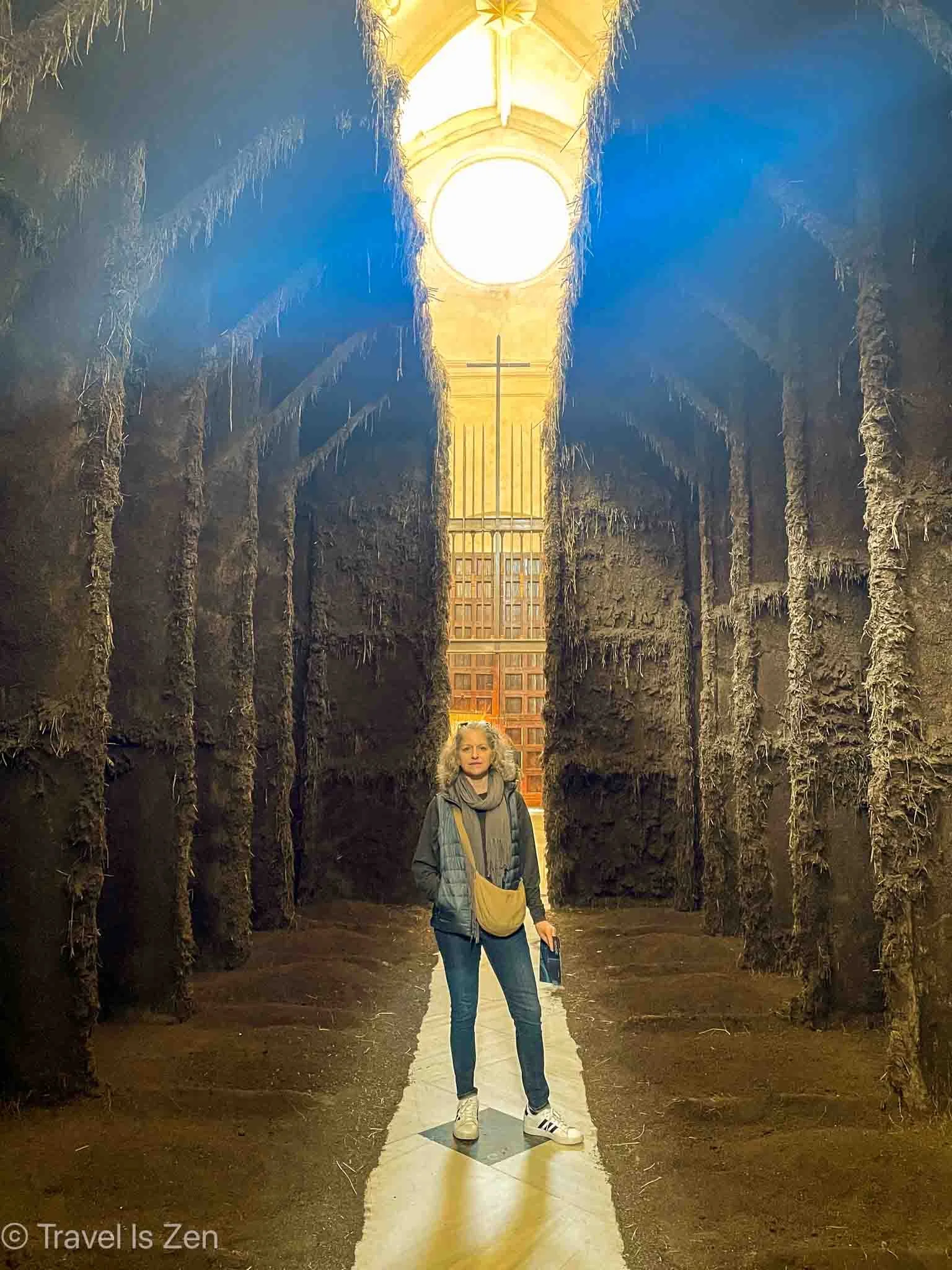
This led us to the discovery of Seville’s Modern Art Museum - you guessed it — housed inside a former monastery that morphed into a ceramics manufacturing facility and is now an art museum. Brilliant repurposing and reimagining! Inside, an eclectic mix: modern photography exhibits, Andy Warhol, quirky exterior sculptures, a thought provoking installation within the former church titled “dirt”, explanations of the ceramics furnaces…
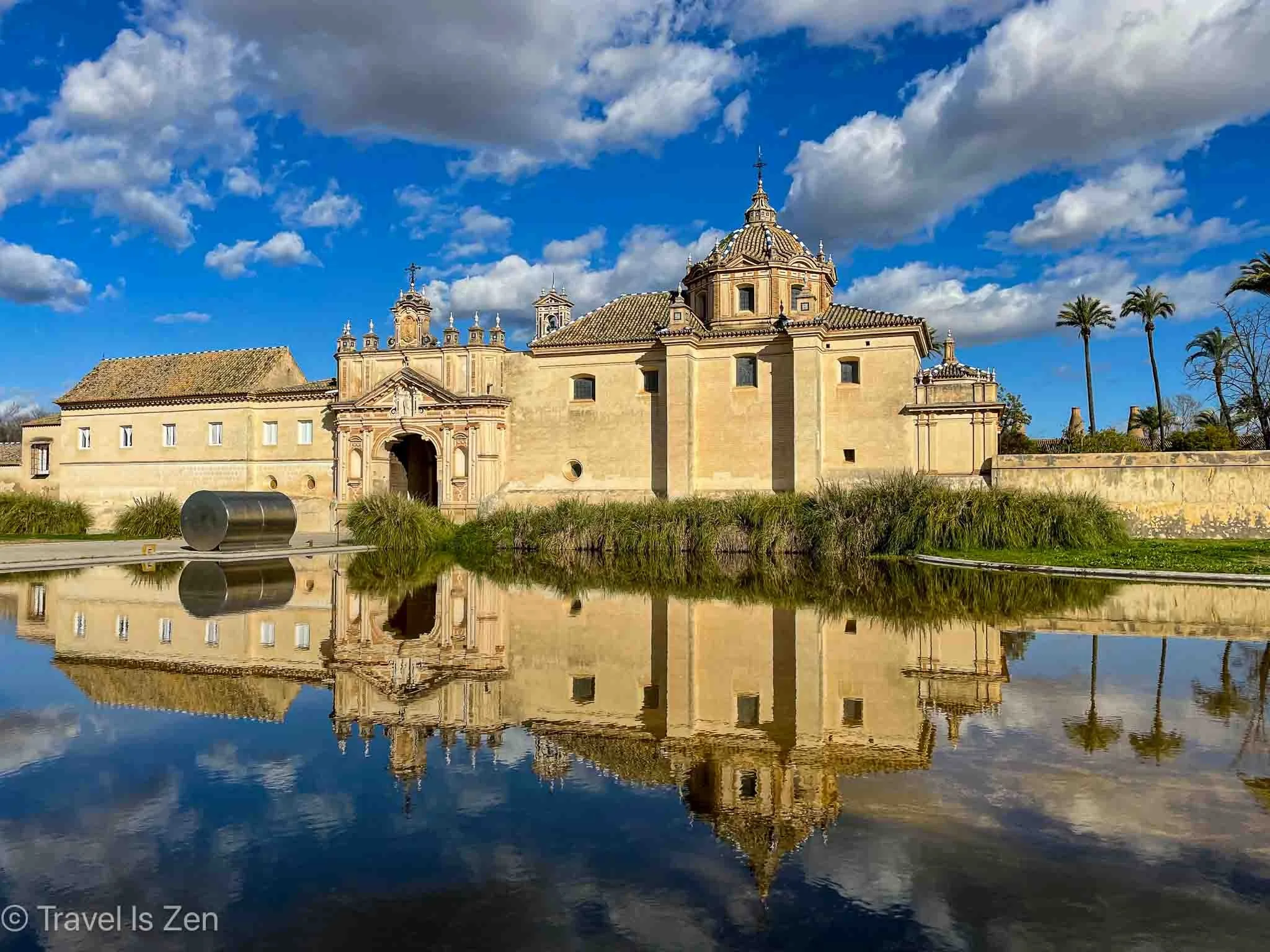
Andaluz de Arte Contemporáneo
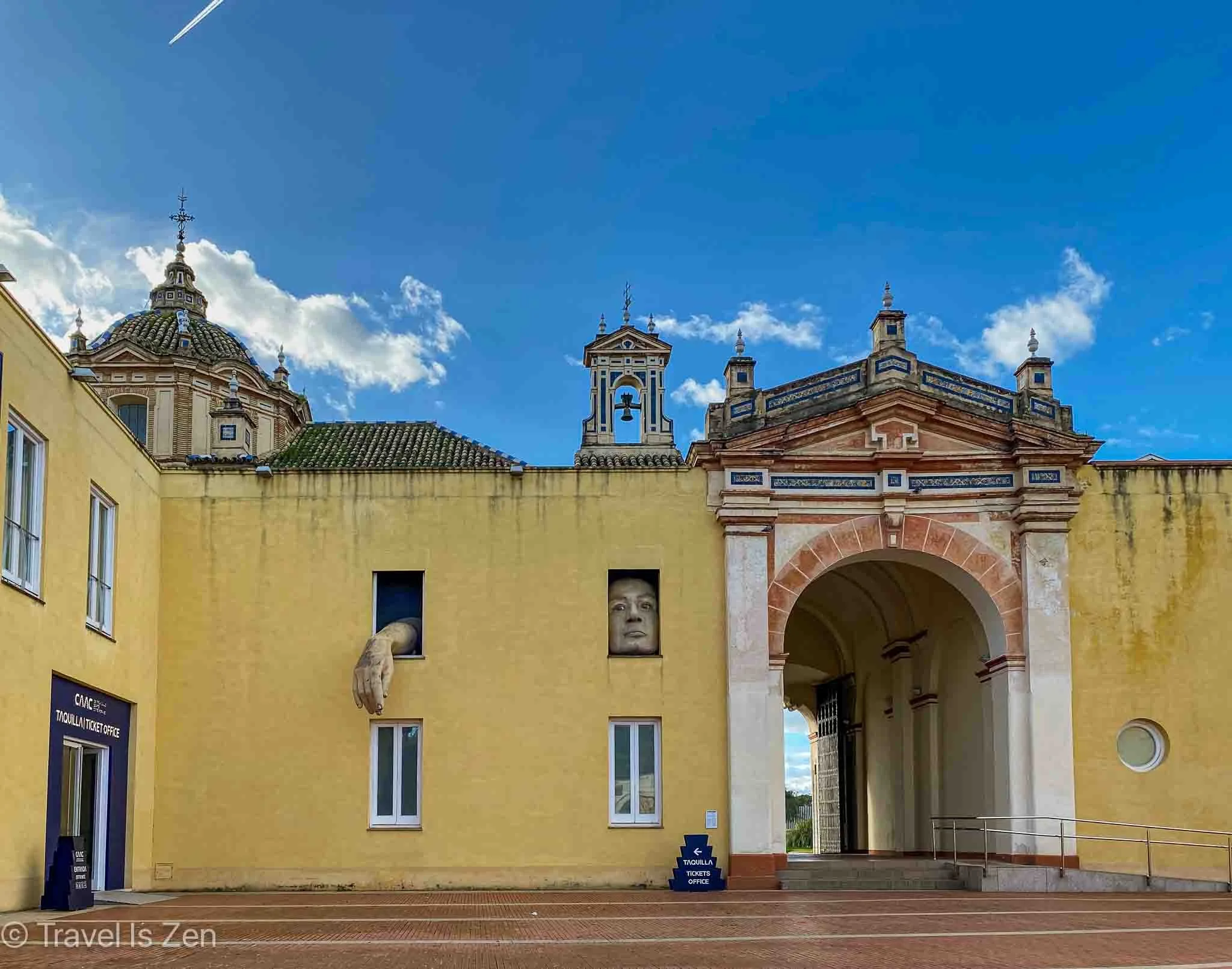
Andaluz de Arte Contemporáneo
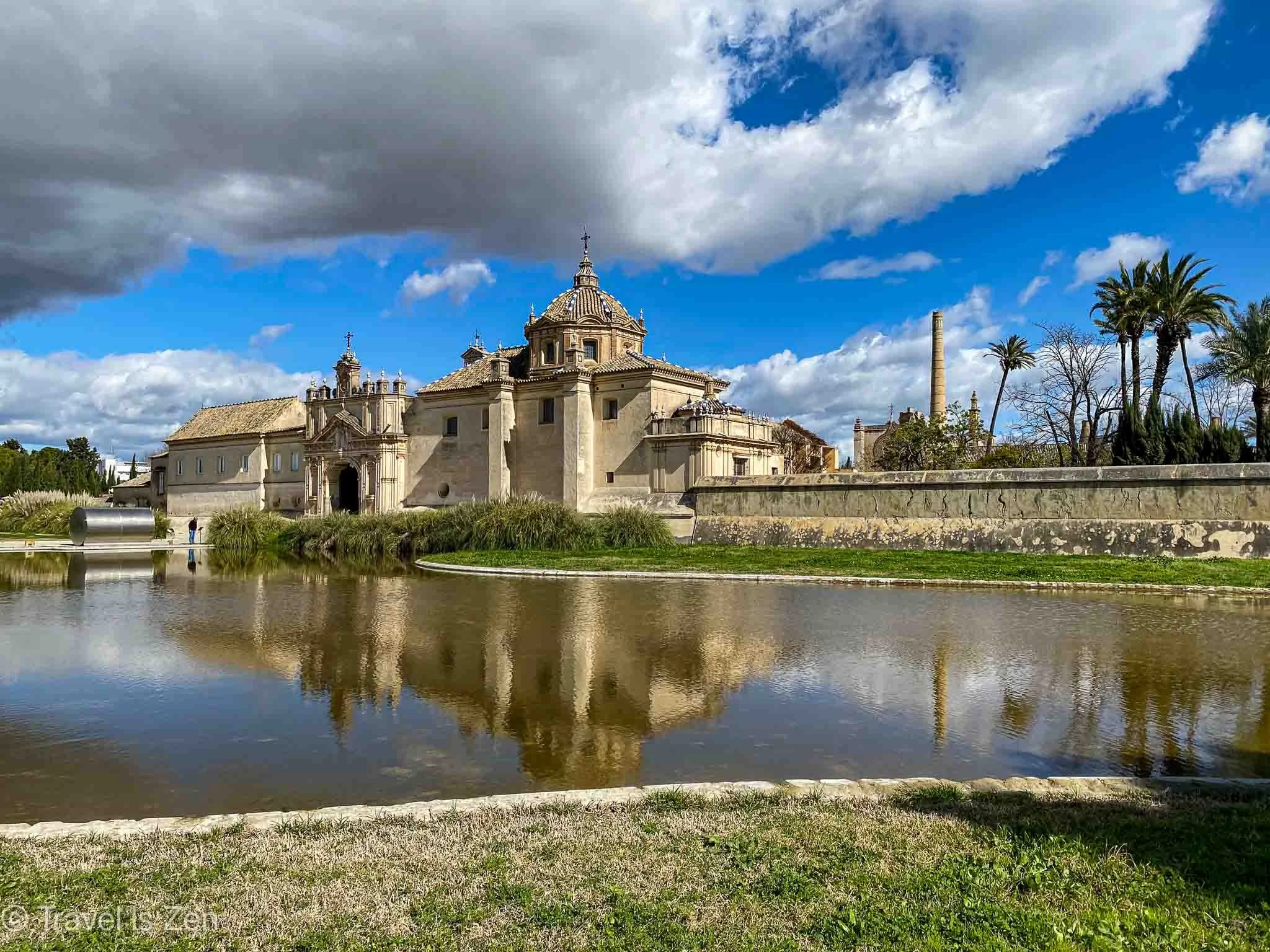
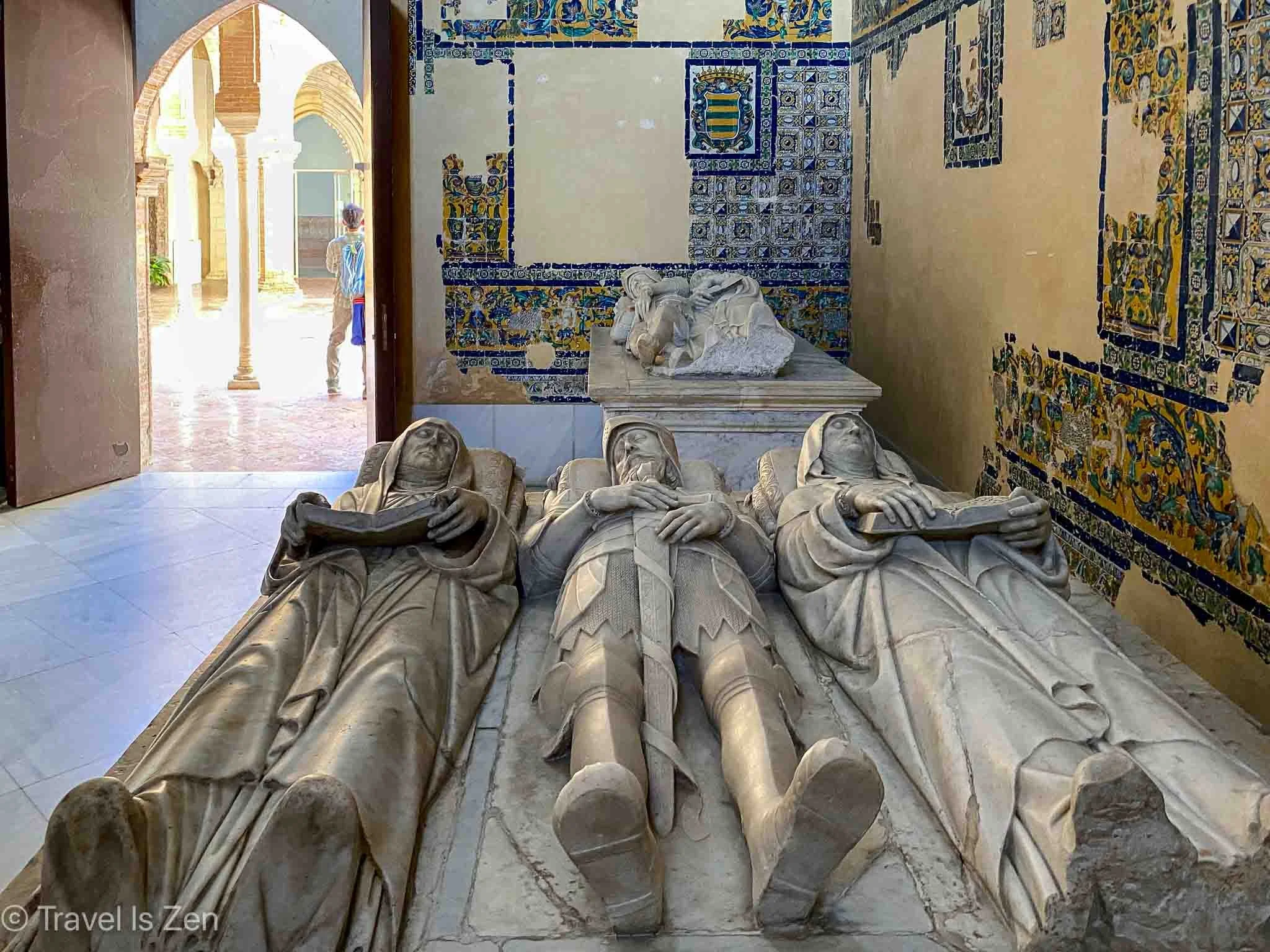
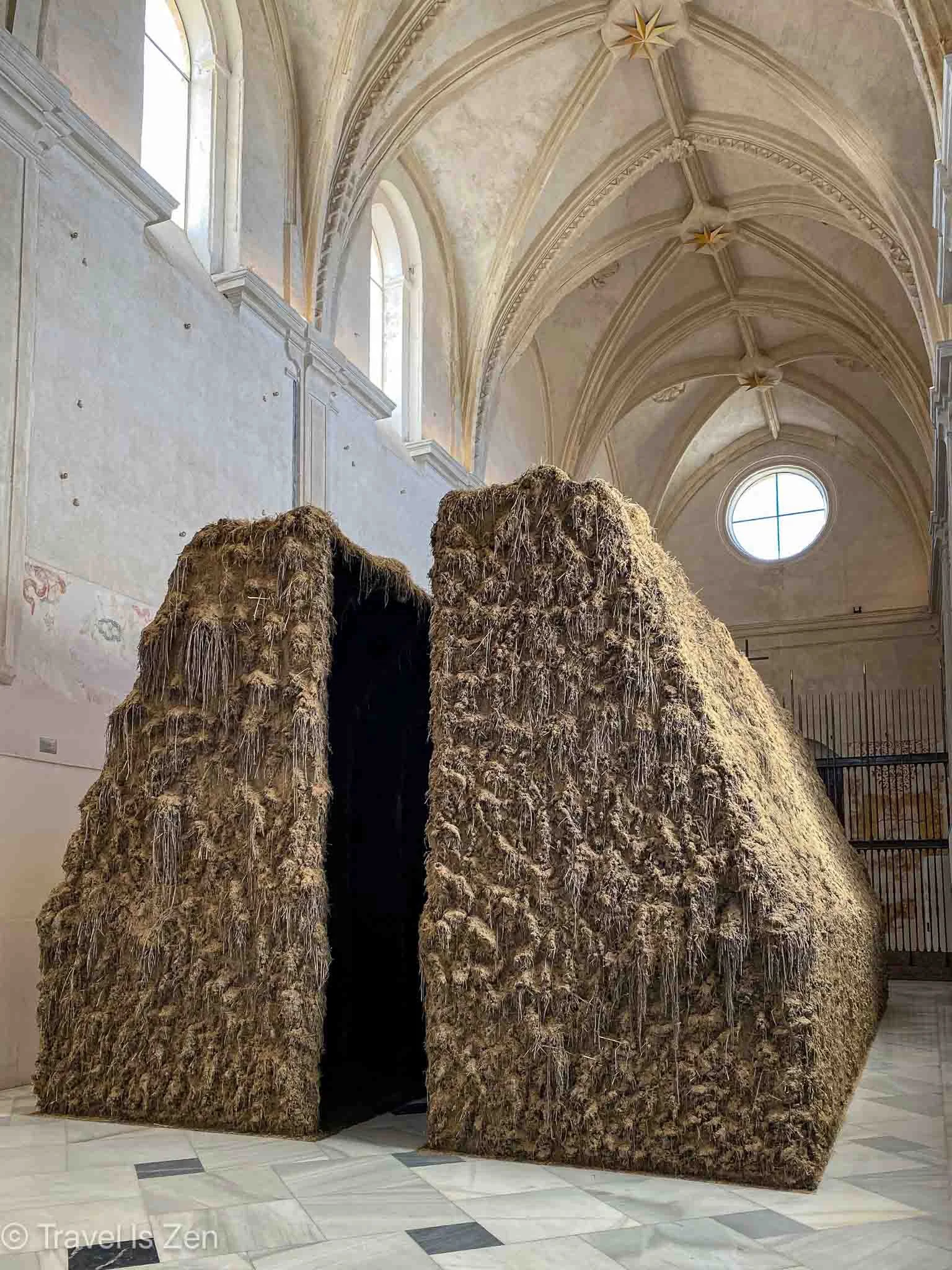
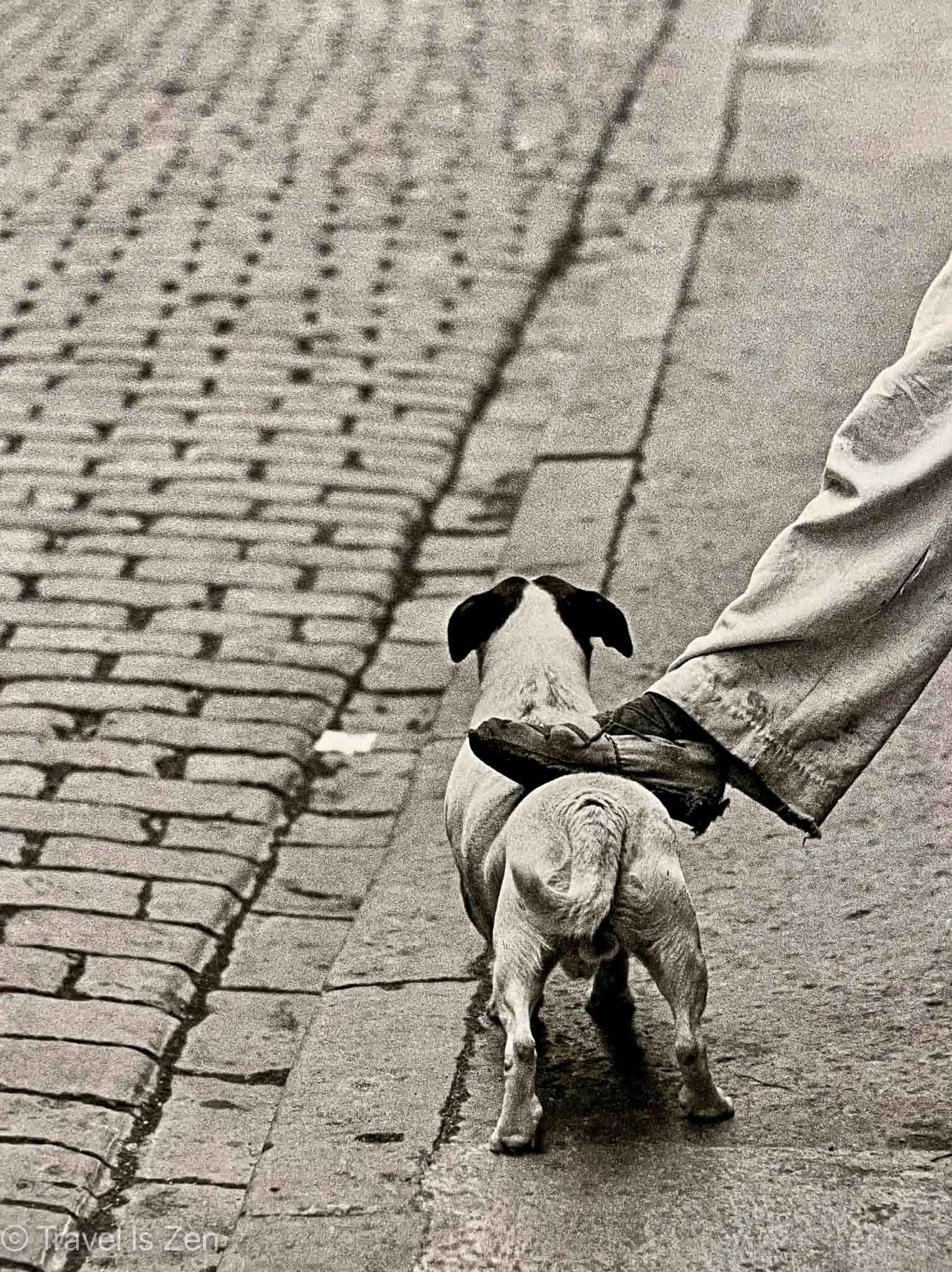
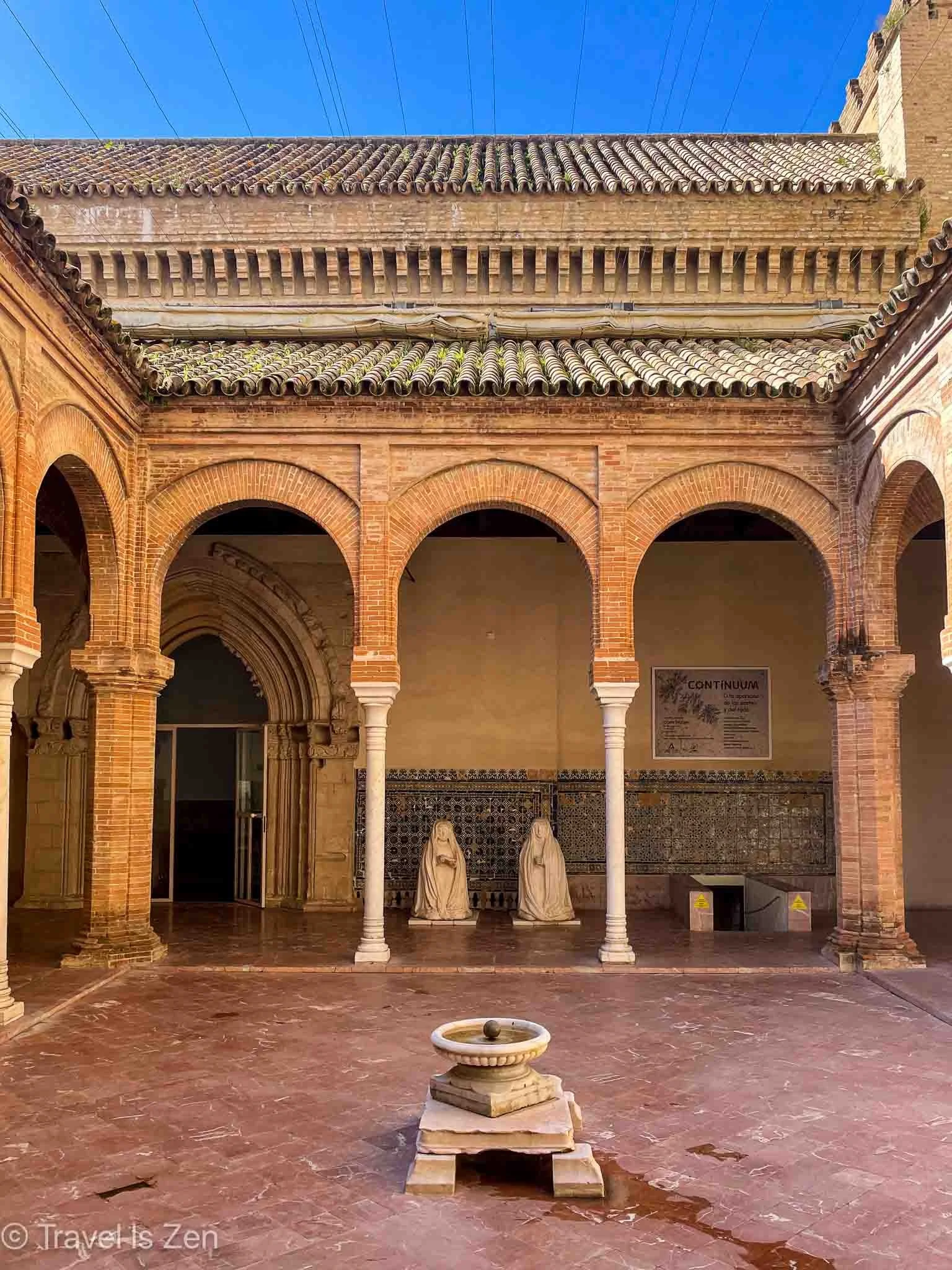
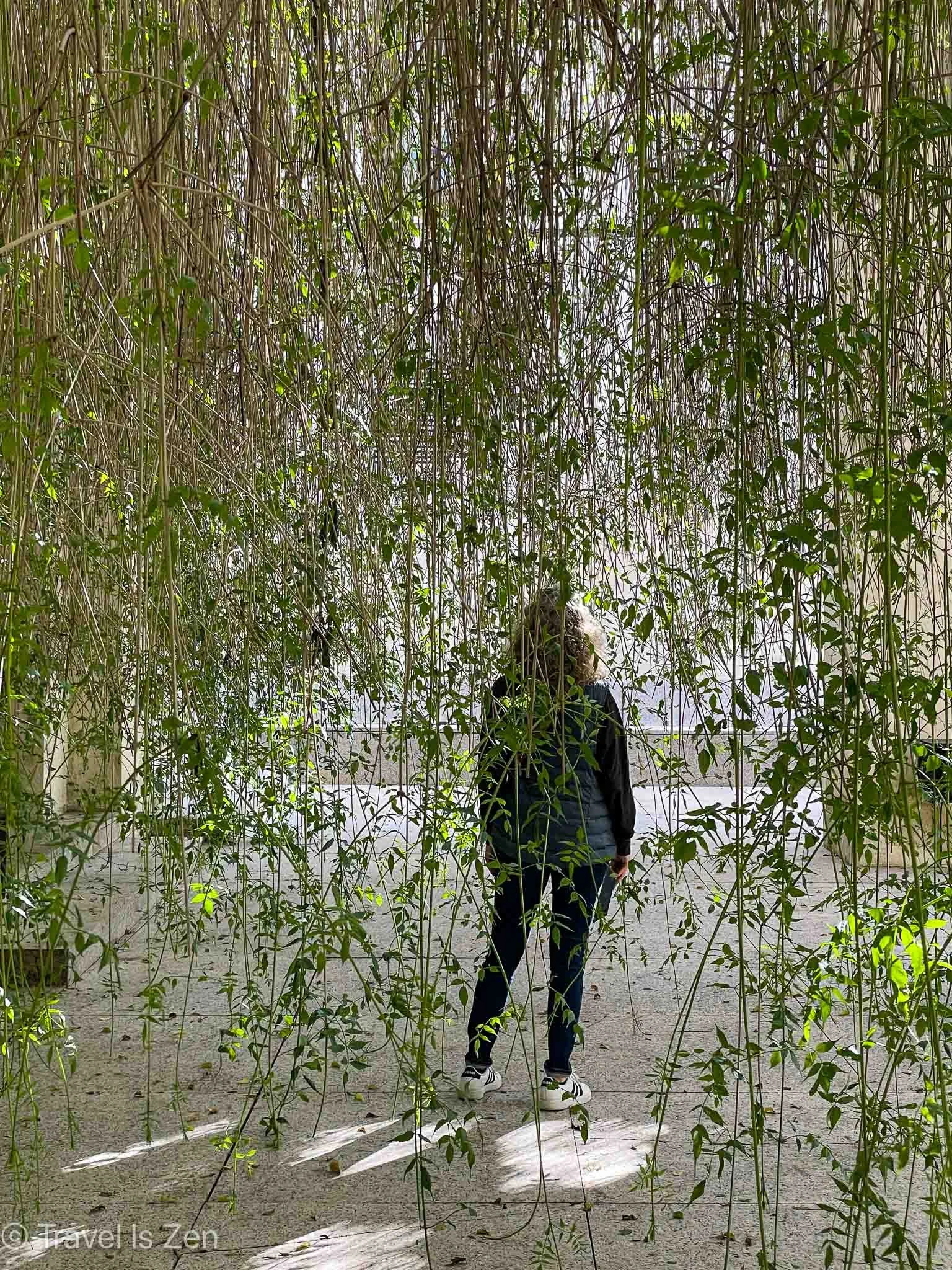
Sometimes when we travel, we forget to really LOOK - not at the sites themselves, but at how a city has incorporated the past into its modern civic infrastructure and cultural identity. In Seville, one can’t help but gawk at the Cathedral and the Real Alcazar, truly awesome testaments of human ingenuity and creativity. Yes, one should pause and consider the weight of history behind the architecture. But just as special is the current hum of modern creativity and innovation that links the past to the present: flamenco dress trends, art exhibits confronting the pace of change and the modern human dilemma, the drastically unconventional form of the Metropol Parasol, the graffiti that shapes the character of Seville’s redeveloped waterfront, and so on… the creative marks of humanity that will carry us into the future…